
 Asep Darmawan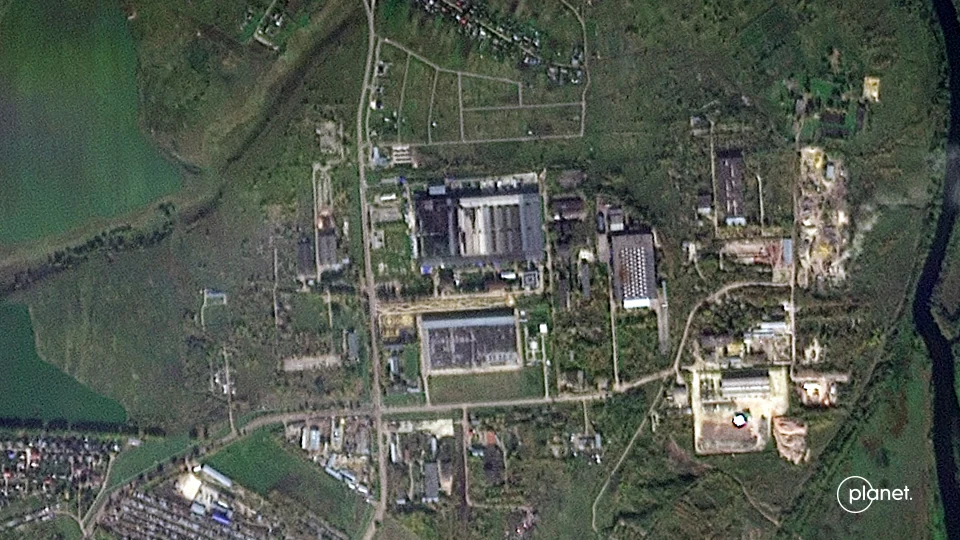
The landscape of modern warfare has undergone a seismic shift in 2026, moving beyond the traditional kinetic theater of trenches and artillery to the very bedrock of the digital economy: the data center. As the conflict between Russia and Ukraine enters a volatile new phase, critical infrastructure—once considered protected by the norms of international conflict—is increasingly becoming the primary objective.
Recent coordinated strikes have paralyzed a wide array of Russian digital services, ranging from popular dating applications and real estate aggregators to the self-publishing platforms that host the nation’s literary output. Perhaps most symbolically, the digital infrastructure supporting the most successful professional soccer club in the Russian Premier League was rendered inaccessible, a casualty of a broader campaign aimed at disrupting the normalcy of the Russian home front.
The New Battlefield: Data Centers as Strategic Targets
The tactical pivot toward data centers marks a dangerous evolution in the nature of regional hostilities. While military commanders have long sought to disable enemy communications, the systematic targeting of civilian-facing server farms suggests a strategy of "total disruption."
This trend was catalyzed earlier this year when the geopolitical landscape reached a flashpoint. Following a February 2026 offensive involving the United States and Israel against Iranian military assets, Tehran retaliated with a precision drone campaign that neutralized multiple Amazon Web Services (AWS) data centers located in Bahrain and the United Arab Emirates. The event served as a sobering proof-of-concept for state actors: modern economies are so deeply tethered to cloud architecture that a single successful strike on a server cluster can cause irreversible data loss and prolonged economic paralysis.
A Chronology of Escalation (2022–2026)
To understand the current state of affairs, one must examine the steady erosion of the boundaries between military and civilian targets since the onset of the invasion.
The Initial Phase (2022–2024)
When President Vladimir Putin launched his full-scale invasion of Ukraine in February 2022, the conflict was defined by traditional attrition. Russia’s doctrine focused on the systematic destruction of Ukraine’s energy grid, transportation hubs, and residential apartment blocks. These strikes were designed to break the morale of the Ukrainian populace and force a surrender through the deprivation of heat, light, and mobility.
The Shift to Asymmetric Response (2025–Early 2026)
As Ukraine faced chronic shortages of Western-supplied interceptor missiles—crucial for neutralizing incoming Russian cruise missiles and Shahed-style drones—the Ukrainian military began a strategic pivot. Recognizing that they could not match Russian artillery volume, Kyiv invested heavily in indigenous medium- and long-range drone technology. By mid-2026, the Ukrainian military had successfully transitioned from defensive posturing to an active, offensive drone campaign deep within Russian territory.
The Summer of Disruption (2026)
In the summer of 2026, the strategy crystallized. Ukraine began targeting the logistics backbone of the Russian economy. This included high-profile strikes on warehouses owned by Wildberries and Ozon—Russia’s answer to Amazon—signaling that no part of the Russian supply chain was beyond reach.
The NATO Border Crisis (October 2026)
The war took an ominous turn in early October 2026. Within the span of 48 hours, two commercial vessels were sunk in the Black Sea within the exclusive economic zones (EEZs) of NATO members Romania and Bulgaria. President Volodymyr Zelenskyy immediately attributed these strikes to Russian forces, highlighting a significant expansion of the war’s footprint into waters protected by the alliance.
Supporting Data: The Cost of Connectivity
The economic impact of these strikes is difficult to quantify but undeniably profound. Data centers serve as the repositories for the digitized life of a nation. When a server farm is compromised, the losses extend beyond the immediate service outage:
- Data Integrity: The Bahrain and UAE incidents demonstrated that strikes on cooling systems and power inputs result in permanent data loss, as hardware failure in high-density environments is often catastrophic and non-recoverable.
- Economic Velocity: By targeting platforms like Wildberries and Ozon, Ukraine has slowed the velocity of the Russian retail economy, forcing the Kremlin to divert resources from the front line to rebuild civil logistics.
- Psychological Warfare: By taking down the websites of premier sports clubs and common lifestyle apps, the strikes serve as a persistent reminder to the Russian public that the war is not a distant television event, but an encroaching reality.
Official Responses and Geopolitical Stance
The international community remains deeply divided on the legality and ethics of targeting data centers.
The Russian Ministry of Defense has repeatedly characterized these drone strikes as "acts of international terrorism," arguing that they violate the fundamental distinction between military assets and civilian infrastructure. In official statements following the October shipping incidents, Kremlin spokespeople claimed that the vessels were carrying dual-use goods, a standard justification for Russian naval actions in the Black Sea.
Conversely, the Ukrainian government maintains that their actions are a proportional response to years of Russian strikes on Ukrainian civilian infrastructure. President Zelenskyy’s administration has consistently argued that since Russia utilizes its digital infrastructure to coordinate military logistics and disseminate state propaganda, those servers constitute "dual-use" military targets under the laws of armed conflict.
Western allies have remained cautious. While the United States and NATO members have provided intelligence and hardware to assist in Ukraine’s defense, there is palpable anxiety regarding the "widening of the war." The sinking of ships within NATO-protected waters has triggered high-level consultations among alliance members, though there is currently no consensus on how to categorize these strikes within the framework of Article 5 of the NATO treaty.
Implications for the Future of Conflict
The events of 2026 suggest that we are witnessing the birth of "Cloud Warfare." As data centers become the new bunkers, the implications are vast and concerning:
1. The Death of Neutrality
The era of neutral digital infrastructure is effectively over. If a data center in a neutral country can be leveled because it hosts the "wrong" client, multinational tech firms will face impossible choices regarding where to store data and whom to serve.
2. The Vulnerability of Global Supply Chains
The strikes on Ozon and Wildberries have proven that modern logistics rely on a "just-in-time" digital coordination layer. By disrupting the digital brain of these companies, Ukraine has successfully crippled the physical delivery of goods, demonstrating that the cyber and physical fronts are now inseparable.
3. The Risk of Escalation
The most dangerous implication is the potential for miscalculation. When drones enter the airspace of NATO nations to target shipping, or when missiles strike data centers that may host the encrypted traffic of global corporations, the risk of triggering an accidental regional conflict increases exponentially.
Conclusion: A Precarious Path Forward
As the conflict in Ukraine continues to evolve, the distinction between a combatant and a civilian, or a military target and a digital service, has become increasingly blurred. The 2026 strikes on Russian data centers represent a tactical maturity in the Ukrainian military, but they also signal a grim future for the global digital ecosystem.
The war is no longer contained within the borders of Eastern Europe. It is now being fought in the cloud, on the high seas of the Black Sea, and in the server rooms that keep the modern world spinning. As both sides continue to probe for weaknesses in the other’s infrastructure, the international community is left to grapple with a new, destabilizing reality: in the 21st century, the most effective way to strike a nation is not always to hit its military, but to turn off its digital life.


 Evan Lee Salim
 Suro Senen
 Basiran
 Neng Nana
 Iffa Jayyana
 Raul Delapena Setiawan
 Rifan Muazin
 Asro
Asro