
 Dwi Wanna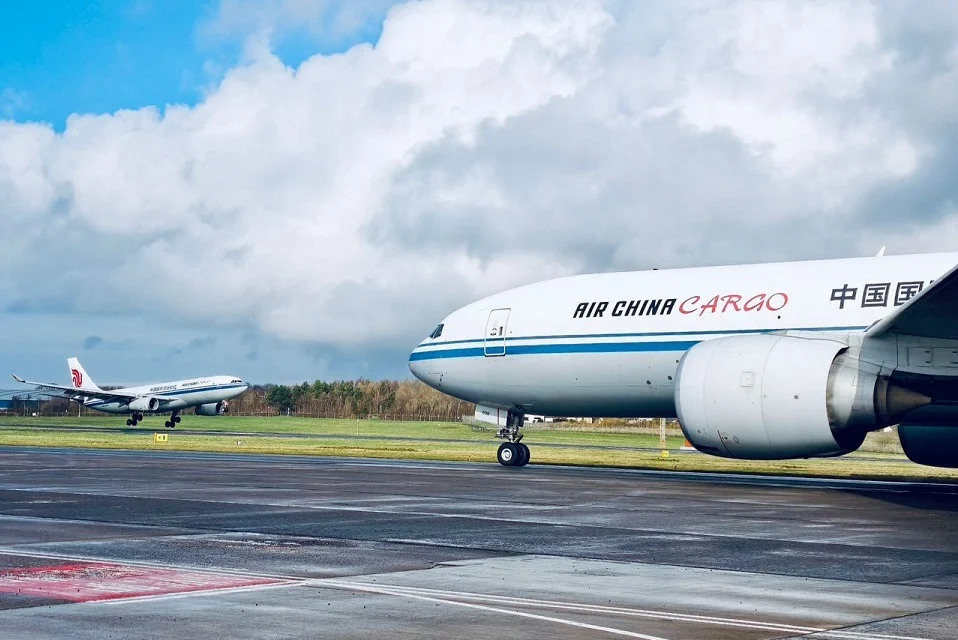
By Rebecca Jeffrey
In a strategic move to reinforce its dominance in the trans-Pacific and global air freight markets, Beijing-headquartered Air China Cargo has officially expanded its fleet with the addition of its 14th Boeing 777 freighter. This delivery marks a significant milestone in the carrier’s ongoing efforts to modernize its operations and meet the surging demand for high-capacity, long-range cargo solutions.
As global supply chains continue to evolve, Air China Cargo’s commitment to expanding its freighter capacity signals a robust outlook for international trade. The acquisition of this new aircraft, registered as B-229D, is not merely a fleet update; it is a calculated investment in the airline’s ability to provide reliable, efficient, and scalable logistics services to its growing customer base.
The Core Facts: A New Addition to the Fleet
On October 1, Air China Cargo formally took delivery of its latest Boeing 777F, a state-of-the-art aircraft fresh off the production line at Boeing’s Everett manufacturing facility in Washington, United States. According to flight tracking data from Planespotters, the aircraft, identified by the registration B-229D, underwent its initial testing phases before departing from Seattle Paine Field International Airport for its delivery flight to Beijing Capital International Airport.
The Boeing 777F remains the gold standard in the air cargo industry, balancing payload efficiency with environmental performance. This specific model offers a payload capacity of approximately 102 metric tonnes and a flight range of 9,200 kilometers. These specifications make it an ideal workhorse for long-haul routes between Asia, North America, and Europe, allowing the carrier to transport heavy or time-sensitive goods with minimal stops.
With this latest delivery, Air China Cargo’s dedicated freighter fleet now stands at 24 aircraft, comprising 14 Boeing 777Fs, eight Airbus A330-200 passenger-to-freighter (P2F) conversions, and two Boeing 747-400Fs. This diverse mix allows the airline to optimize its aircraft deployment based on route length, cargo density, and specific client requirements.
Chronology of Expansion
The arrival of the B-229D is the latest chapter in a multi-year growth strategy for the Chinese carrier. To understand the trajectory of Air China Cargo, one must look at the timeline of its recent investments and fleet diversification:

- 2025 (Throughout): Air China Cargo focused on stabilizing its operations while evaluating the performance of its existing 777F and A330P2F fleets. The carrier’s data indicated a successful year, with Boeing delivering 35 units of the 777F to customers globally, solidifying the aircraft’s status as a market favorite.
- February 2026: Boeing’s internal data confirmed that the demand for the 777F remained high, with strong delivery numbers across the global logistics sector.
- May 2026: In a major announcement, Airbus confirmed that Air China Cargo had placed an order for an additional four A350 freighters. This added to a previously announced order of six, bringing the airline’s total commitment for the next-generation A350F to ten aircraft.
- September 2026: The Federal Aviation Administration (FAA) granted Boeing a critical emissions exemption, allowing for the continued production and sale of the 777F beyond the 2027 regulatory deadline.
- October 1, 2026: Air China Cargo officially takes delivery of its 14th Boeing 777F, marking the latest expansion in its operational capacity.
Supporting Data: Why the 777F Remains a Strategic Asset
The preference for the Boeing 777F by Air China Cargo is supported by hard data regarding market performance and aircraft utility. Boeing has consistently seen strong order books for the 777 freighter family. Last year, the company recorded 15 new orders and 35 deliveries. As of the third quarter of 2026, 18 777Fs have already been delivered to various global customers, demonstrating a consistent demand that defies cyclical downturns in the broader aviation market.
The primary appeal of the 777F lies in its economics. Its ability to carry 102 metric tonnes over long distances reduces the cost-per-tonne-kilometer, an essential metric for carriers operating in the thin-margin air cargo sector. Furthermore, the aircraft’s compatibility with standard pallets ensures seamless integration into existing global ground-handling ecosystems.
Beyond the 777F, Air China Cargo’s move toward the Airbus A350 freighter indicates a future-proofing strategy. As environmental regulations tighten globally, the A350F is designed to meet stringent ICAO carbon emission standards, providing the carrier with a sustainable pathway for its long-term growth.
The Regulatory Landscape: The FAA Emissions Exemption
A crucial development supporting the continued utility of the 777F is the FAA’s recent decision to grant an emissions exemption to Boeing. Without this regulatory intervention, Boeing would have been forced to cease production of the 777F by the end of 2027 due to evolving international emissions standards.
This exemption is widely viewed as a "bridge" measure. It allows Boeing to maintain the production line for the 777F while the manufacturer focuses on the development and certification of the next-generation 777-8 freighter. For airlines like Air China Cargo, this provides much-needed continuity. It ensures that the carrier can continue to procure reliable, known-quantity aircraft while they transition their long-term fleet strategies toward the 777-8 and the A350F.
The FAA’s decision highlights the importance of the 777F to global supply chains. Regulators recognized that an abrupt cessation of production would have created a significant capacity shortfall in the global air cargo market, potentially driving up costs for consumers and businesses alike.
Implications: Strategic Positioning in a Competitive Market
The decision by Air China Cargo to aggressively expand its freighter fleet carries significant implications for the competitive landscape of international air logistics.

1. Strengthening the Beijing Hub
By centralizing its fleet in Beijing, the carrier is reinforcing the capital’s position as a primary global air cargo node. The ability to route goods through Beijing with a modern, high-capacity fleet allows Air China Cargo to better serve the manufacturing centers of Northern China, providing faster transit times for high-tech components, automotive parts, and e-commerce goods destined for North American and European markets.
2. Diversification and Risk Management
The combination of Boeing (777F, 747F) and Airbus (A330P2F, A350F) aircraft is a strategic hedge. By maintaining a mixed fleet, Air China Cargo avoids over-reliance on a single manufacturer, ensuring that maintenance schedules, supply chain issues, or regulatory delays with one OEM do not cripple the entire operation. This fleet diversity is a hallmark of a mature, risk-aware airline.
3. E-commerce and Time-Sensitive Logistics
The global rise of e-commerce has fundamentally changed air cargo. Retailers now demand higher frequency and greater reliability. The 777F, with its excellent reliability record, is the perfect tool for these "just-in-time" supply chains. By increasing its fleet size, Air China Cargo is signaling its intention to capture a larger share of the premium, time-definite logistics market.
4. Sustainability and Future Growth
While the 777F is a legacy design, its longevity is extended by the FAA exemption. However, the concurrent investment in the Airbus A350F indicates that Air China Cargo is looking ahead. The airline is clearly planning a transition toward a more fuel-efficient, lower-emission future. This two-pronged approach—maintaining current capacity with the 777F while securing future, greener technology with the A350F—positions the airline to remain competitive through the 2030s.
Conclusion: A Clear Path Forward
The delivery of the 14th Boeing 777 freighter to Air China Cargo is more than just a routine fleet addition. It is a statement of intent. In a global economy characterized by uncertainty and rapid change, Air China Cargo has chosen to invest in capacity, reliability, and strategic growth.
By balancing the immediate utility of the Boeing 777F with the long-term potential of the Airbus A350F, the airline is ensuring it remains a central pillar of global logistics. As the carrier integrates the B-229D into its schedule, the industry will be watching closely to see how this increased capacity is utilized to capture emerging trade flows between China and the rest of the world.
For Air China Cargo, the message is clear: they are not just reacting to the market—they are actively building the infrastructure to shape it. With a robust fleet, a clear procurement strategy, and a firm grip on its operational hub, the airline remains well-positioned to navigate the complexities of the modern aviation landscape.

 Evan Lee Salim
 Asep Darmawan

 Muslim
 Nana Wu

 Rifan Muazin
 Asro
Asro