
 Evan Lee Salim
This coverage is made possible through a partnership between Grist and Verite News, a nonprofit news organization dedicated to in-depth journalism in underserved communities throughout the New Orleans area.
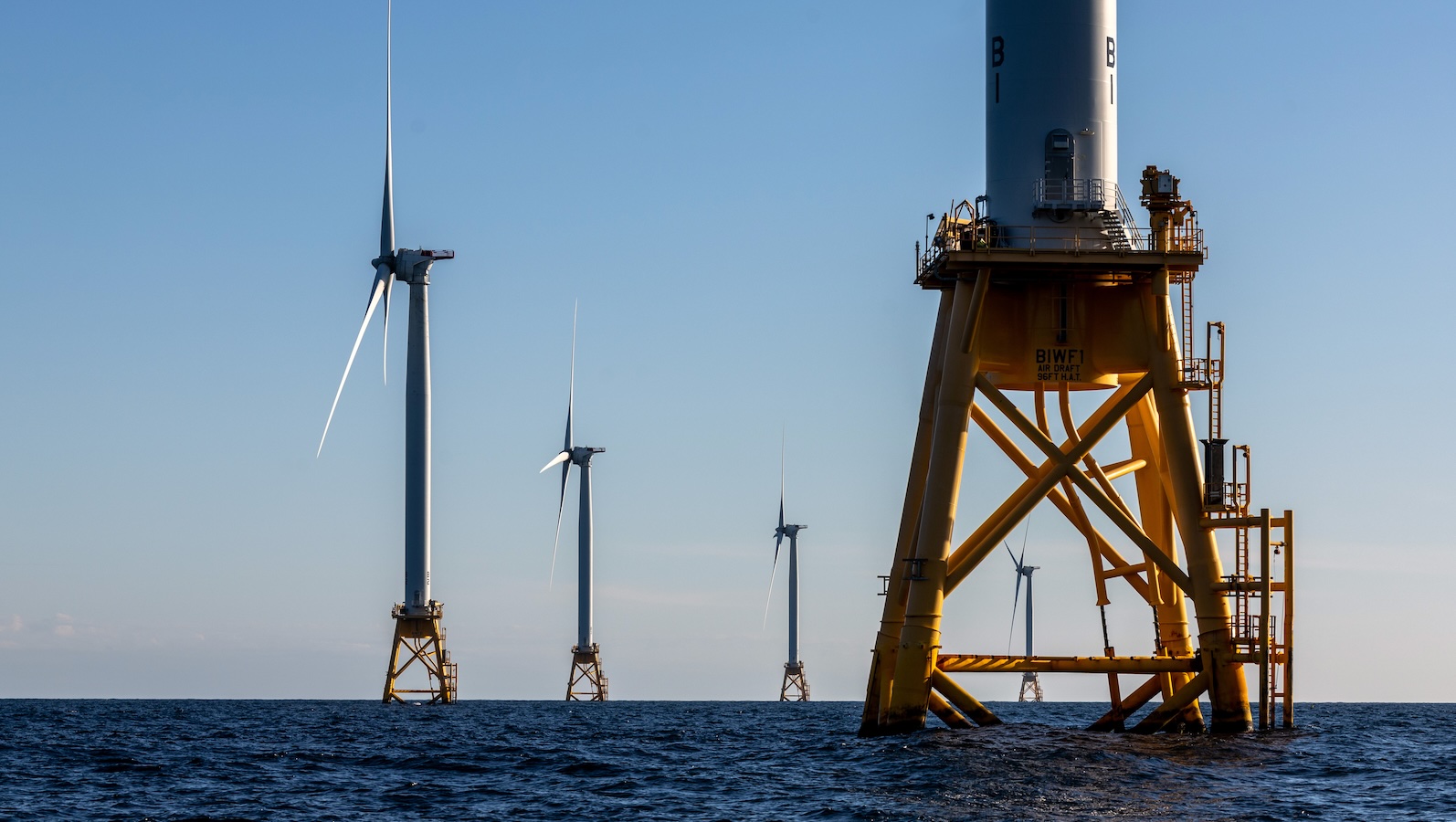
In the coastal shipyards of Louisiana, where the hum of heavy industry has long been the heartbeat of the local economy, a strange silence has taken hold. It is not the silence of decline, but rather the silence of a "pause button" pressed by the highest office in the land. For the engineers, fabricators, and supply boat operators who had pivoted from the sunset of the oil and gas era to the sunrise of offshore wind, the current political climate feels less like a policy debate and more like a systematic dismantling of their future.
Louisiana’s offshore wind industry has a singular date etched into the collective consciousness of its stakeholders: January 21, 2029. It is the first day after the conclusion of President Donald Trump’s current term—a day that many in the sector hope will mark the end of an era of federal hostility and the beginning of a long-awaited revival.
The State of Play: A Multibillion-Dollar Retreat
Under the Trump administration, the American offshore wind sector has transitioned from a booming frontier to a theater of retreat. The administration’s strategy has been two-pronged: the use of executive orders to freeze new federal leasing and permitting, and, perhaps more effectively, a "buyout" program that has incentivized developers to abandon their projects in exchange for billions in federal payouts.
According to industry analysts, the administration has successfully induced developers to relinquish at least 12 major offshore wind leases. In return, the federal government has shelled out roughly $4 billion to effectively vacate these sites. These abandoned ventures represented approximately 21 gigawatts of potential renewable capacity—a staggering figure sufficient to power more than 5 million homes across the United States.
Among the casualties is a high-profile 2-gigawatt wind farm originally planned for the Gulf of Mexico, roughly 44 miles south of Lake Charles. The project, spearheaded by the German energy giant RWE, was slated to deliver power to 350,000 homes and businesses via a strategic partnership with Entergy. Today, that project is effectively dead, joining a growing list of casualties that have left the Louisiana supply chain in a state of precarious limbo.
A Chronology of Confrontation
The hostility toward wind energy is not a new development for the current administration; it is a long-standing ideological hallmark. To understand the current gridlock, one must look back to 2006, when Donald Trump began a decade-long legal and public relations battle against the Scottish government. The grievance? An offshore wind farm that, in his view, threatened to spoil the aesthetic views from his luxury golf course in Aberdeenshire.
That personal animosity evolved into a broader national policy platform. Upon taking office in January 2026, the administration moved with clinical efficiency:
- Day One: The President signed executive orders withdrawing federal waters from future offshore wind leasing and placing an immediate moratorium on all pending permits.
- The Construction Freeze: Shortly thereafter, the administration issued stop-work orders for all projects already in the pre-construction or early construction phases.
- The Buyout Strategy: When developers initiated legal challenges to protect their investments, the administration pivoted to a strategy of financial attrition. By offering substantial federal payouts to developers to exit their leases, the administration essentially paid the industry to fold.
- The Result: By mid-2027, the momentum that had been building for nearly a decade had been effectively neutralized.
The Economic Implications: A Supply Chain Under Siege
For Louisiana, the impact of these policies is deeply personal. For years, the state had been positioning itself as the "Silicon Valley of the Gulf" for wind energy. Leveraging the technical expertise honed through decades of offshore oil and gas production, Louisiana firms had become indispensable to East Coast wind projects.
By 2024, nearly 25% of all offshore wind contracts in the U.S. were being serviced by Gulf-based firms. According to the Oceantic Network, a trade group dedicated to the sector, roughly $1 billion in direct investment had flowed into the region’s fabrication yards and shipyards. State institutions followed suit: Nunez Community College launched specialized turbine technician certifications, and the University of New Orleans established the Wind Energy Hub, creating a pipeline of talent that was meant to secure the state’s economic transition.
"It’s been a big pause button on what was a sleeping giant of an industry," said James Martin, CEO of Gulf Wind Technology. Based in Avondale, his company had been at the forefront of designing and testing advanced wind blades. Now, the company is forced to pivot toward the aerospace and defense sectors simply to keep its doors open. "There are huge layoffs in the wind space, and some of the best engineers on the planet — they’re giving up."
Official Perspectives and Industry Resilience
The rhetoric coming from state leadership suggests a divide between local economic interests and federal policy. State Representative Joe Orgeron, a Republican and a former participant in the offshore wind industry, has been a vocal critic of the federal crackdown.
"Come January 21st, 2029, we all get to wave goodbye," Orgeron said during a recent panel at Tulane University’s Future of Energy Forum. "The current administration has been a one-man stopping show. I’m pretty confident, and I’m hopeful that it’ll change."
Orgeron’s sentiment was shared by Madelyn Smith, a program manager with the Southeastern Wind Coalition. During the same forum, Smith articulated the difficulty of the developers’ position. "The Trump administration has been pretty openly hostile to seeing the advancement of the offshore wind industry," she noted. "For many reasons, it [the payout offer] is very compelling. There’s no real pathway for progress in the next two to three years, and some of these leases are quite expensive."
The administration’s public justification for these actions has leaned heavily on populist tropes. The President has frequently claimed, without scientific backing, that wind turbines are responsible for everything from rising food prices and plummeting property values to the potential for driving citizens "insane." These claims have been consistently debunked by experts, yet they remain the bedrock of the administration’s messaging strategy to justify the $4 billion expenditure in lease buyouts.
Looking Toward the Horizon: The 2029 Pivot
The central question facing Louisiana’s energy sector is whether the talent pool and infrastructure built over the last decade can survive the current freeze. Engineering firms are currently in "hibernation mode," trimming budgets and diversifying their portfolios to survive the dry spell.
However, there is a limit to how long a company can hold onto specialized staff without active projects. The "brain drain" is already beginning; skilled welders, naval architects, and electrical engineers are finding work in other sectors, and once that human capital is dispersed, it will be costly and time-consuming to reassemble.
For the supporters of the industry, the goal is simple: survive the term. "Just wait for the clock to run out," is the mantra offered by Rep. Orgeron.
Yet, the recovery will not be instantaneous. The offshore wind industry requires massive capital investment and long-term regulatory certainty. Even with a change in administration in 2029, investors will be wary of the volatility that defined the 2026–2029 period.
Conclusion: The Cost of the Standoff
The irony of the current situation is not lost on the residents of Louisiana. A state that built its wealth on the extraction of fossil fuels was on the verge of becoming a global leader in the next generation of energy infrastructure. The $4 billion spent to dismantle this progress has not only halted development but has introduced a level of political risk that may deter future investment for years to come.
As the industry waits for the 2029 milestone, the story of Louisiana’s wind sector remains a cautionary tale about the intersection of national politics and local economic destiny. Whether the "sleeping giant" of the Gulf will ever wake up remains to be seen. For now, the shipyards remain quiet, the engineers look toward aerospace, and the calendar remains the most important tool in the industry’s kit.


 Laily UPN
 Lina Hope
 Iffa Jayyana
 Rifan Muazin
 Suro Senen
 Lina Irawan