
 Sagoh
Sagoh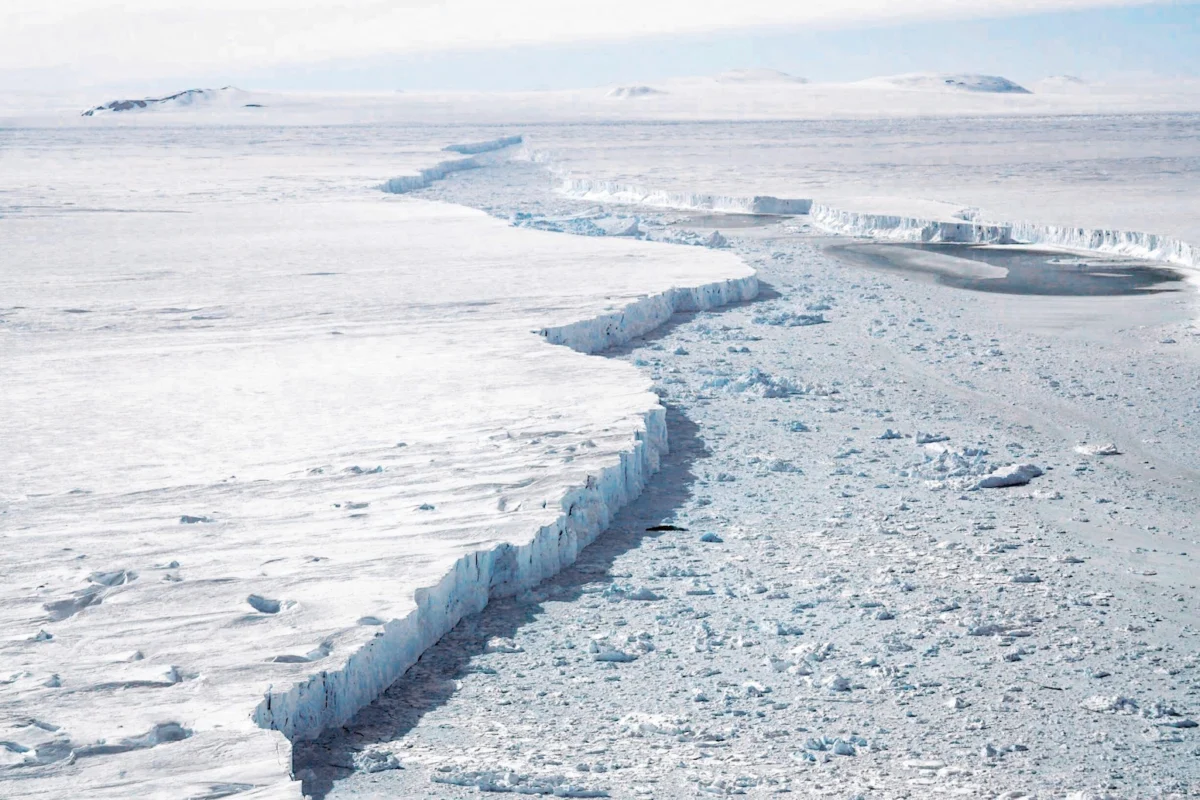
The world’s polar regions are flashing warning signs that researchers say could signal a fundamental shift in the Earth’s climate system. New data from the US National Snow and Ice Data Center (NSIDC) has confirmed that Antarctic sea ice has reached its annual winter maximum at a level that ranks as the third-smallest in the 48-year satellite record. Simultaneously, the Arctic has concluded its summer melt season with an ice extent that ties for the 10th lowest since records began, underscoring a persistent, long-term decline in the northern hemisphere.
As these figures emerge, the scientific community is grappling with a central, urgent question: are we witnessing a temporary anomaly driven by natural climate variability, or has the planet crossed a threshold into a new, structurally altered state of polar decline?
The Antarctic Winter: A Persistent Deficit
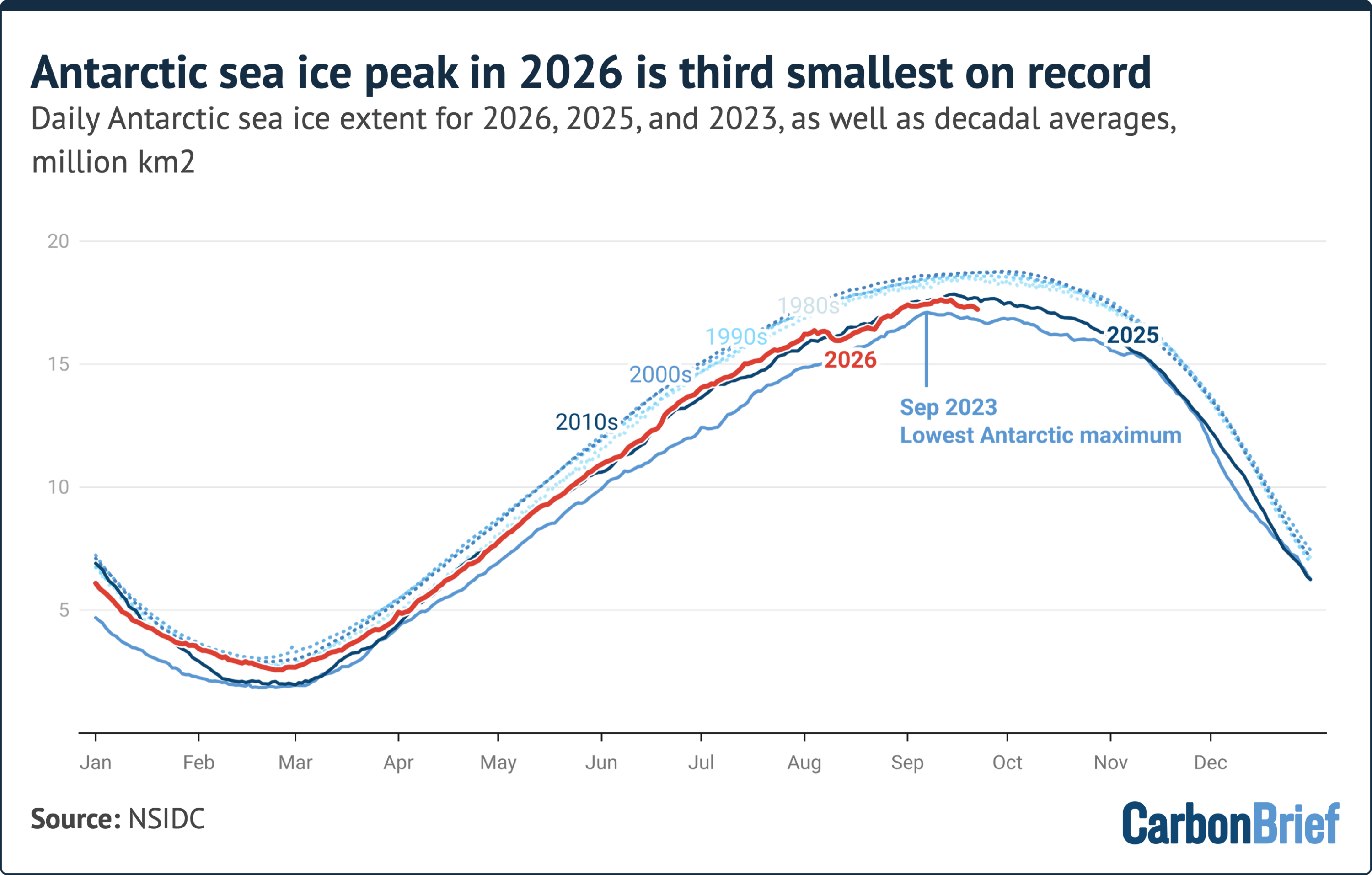
On September 14, Antarctic sea ice reached its annual winter peak, covering an area of 17.59 million square kilometres (km²). While the NSIDC cautions that these figures remain preliminary—noting that large fluctuations are common during the seasonal maximum—the persistence of low ice values has alarmed experts.
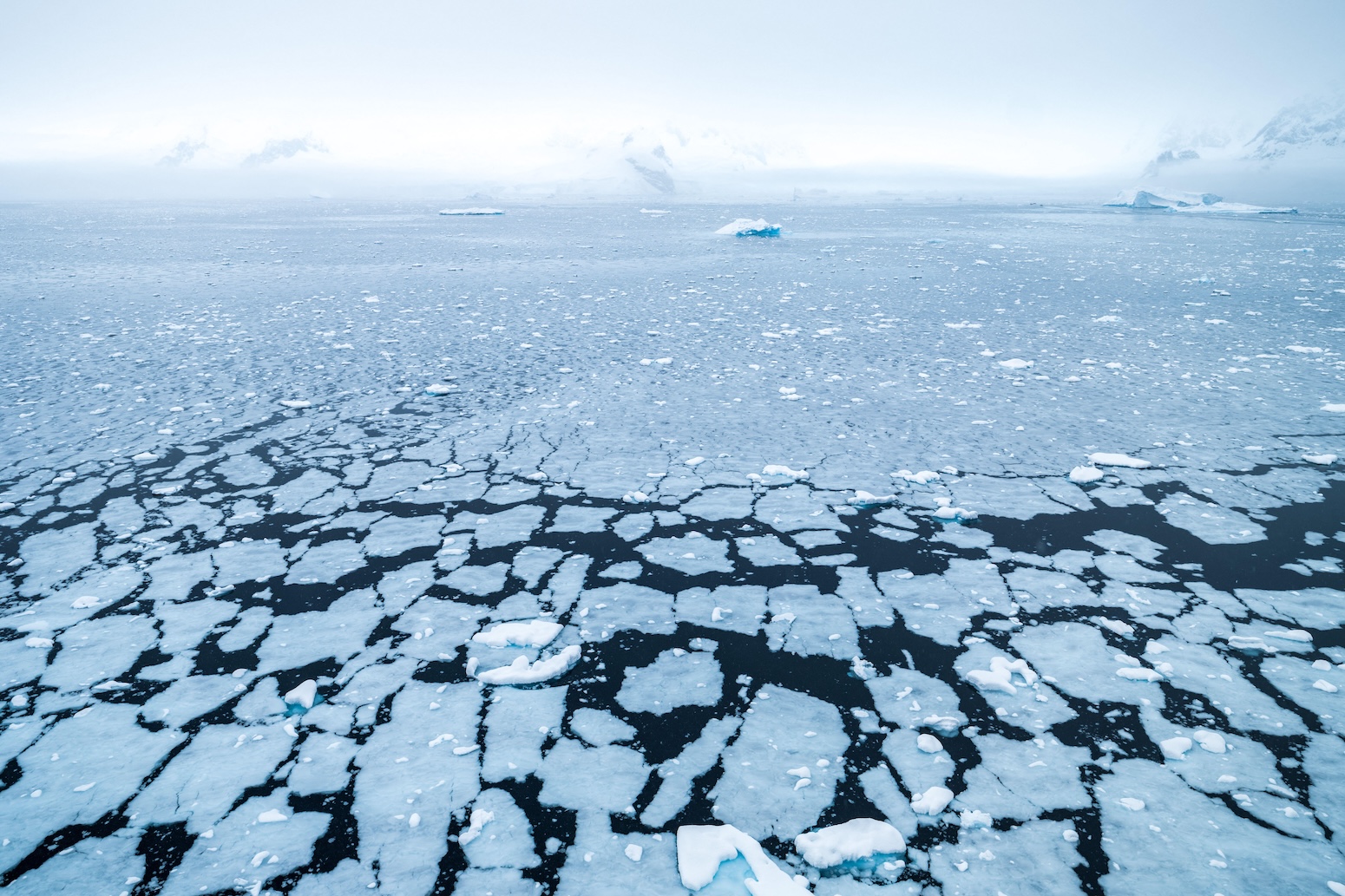
Dr. Lettie Roach, a polar climate scientist at the Alfred Wegener Institute in Germany, characterizes the 2026 maximum as "well below average." For decades, Antarctic sea ice exhibited a unique stability, sometimes even showing slight growth, which often confounded simple models of global warming. That era appears to be over.
"After several decades of stable or increasing winter Antarctic sea ice conditions, it is concerning to see these low values persisting," Dr. Roach explains. "Compared with the Arctic, it is less clear how recent changes in Antarctic sea ice are attributable to human-caused warming versus natural variability. We need more years of observations to better understand whether this is truly a structural shift."
The data supports her caution. According to Dr. Clare Eayrs, a researcher at the Korea Polar Research Institute (KOPRI), the current year represents a return to "unusually low winter coverage" following a brief period of near-average conditions during the February minimum. The statistics are sobering: the July and August extents this year were the fifth and fourth lowest on record, respectively. Perhaps most tellingly, all five of the lowest July extents in history have occurred since 2022, and all four of the lowest August extents have occurred since 2023.
Regional Instability and Shifting Patterns
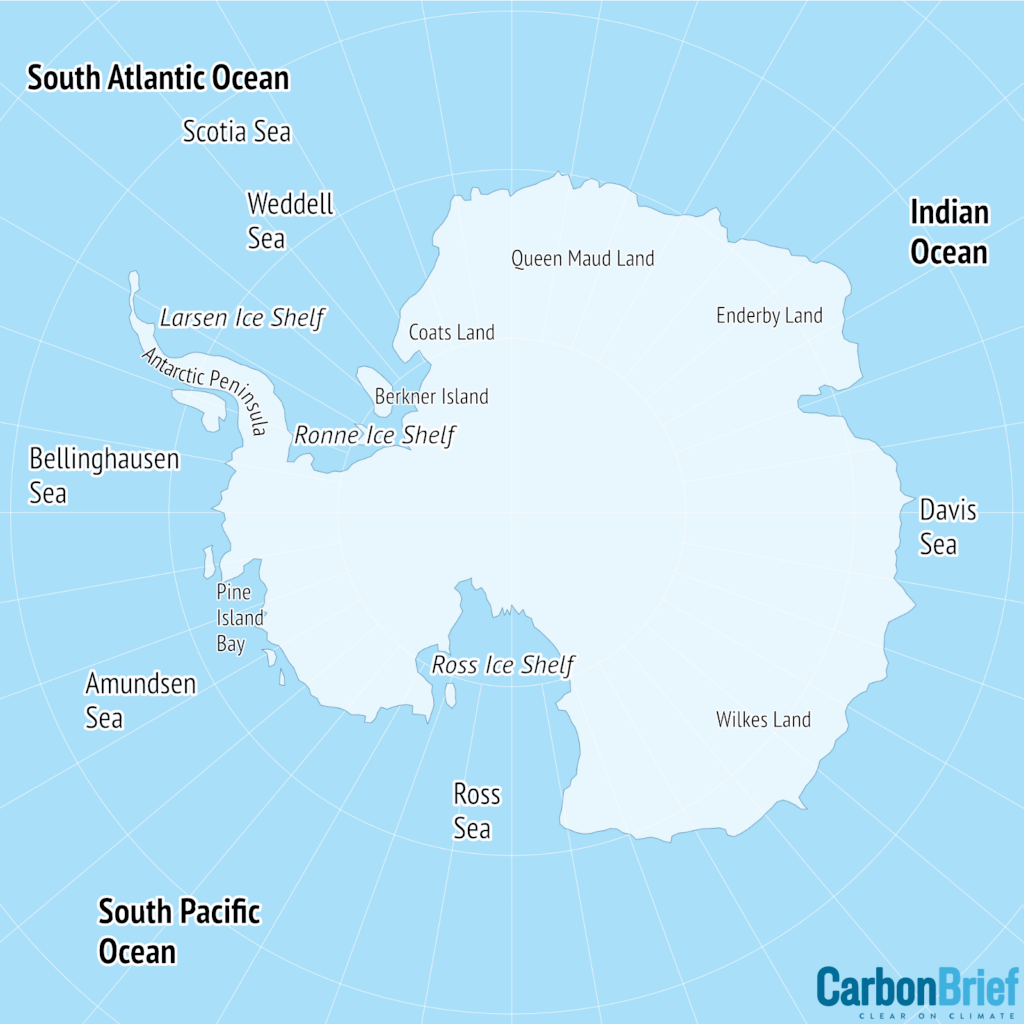
The decline in Antarctic ice is not uniform; it is a complex mosaic shaped by atmospheric pressure and wind patterns. Dr. Eayrs notes that the regional distribution of ice "changed substantially during the growth season."
Earlier in the year, in April, the Bellingshausen Sea remained almost entirely ice-free, while the neighbouring Amundsen Sea bucked the trend by hosting more ice than usual. However, as the season progressed, atmospheric dynamics shifted. By late August, the Bellingshausen Sea deficit had largely recovered, but the ice had retreated significantly in the Amundsen Sea and across vast swaths of East Antarctica. This volatility suggests that the Antarctic ecosystem is highly sensitive to shifting weather patterns, which are themselves being influenced by a warming global climate.
The Arctic Minimum: A "New Normal" of Decline
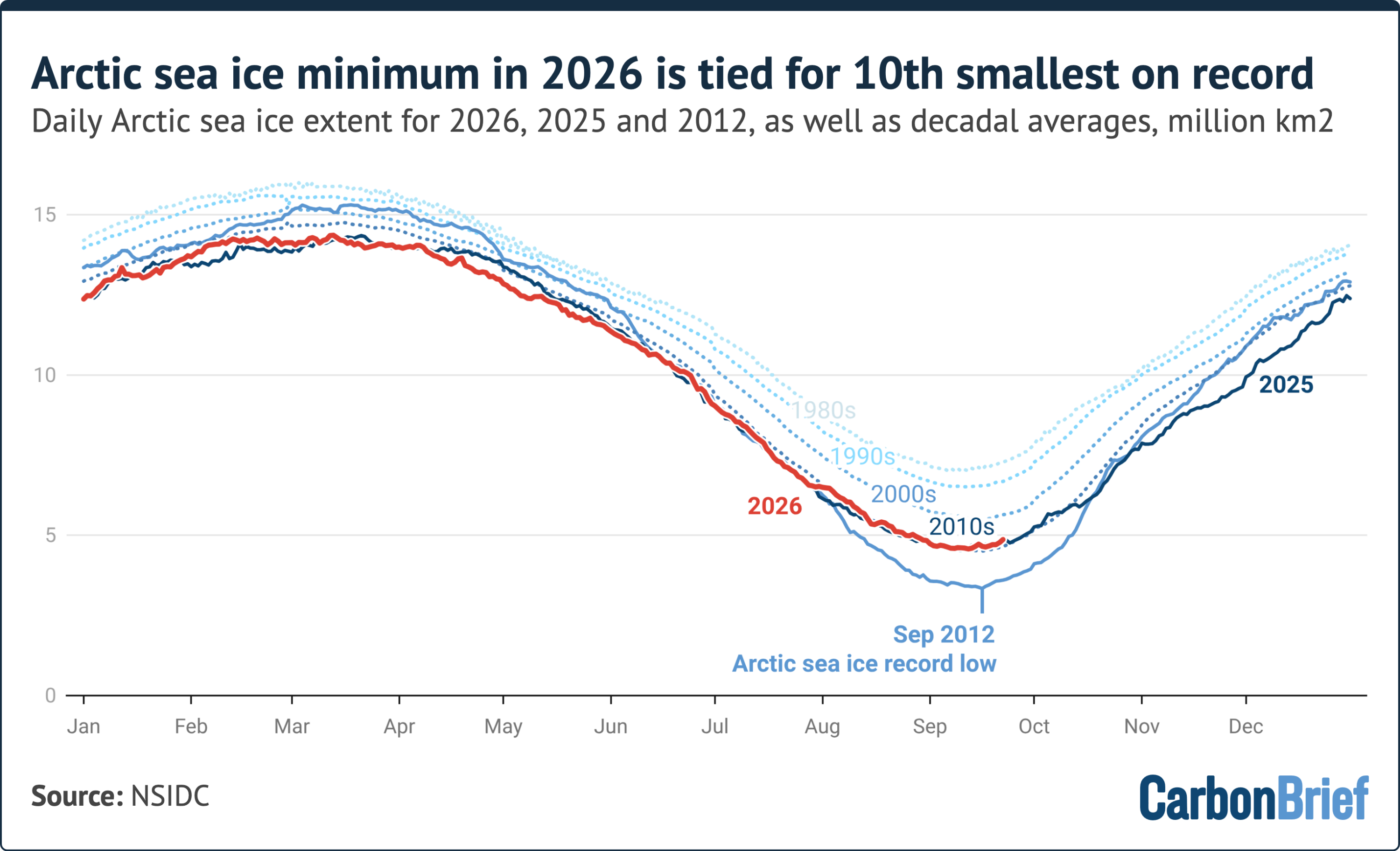
While the South Pole faces a potential "structural shift," the North Pole is locked in a long-term downward trajectory. On September 12, Arctic sea ice reached its annual summer minimum, settling at 4.60 million km². This year ties with 2008, 2010, and 2025 as the 10th-lowest extent in the satellite record.
While tying for the 10th lowest might seem like a reprieve, scientists warn against complacency. The last 20 years have seen the lowest 20 Arctic sea ice extents in the entire 48-year satellite record. "Human-caused climate change has reduced Arctic sea ice cover and thickness, so the region is fundamentally different compared to a few decades ago," says Dr. Roach. "This minimum is not record-setting, but it is still lower than any sea ice minimum before 2007."
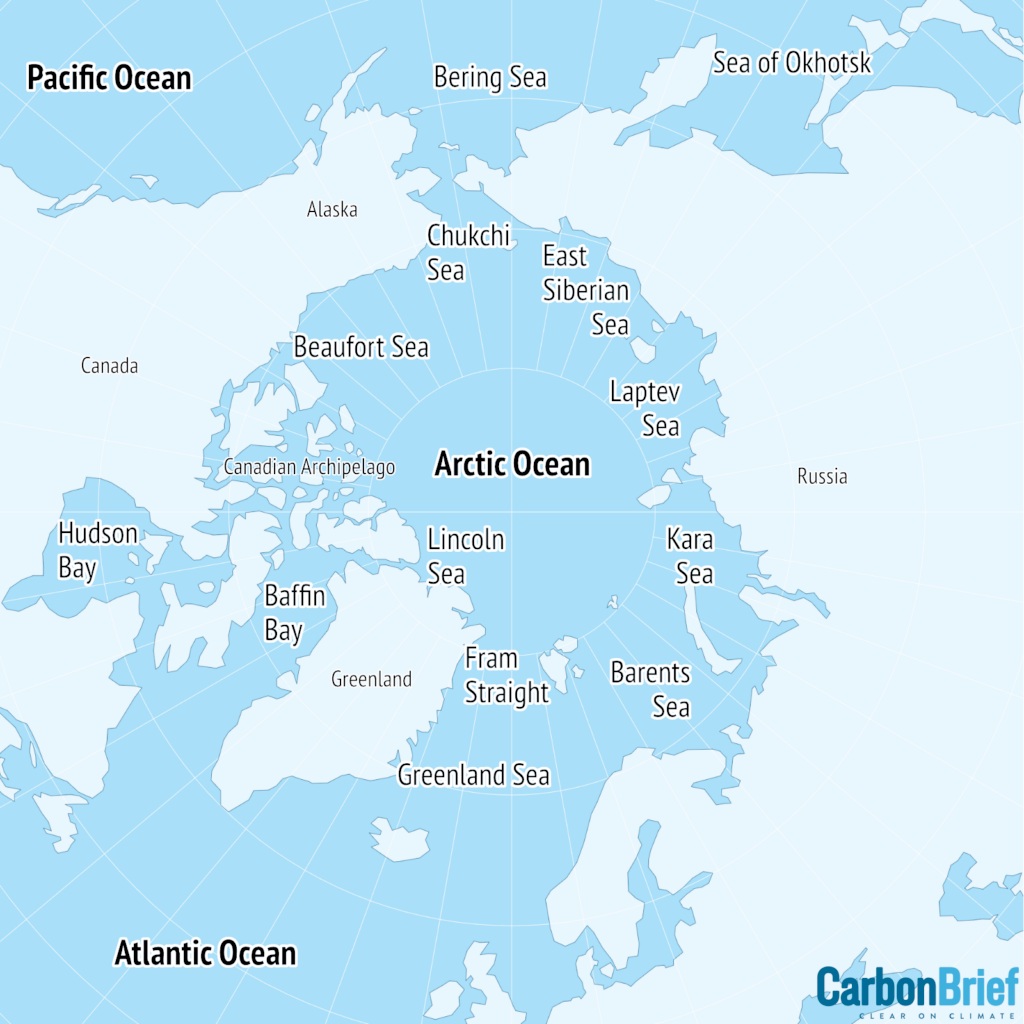
The factors driving this are becoming increasingly complex. In 2026, the Arctic experienced a "tale of two seas." The Atlantic side of the Arctic saw an extreme summer, with the Barents Sea suffering its earliest melt-out on record. This was driven by persistent heatwaves; in western Siberia, temperatures remained more than 5°C above the 1981-2010 average for much of the summer, a pattern that extended over the Kara Sea and accelerated ice loss.
Conversely, the Pacific side—specifically the Beaufort and Chukchi seas—experienced cooler, cloudier conditions caused by low-pressure systems in the central Arctic. This delayed the start of the melt season by over two weeks. Dr. Zack Labe of Climate Central notes that this "absence of a new record does not mean the ice cover is becoming more resilient. Local weather patterns play a huge role in year-to-year variability, even as the long-term trend remains clearly downward."
A Data Crisis in Polar Science
As researchers attempt to decode these trends, they are facing a significant institutional hurdle. Scientists have historically relied on the Pan-Arctic Ice Ocean Modeling and Assimilation System (PIOMAS) to track ice thickness, a critical metric for understanding the health of the ice pack.
However, in March 2026, the US National Oceanographic and Atmospheric Administration (NOAA) terminated a global air pressure dataset that was essential to the PIOMAS model. This has brought updates to the series to a halt. The PIOMAS team has indicated that finding alternative data will require "considerable effort and time," and they remain uncertain if they have the funding or the resources to resume production of the timeseries.
This loss of data comes at a critical juncture. "We need more data and observations of other sea-ice metrics, like ice thickness," Dr. Labe emphasizes. "This would give us better insight into the overall condition of the ice pack, especially during years like 2026 when the ice is very fragmented."
Implications: The Road Ahead
The implications of these trends are far-reaching. The loss of sea ice triggers a feedback loop: as white ice is replaced by dark, open ocean, the planet absorbs more solar radiation, which in turn accelerates further warming and melting.
Beyond the climate impacts, the uncertainty regarding Antarctic sea ice poses a significant challenge for scientists. The "structural shift" theory remains a subject of intense debate. Is the Southern Ocean responding to a delayed reaction from greenhouse gas emissions, or are we seeing the influence of complex, decadal ocean-atmosphere cycles that we do not yet fully understand?
For the Arctic, the trajectory is clearer, though the pace of change remains variable. The region is increasingly characterized by "thinning" ice—less able to survive the summer melt, regardless of whether a specific year hits a record minimum.

As the world continues to debate climate policy, the polar regions remain the ultimate bellwether. The scientific community is calling for increased investment in observation, particularly in satellite imagery and thickness monitoring, to ensure that we are not flying blind as the cryosphere undergoes its most significant transformation in human history. Whether it is the "very alarming" winter in the Arctic or the persistent, puzzling lows of the Antarctic, the data suggests that the polar environment is no longer the stable, predictable entity it once was.
As we look toward 2027 and beyond, the focus will remain on whether these recent lows in the Southern Hemisphere are a transient dip or the beginning of a rapid, irreversible decline. For now, the world’s researchers are watching the maps, measuring the melt, and waiting for the next cycle of data to reveal the future of the poles.


 Laily UPN
 Lina Hope
 Iffa Jayyana
 Rifan Muazin
 Suro Senen
 Lina Irawan