
 Dwi Wanna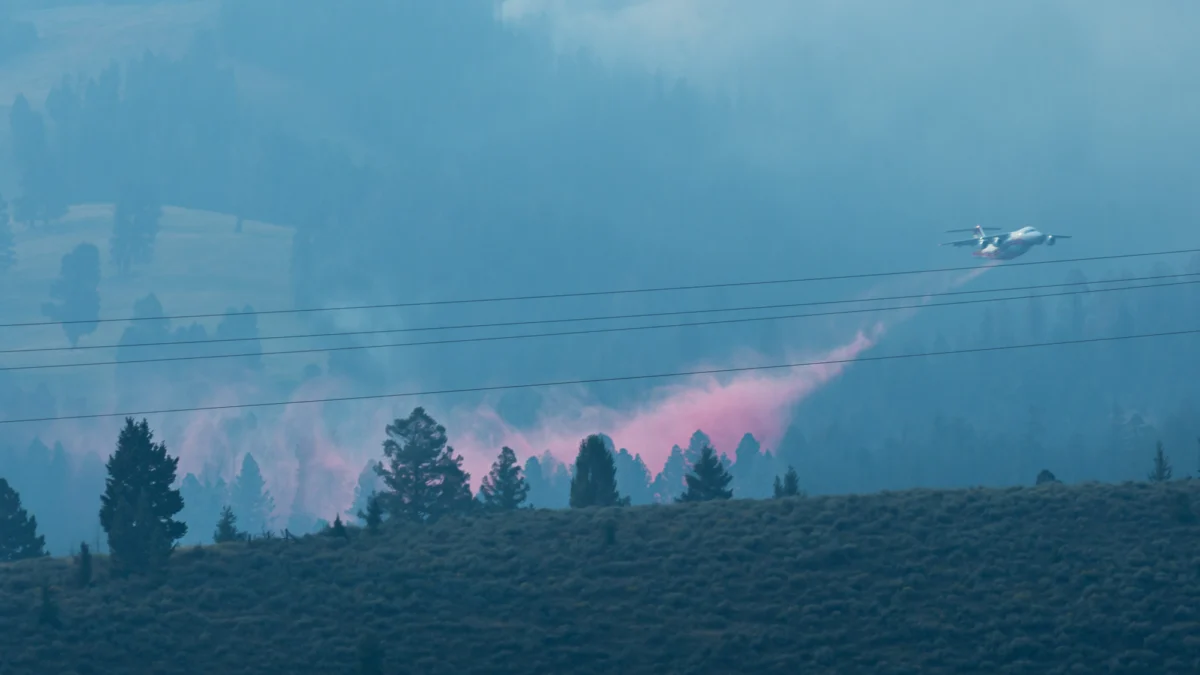
As the climate crisis accelerates the frequency and intensity of wildfires across the American West, the traditional "boots on the ground" approach to firefighting is undergoing a radical technological transformation. In the rugged, fire-scarred terrain of southwestern Montana, where the Sand Creek Fire has raged since early August, fire managers have begun to rely on a sophisticated aerial ally: unmanned aircraft systems (UAS).
The use of drones to scout smoldering embers in treacherous, inaccessible terrain marks a pivotal moment in wildfire management. No longer mere novelties or auxiliary observation tools, these robotic systems—paired with the burgeoning power of artificial intelligence—are being integrated into the core tactical architecture of federal wildfire response.
The Evolution of Aerial Support: From Observation to Action
For decades, the wildfire suppression playbook was defined by human labor and manned aircraft. Firefighters navigated steep slopes, often working under the canopy of fire-weakened trees that posed constant threats of collapse. Aerial support was limited to large air tankers dropping retardant and helicopters providing water, both of which are tethered to strict safety parameters, visibility requirements, and the physical limits of human pilots.
Today, the U.S. Forest Service (USFS) is pivoting toward a hybrid model. Drones are now routinely deployed to map fire perimeters with surgical precision and identify hotspots that are invisible to the naked eye. According to Forest Service press officer Meredith Hollowell, these tools have become "critical" for real-time situational awareness. By providing infrared imagery, drones allow incident commanders to make tactical decisions based on data rather than just intuition, effectively keeping personnel out of the most dangerous sectors of a burn zone.
The role of the drone has expanded beyond passive monitoring. During "aerial ignition operations"—a process where fire managers intentionally burn vegetation to create control lines—unmanned aircraft are increasingly used to perform the work. This reduces the need for human pilots to fly low-level, high-risk missions over dense smoke and turbulent air, significantly lowering the risk of aviation accidents.
A Chronology of Technological Integration
The transition toward automated firefighting did not happen overnight. It is the result of years of testing and incremental adoption by federal agencies, including the Federal Aviation Administration (FAA) and the Department of Agriculture.
- The Early Years (2010–2018): Initial testing focused on basic mapping and situational awareness. Drones were used sparingly to augment human reconnaissance.
- The Proliferation Phase (2019–2023): As drone technology became more affordable and robust, federal agencies began formalizing the use of UAS. Specialized roles were created, including dedicated UAS pilots, data specialists, and module leaders, standardizing how drone resources are ordered and deployed during emergencies.
- The AI and Autonomy Shift (2024–Present): The current era represents a leap into machine learning and ground-based robotics. In June of this year, the US Forest Service conducted field trials in Georgia with autonomous ground vehicles, testing their ability to haul heavy equipment—including water, medical supplies, and hand tools—across terrain that would leave traditional vehicles immobile.
Supporting Data: Testing the Limits of Robotic Utility
The shift toward autonomous ground vehicles is perhaps the most significant logistical development in recent years. During the June trials, researchers tested robots designed to carry payloads of up to 800 pounds. These machines were put through their paces on rocky, uneven, and steep terrain, replicating the brutal conditions firefighters encounter on the front lines.
The objective is not to replace the firefighter, but to extend their capability. By offloading the physical burden of hauling firehose packs and heavy equipment to autonomous platforms, agencies hope to reduce fatigue-related injuries and allow crews to reach the fireline with more energy and resources.
"While the technology is not yet ready for routine, wide-scale wildfire operations, it shows immense promise," noted Charlie Gray, a Forest Service district fire management officer. "The goal is to mitigate the physical toll on our crews while simultaneously increasing the efficiency of our logistics chain."
Artificial Intelligence: The New "Brain" of the Fireline
Perhaps the most ambitious frontier in this technological shift is the application of Artificial Intelligence to fire behavior modeling. Currently, incident commanders rely on a blend of weather reports, topographical maps, and decades of personal experience to predict where a fire will move next. While this human expertise is invaluable, it is limited by the speed at which humans can process complex environmental data.
A recent study published in the International Journal of Wildland Fire highlights a potential path forward. Phinehas Lampman, a researcher at the University of Idaho, has developed a system that uses drone-collected thermal-infrared imagery to train machine learning models. By analyzing three core metrics—rate of spread, fireline intensity, and radiative power—these models can generate high-resolution predictions of how a fire will evolve in the short term.
Lampman, who spent seven years as a "hotshot" firefighter, understands the stakes better than most. "Most incident commanders rely on their vast experience," Lampman explains. "But there are times when visibility is zero and manned aircraft are grounded due to smoke. Drones can fly through that. They don’t need a clear horizon to gather the data that these models require to function."
The integration of these systems could eventually lead to a "decision-support" revolution, where commanders receive live, AI-generated predictions that update every few minutes, far outpacing the current speed of manual mapping.
Implications for Public Health and Safety
The implications of this technological leap extend far beyond the fire line. One of the most promising areas of research is the intersection of drone-collected data and smoke modeling.
Leda Kobziar, a professor of wildland fire science at the University of Idaho, is currently researching how drones can provide real-time data on the relationship between fire behavior and smoke emissions. By analyzing the composition of smoke at the source, researchers hope to build AI models that can accurately predict not just the path of smoke, but its chemical and microbial content.
This would provide public health officials with granular data, allowing them to issue specific, localized health warnings to downwind communities rather than relying on broad, regional air quality alerts. It is a critical development for a future where wildfire smoke is becoming a permanent seasonal fixture for millions of Americans.
Official Responses and the Path Ahead
Federal agencies remain optimistic but cautious. The transition to AI-assisted, drone-heavy firefighting is subject to strict regulatory oversight to ensure the safety of both the public and the firefighters themselves. The Forest Service acknowledges that while the technology is still in the "proof of concept" phase for many applications, the long-term goal is full integration.
"Looking ahead, advances in AI-enabled UAV systems, improved fire-behavior modeling, and the expanded use of decision-support tools are expected to fundamentally alter our efficiency," Hollowell stated.
However, the technology does not exist in a vacuum. As the Forest Service integrates these systems, it faces the challenges of training a workforce to operate high-tech robotics in a low-tech, high-pressure environment. There is also the matter of budget and infrastructure—the cost of deploying drone fleets, the need for robust data transmission in remote wilderness, and the maintenance of autonomous vehicles all require significant long-term investment.
Despite these hurdles, the trajectory is clear. The "robotic revolution" in wildfire management is no longer a distant theoretical goal; it is a developing reality on the ground in places like Montana. By combining the courage of human firefighters with the tireless, data-driven precision of drones and AI, the agencies responsible for protecting our wildlands are crafting a new, more resilient response to an era defined by fire.
The fire of the future will be met not just with water and axes, but with the combined power of human experience and machine intelligence, working in tandem to hold the line in an increasingly volatile climate.


 Laily UPN
 Basiran
 Neng Nana
 Iffa Jayyana
 Raul Delapena Setiawan
 Rifan Muazin
 Asro
Asro