
 Lina Hope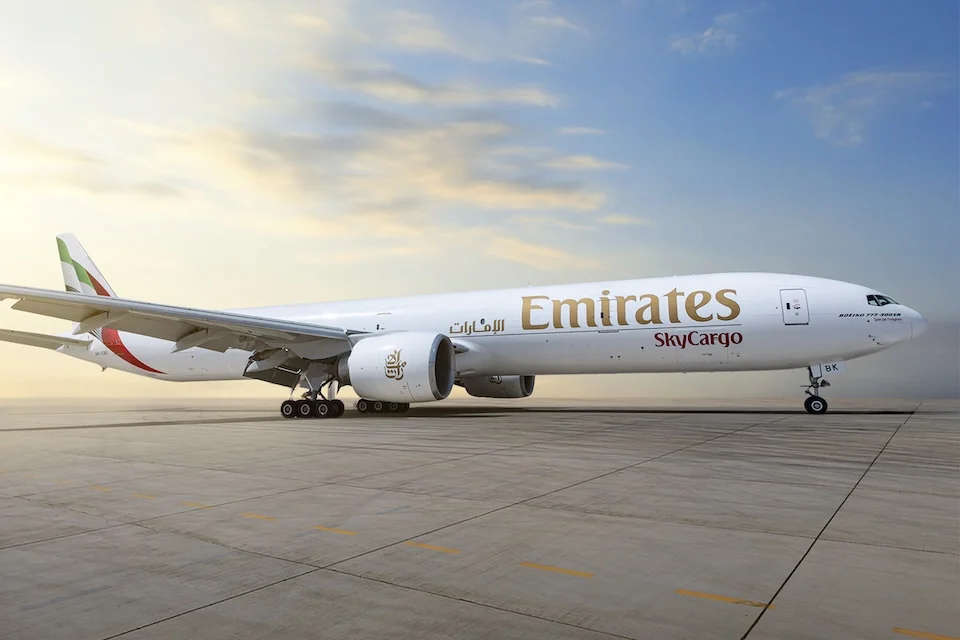
Executive Summary: A New Corridor of Connectivity
Emirates SkyCargo, the freight division of Dubai’s flagship airline, has officially cemented its status as a critical artery for South American trade. Following an aggressive expansion of its freighter network earlier this year, the carrier has reported double-digit percentage volume increases across its key South American markets. By deploying seven additional weekly freighter flights, Emirates has successfully bridged the logistical gap between the resource-rich economies of Argentina, Brazil, Colombia, and Ecuador and the global marketplace.
This strategic pivot has yielded significant results in the first half of the 2025/26 financial year, with export volumes soaring in regions that rely heavily on the rapid, temperature-controlled transit of perishable goods. From fresh-cut flowers to premium proteins, the surge in capacity has transformed Emirates SkyCargo into the preferred partner for South American exporters looking to penetrate markets in Europe, the Middle East, and Asia.
Chronology of Expansion: Scaling the Skies
The current success story is the culmination of a phased operational rollout that began in early 2026. The carrier’s decision to bolster its presence in the region was not incidental but rather a calculated response to burgeoning demand in specialized commodity sectors.
- March 2026: Emirates SkyCargo initiated its expansion by launching weekly freighter operations from Buenos Aires, Argentina. This move was a direct response to the increasing demand for high-quality perishable exports from the Southern Cone.
- May 2026: Recognizing the critical need for flower transport capacity, the airline introduced an additional weekly freighter flight out of Bogotá, Colombia.
- July 2026: The frequency from Buenos Aires was tripled to three weekly flights, signaling a permanent commitment to the Argentinian market.
- Mid-2026 Fleet Milestones: Throughout this period, the logistical capacity was underpinned by a massive fleet upgrade. The carrier took delivery of seven Boeing 777 production freighters starting in March 2026, followed by the successful deployment of its first Boeing 777-300ERSF—a passenger-to-freighter conversion that signaled a new era of efficiency.
By July 2026, the carrier had successfully expanded its global network of freighter destinations from approximately 40 to over 60, with the South American additions serving as the crown jewel of this growth.
Supporting Data: By the Numbers
The statistical impact of these operational changes is profound. Since April 2026, Emirates SkyCargo has transported more than 22,000 tonnes of export cargo from South American markets—a robust 18% increase over the same period in the previous financial year.
Regional Breakdown
- Argentina: The standout performer, recording a 57% year-on-year growth. Since April 2024, the carrier has moved approximately 5,000 tonnes of goods, including salmon, fresh fruits, and high-grade meat products.
- Brazil: Benefiting from four weekly flights out of São Paulo, the region saw a 22% growth in export volumes. The route has become essential for the movement of diverse commodities across Emirates’ vast international network.
- Colombia: Exports from Bogotá increased by 18%, largely driven by the high demand for floral exports that require the precise climate control for which Emirates is known.
- Ecuador: Demonstrating a 14% growth, the Quito-Amsterdam route has become a powerhouse. Currently flying six times a week, the airline offers a capacity of 600 tonnes per week, with flowers accounting for over 90% of the total uplift. In the 25/26 financial year alone, nearly 24,000 tonnes of flowers were transported, ensuring the delicate blooms arrive at the world’s largest flower market in Amsterdam in peak condition.
Official Perspectives: The Strategic Vision
Badr Abbas, Divisional Senior Vice President at Emirates SkyCargo, emphasized that the expansion is not merely about adding flights, but about facilitating the economic vitality of emerging hubs.
"South America is a dynamic emerging hub for exports across a range of sectors," Abbas noted. "From high-quality food products to the world’s most sought-after fresh flowers, these sectors rely on the fast and reliable air cargo connectivity that Emirates provides. Our ability to bridge these distances means that South American producers are no longer geographically isolated; they have a direct, high-speed line to the world’s most demanding consumers."
Abbas highlighted that the 18% overall volume growth serves as a testament to the carrier’s commitment to precision logistics. "We have moved over 22,000 tonnes since April, and every tonne represents a producer who now has greater access to international markets," he added.
Fleet Modernization: The Engine of Growth
The expansion of the South American network would have been impossible without a significant infusion of new, high-capacity aircraft. The carrier has focused heavily on the Boeing 777 platform, which is renowned for its reliability and range.
The acquisition of seven Boeing 777 production freighters since March 2026 has provided the operational flexibility required to maintain these high-frequency routes. Furthermore, the introduction of the first Boeing 777-300ERSF—converted from an Emirates passenger jet—marks a significant milestone in sustainable fleet management, allowing the airline to repurpose assets while increasing cargo capacity.
Looking ahead, the carrier is on a clear trajectory of growth. By the end of March 2027, Emirates SkyCargo expects to operate a fleet of 23 dedicated freighter aircraft. This fleet expansion is the cornerstone of their strategy to reach more destinations and offer higher frequencies to key trade partners like those in South America.
Implications for Global Trade
The ripple effects of this increased connectivity are significant. For the local economies in Argentina, Brazil, Colombia, and Ecuador, the reliable air bridge means:
- Reduced Wastage: For perishable goods like salmon and flowers, time is the greatest enemy. The increased frequency of flights reduces the time from harvest to market, significantly cutting down on spoilage and increasing the profit margins for local exporters.
- Market Diversification: With a direct connection to the Emirates network, South American exporters are not just shipping to traditional markets. They are gaining access to the Middle East, Asia, and North Africa, effectively hedging their bets against local market fluctuations.
- Enhanced Competitive Edge: By positioning themselves as a reliable, high-volume partner, South American producers can now compete more aggressively with global suppliers. The reliability of Emirates’ schedule allows for "just-in-time" supply chains that were previously impossible for these regions.
As Emirates SkyCargo continues its upward trajectory, the partnership between the Dubai-based carrier and the South American continent appears set for a long-term expansion. The shift from 40 to 60+ global freighter destinations in just a few months is a clear indicator that the world of air cargo is undergoing a fundamental change, with South America emerging as a pivotal player in the global supply chain. For the producers in the Andes and the plains of Argentina, the sky is no longer the limit—it is the bridge to the future.

 Basiran
 Neng Nana
 Iffa Jayyana
 Raul Delapena Setiawan
 Rifan Muazin
 Asro
Asro