
 Nila Kartika Wati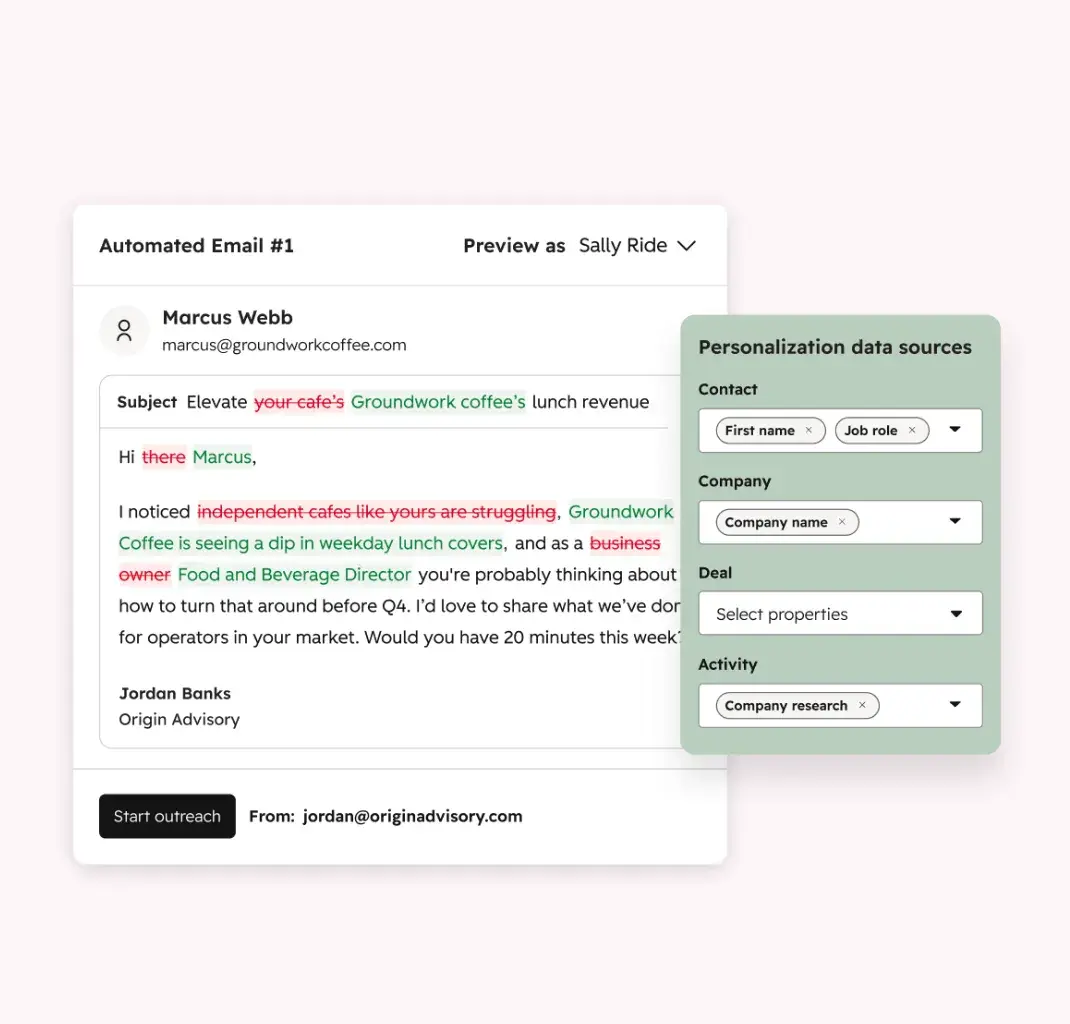
The landscape of digital marketing is undergoing a seismic shift. For years, marketing teams have been caught in a paradox: as the sophistication of customer data and the number of available communication channels have grown, so too has the burden of manual labor. Digital marketing has historically been one of the most process-intensive functions in business, where the "campaign tax"—the hours spent building audiences, configuring nurture sequences, drafting follow-up emails, and monitoring performance—often consumes more time than the actual strategic and creative work.
Today, that paradigm is being challenged by the emergence of AI agents. Unlike the rigid, rules-based automation of the past, these autonomous software programs are designed to plan, decide, and execute complex workflows independently. By delegating the mechanical heavy lifting to AI, marketing teams are moving away from perpetual "maintenance mode" and toward a more agile, high-impact model of operation.
Main Facts: The Shift from Task Execution to Strategic Oversight
At the core of this transformation is a fundamental distinction: traditional automation vs. AI agents. While traditional tools follow a linear, "if-this-then-that" script, AI agents are designed to handle multi-step objectives. They possess the capacity to interpret context, adapt to real-time data, and coordinate across disparate software tools without requiring human intervention at every juncture.
The primary benefit for marketing organizations is the reclamation of human capital. By offloading repetitive execution tasks—such as audience segmentation, sequence timing, and performance monitoring—marketers can pivot their attention toward the work that requires high-level human judgment, such as brand narrative, market positioning, and long-term strategy.
Key capabilities currently driving this shift include:
- Autonomous Workflow Orchestration: AI agents can handle the intricate configuration of enrollment triggers, branch logic, and wait steps.
- Dynamic Personalization: Leveraging CRM data to craft tailored messaging based on intent signals rather than just surface-level placeholders.
- Predictive Performance Monitoring: Constant, real-time surveillance of campaign health to catch anomalies before they escalate into pipeline-threatening issues.
Chronology: The Evolution of Marketing Automation
The trajectory of marketing efficiency has evolved through three distinct phases, leading to the current era of the AI agent.

Phase 1: The Manual Era (Pre-2010s)
Marketing execution was defined by human labor. Every email blast was manually scheduled, every list was segmented via spreadsheets, and performance tracking relied on periodic, manual reporting. Scalability was limited strictly by headcount.
Phase 2: The Rules-Based Automation Era (2010–2022)
The rise of Marketing Automation Platforms (MAPs) allowed for "fixed-sequence" workflows. Teams could build pre-programmed paths, but these systems remained brittle. If a campaign needed to change based on a new market trend, a human had to manually reconfigure the entire workflow, often resulting in significant technical debt.
Phase 3: The AI Agent Era (2023–Present)
We have entered a period where software agents, such as those integrated into HubSpot’s Breeze AI ecosystem, function as force multipliers. These agents possess the capability to "learn" from CRM engagement history and independently adjust campaign parameters. The focus has shifted from how to build a campaign to what the strategic goal of the campaign should be.
Supporting Data: Why "More Headcount" is No Longer the Answer
Industry research consistently highlights a growing "execution gap." As the number of channels (social, email, SMS, web, paid search) increases, the complexity of managing a unified customer journey grows exponentially.
According to internal industry metrics, marketing teams spend approximately 60% of their time on operational maintenance—keeping campaigns running, fixing broken segments, and monitoring for deliverability issues. This leaves only 40% of the team’s capacity for creative strategy, A/B testing, and market research.
When companies attempt to bridge this gap through hiring, they often encounter diminishing returns due to the time required for onboarding and the inevitable increase in communication overhead. AI agents, by contrast, offer:

- Increased Velocity: Campaigns that previously took weeks to design and deploy can now be stood up in hours.
- Granular Personalization: Instead of one-size-fits-all messaging, AI agents allow for the creation of 5–10 variations of a campaign, tailored to specific personas, which studies show can improve conversion rates by up to 25–40%.
- Risk Mitigation: Automated monitoring reduces the "Time to Detection" for performance issues, preventing the loss of sender reputation or wasted ad spend that typically occurs during the wait for a weekly manual report.
Official Perspectives: The Role of Intelligence in Execution
Industry leaders emphasize that AI agents do not replace the marketer; they empower them to operate at a higher level.
"The goal of AI in marketing isn’t to replace the strategist, but to remove the ‘execution tax’ that prevents great strategies from ever being launched," says a spokesperson for the HubSpot product team. By using tools like the HubSpot Campaign Agent, teams are finding that they can maintain brand consistency across complex workflows without needing a massive operations team to monitor every click.
The consensus among analysts is that the future of marketing is "Agentic." As these systems become more integrated with the CRM, the "source of truth" for customer data becomes the engine for the campaign itself. This ensures that the messages being sent are not only timely but also contextually relevant to the contact’s specific journey stage.
Implications: The Future of the Marketing Team
The rise of AI agents has profound implications for how marketing departments will be structured in the coming years.
The Rise of the "Marketing Architect"
As execution becomes automated, the skill set required for a marketing manager will shift. The ability to write an email will become less important than the ability to "prompt" an AI agent to build a sequence that aligns with a specific brand voice. We are seeing the rise of the Marketing Architect—a professional who designs the systems and logic that agents execute.
The Death of "Maintenance Mode"
Perhaps the most significant implication is the end of the "maintenance mode" cycle. Teams are no longer tethered to their computers on weekends or holidays to ensure that a nurture sequence is triggering correctly. AI agents provide the stability that was once only possible through constant human oversight.

Data as the New Competitive Advantage
Because AI agents rely on CRM data to function, the quality of a company’s database will become the ultimate competitive advantage. Companies with clean, well-organized, and enriched data will see significantly higher performance from their AI agents than competitors with "dirty" or siloed data.
Conclusion: Scaling Strategy
The constraint on growth for most marketing teams has never been a lack of creativity or a lack of ideas. The constraint has been time. By shifting the execution load to AI agents, organizations are finally breaking the ceiling that limited their output. As we move further into this era, the most successful teams will be those that embrace these agents as digital colleagues, delegating the repetitive, mundane, and time-consuming tasks to software, and reserving their human brilliance for the high-level strategy that truly drives growth.
The era of manual campaign management is ending. The era of the autonomous marketing team has begun.

 Suro Senen
 Raul Delapena Setiawan
 Laily UPN
 Iffa Jayyana
 Rifan Muazin
 Lina Hope
 Lina Irawan