
 Basiran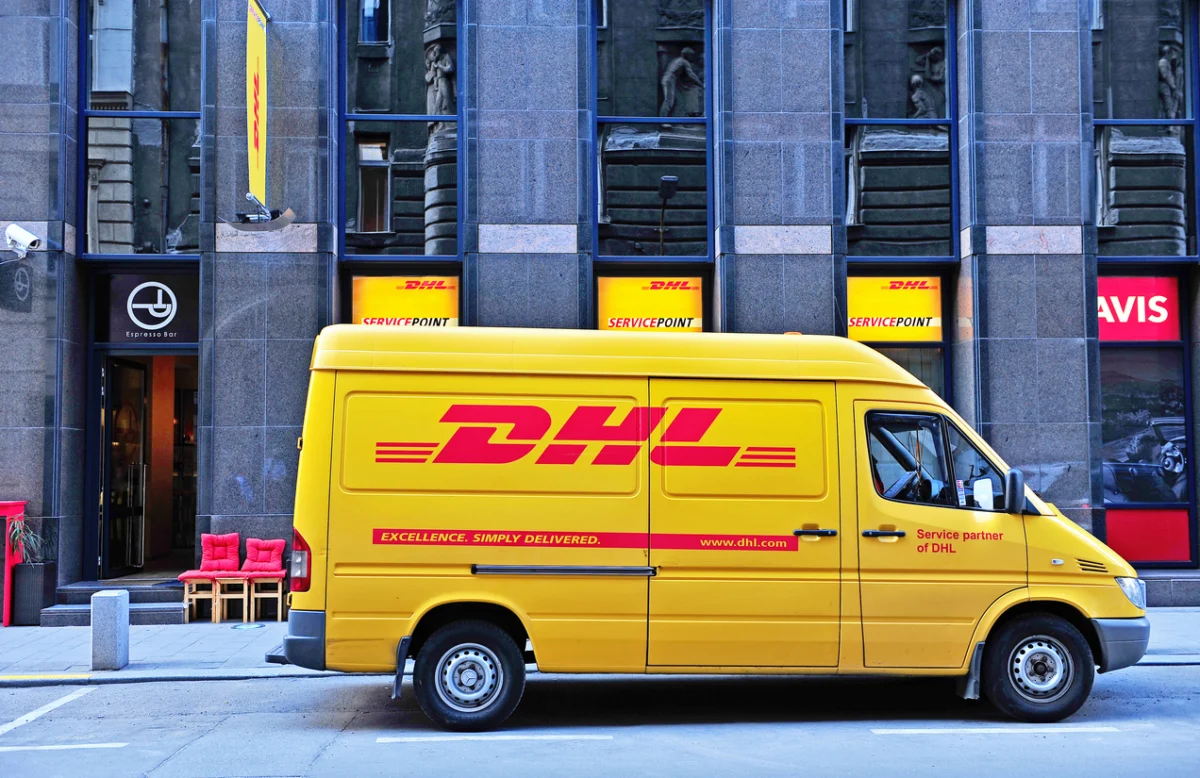
In a definitive shift in its European logistics strategy, DHL eCommerce has signaled that Eastern Europe is the new frontier for its expansion efforts. Following a series of tactical consolidations in the West and South, the logistics giant is now actively seeking to acquire parcel delivery companies in the East to solidify its cross-border capabilities. According to Pablo Ciano, CEO of DHL eCommerce, the region is now the focal point for the division’s acquisition strategy as it works toward a bold target: doubling its annual turnover within the next five years.
The Strategic Shift: From Western Consolidation to Eastern Growth
For years, DHL eCommerce’s European strategy was defined by filling operational gaps in mature markets. By merging its UK parcel operations with Evri and establishing a strategic partnership with the Portuguese postal operator CTT to cover the Iberian Peninsula, the company successfully optimized its presence in the West.
However, as these markets reach a state of relative operational maturity, DHL has shifted its gaze toward the untapped potential of Eastern Europe. In a recent interview with the German logistics publication DVZ, Pablo Ciano clarified that the company views the region as ripe for investment. The goal is to build a seamless, high-density network that bridges domestic delivery capabilities with international cross-border logistics. By integrating local players, DHL aims to provide a unified service level that rivals the efficiency currently enjoyed by customers in Germany or the Benelux region.
Chronology of Expansion: Key Milestones
The current push into Eastern Europe is not an isolated incident but the latest chapter in a broader European transformation. The timeline of recent moves illustrates a coherent, multi-year plan:
- 2024 (Early): DHL eCommerce strengthens its presence in Southern Europe, formalizing a partnership with CTT in Portugal and Spain to streamline cross-border parcel movements.
- 2024 (Mid-Year): A significant joint venture is launched in Italy with Poste Italiane, focusing on the proliferation of parcel lockers to meet the rising demand for out-of-home delivery solutions.
- July 2025: DHL announces the landmark acquisition of Venipak, a major Baltic logistics player. This move, currently pending regulatory approval, marks the most significant step in the company’s Eastern European roadmap.
- August 2025: Following the Venipak announcement, reports highlight record-breaking revenue for the Baltic firm, validating DHL’s choice of a high-growth acquisition target.
- Ongoing (2025-2026): DHL continues to monitor potential acquisition targets in Eastern Europe, seeking companies that possess robust domestic delivery infrastructure and existing locker networks.
The Venipak Acquisition: A Template for Integration
The agreement to acquire Venipak serves as a blueprint for how DHL intends to operate in emerging markets. Venipak provides a comprehensive footprint in Lithuania, Latvia, and Estonia—countries where DHL previously lacked a deep, native last-mile delivery network.
Venipak brings to the table approximately 800 parcel lockers, a widespread collection point network, and a mature domestic delivery infrastructure. For DHL, the objective is to fold these local assets into its international backbone. By connecting Venipak’s local infrastructure to DHL’s global logistics technology, the company plans to offer merchants in the Baltics a frictionless path to the rest of the world, while simultaneously allowing international retailers to penetrate the Baltic market with ease.
Supporting Data: The Engine of Growth
The necessity for this expansion is underscored by impressive growth metrics within the DHL eCommerce division. Ciano noted that the company’s cross-border business is currently expanding at a rate of 15 percent per year. This growth is bolstered by the development of new, dedicated routes between Europe and the Americas, highlighting that the strategy is not limited to intra-European trade.
Furthermore, the surge in the "second-hand economy" is providing a massive tailwind for parcel-point services. DHL reports that volumes handled through its parcel shops and lockers are surging by roughly 50 percent annually. This is a critical demographic shift; unlike traditional e-commerce, which focuses on business-to-consumer (B2C) deliveries, the second-hand market relies on consumer-to-consumer (C2C) exchanges.
The Vinted Effect
The rise of platforms like Vinted—which reported a staggering 10.8 billion euros in Gross Merchandise Value (GMV) for 2025, a 47 percent increase year-on-year—illustrates why infrastructure investment is essential. These platforms connect buyers and sellers across borders, creating a unique logistics challenge: the need for reliable, cost-effective return and collection points. DHL’s recent expansion of its partnership with Vinted in Germany, which simplifies the process of using DHL lockers for both sending and receiving, is a direct response to this demand.
Official Responses and Strategic Vision
In his discussions with DVZ, Pablo Ciano emphasized that the goal to double revenue—taking the division from 6.9 billion euros in 2025 to over 13 billion euros by 2030—is a "strategic ambition" rather than a rigid forecast. This distinction is vital; it frames the company’s actions not as a desperate scramble for size, but as a deliberate pursuit of scale to support long-term profitability.
"We are building a network that makes cross-border e-commerce as easy as domestic trade," Ciano suggested. The focus is on the experience of the sender and receiver. By controlling the parcel point network, DHL is effectively hedging against the rising costs of "last-mile" home deliveries, which remain the most expensive and environmentally taxing part of the logistics chain.
Implications for the Logistics Landscape
The implications of DHL’s aggressive expansion are threefold:
1. Market Consolidation
As DHL snaps up regional leaders like Venipak, smaller, independent regional players in Eastern Europe may find it increasingly difficult to compete. This creates a trend toward industry consolidation, where only those with the capital to invest in sophisticated locker networks and international software integrations will survive.
2. The Rise of "Out-of-Home" Logistics
The pivot toward parcel lockers and collection points is a permanent change in consumer behavior. By prioritizing these locations, DHL is essentially decentralizing its logistics hubs. This reduces the pressure on residential delivery routes and aligns with the sustainability goals of the European Union, as delivery vans can drop off dozens of parcels at a single locker bank rather than making multiple stops at individual households.
3. Cross-Border Friction Reduction
For the average consumer in Warsaw, Tallinn, or Bucharest, this means a significantly higher standard of service. As DHL integrates its Eastern European acquisitions, the "black box" of cross-border shipping—where tracking information often goes dark once a package crosses a national border—will become a thing of the past. A unified digital interface, combined with physical control over the local delivery network, allows for end-to-end transparency.
Conclusion: A High-Stakes Future
DHL eCommerce is betting heavily on the idea that the future of logistics lies in connectivity. By targeting Eastern Europe, the company is securing the final pieces of its European puzzle. While the road to doubling revenue is paved with regulatory hurdles and the complexities of integrating disparate local companies, the data suggests that the market for both cross-border trade and the circular, second-hand economy is expanding rapidly enough to justify the gamble.
As DHL continues its search for new partners and acquisition targets in the East, the logistics industry will be watching closely. If the Venipak integration proves as successful as the company expects, it will likely serve as the definitive model for how a global logistics leader navigates the nuances of regional markets in an increasingly interconnected global economy. With its current momentum, DHL eCommerce is not just delivering parcels; it is architecting the backbone of the next generation of European e-commerce.

 Rifan Muazin
 Azzam Bilal Chamdy
 Laily UPN
 Iffa Jayyana

 Suro Senen
 Lina Hope
 Lina Irawan