
 Suro Senen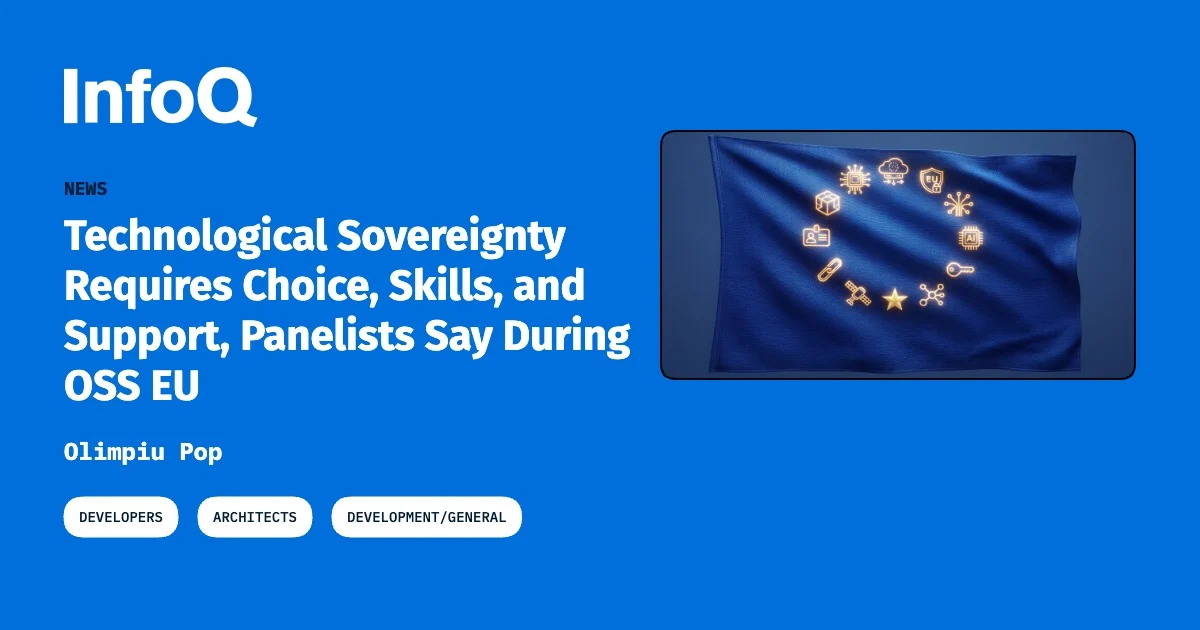
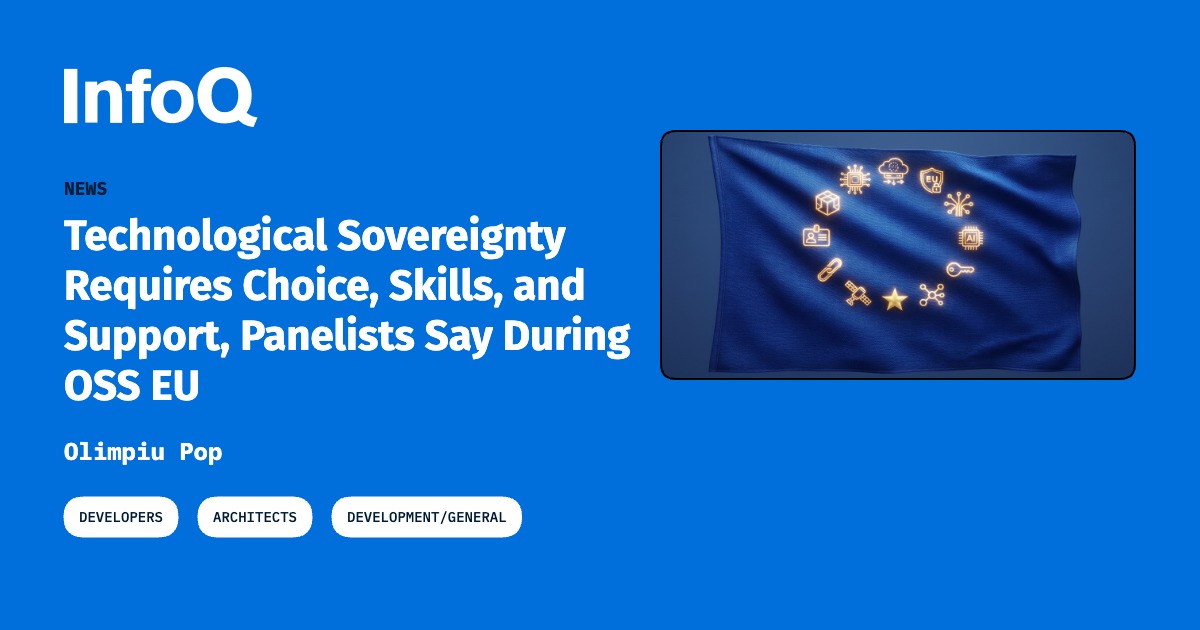
In the high-stakes arena of European digital policy, a consensus is emerging: true technological sovereignty is not found in isolation, but in the power of choice. During the recent Open Source Summit Europe in Prague, a distinguished panel of industry experts dismantled the prevailing myth that sovereignty requires the total rejection of global technology providers. Instead, they argued that Europe’s path to digital independence lies in cultivating credible alternatives, deep technical expertise, and a pragmatic approach to supply-chain management.
The Sovereignty Paradox: Defining the Goal
The discussion, moderated by Stephen Sopko of HyperFRAME Research, centered on the European Union’s evolving cloud sovereignty framework. This framework identifies eight critical pillars of autonomy, including legal jurisdiction, data sovereignty, AI control, operational stability, and supply-chain integrity.
The core question posed to the panel was deceptively simple: Which dependencies are truly existential, and which are merely tactical?
Jonathan Bryce, Executive Director of the CNCF and the Linux Foundation, opened the discourse by redefining the objective. "The most valuable thing with open source is the choice," Bryce noted. He contended that utilizing global giants like AWS or Azure is not inherently antithetical to sovereignty, provided an organization retains the technical agility to migrate or repatriate workloads. He pointed to Kubernetes as the gold standard for this "portable" architecture—a technology that allows workloads to move seamlessly between public clouds and private, on-premises infrastructure.
However, Paula Grzegorzewska of Linux Foundation Europe cautioned that portability is only as good as the skills behind it. "An alternative is useful only when switching is practical," she argued, noting that for government entities, the cost and expertise required to transition between proprietary ecosystems can be prohibitive, effectively creating a "vendor lock-in" that undermines sovereignty regardless of the underlying software’s open nature.
Chronology: From Code Access to Operational Control
The panel traced the evolution of the sovereignty debate, noting that the conversation has matured significantly over the last decade.
- Phase 1 (The Open Source Promise): Early discussions focused on the availability of source code. The assumption was that if code was open, it was inherently sovereign.
- Phase 2 (Operational Reality): Organizations realized that having the source code did not equate to having the operational capability. As Bryce pointed out, knowing how to run, secure, and monitor a stack is just as vital as owning the code. He cited OVHcloud as an example of an organization that understands that sovereignty is a service-delivery model, not just a license type.
- Phase 3 (The Hardware Frontier): The current focus has shifted toward hardware. Bryce recalled insights from colleagues in China, where the sovereignty discourse is heavily weighted toward semiconductor access and optical networking. The consensus: while software provides flexibility, hardware remains the ultimate "chokepoint."
- Phase 4 (The Regulatory Integration): We are now entering an era where policy (such as the EU Cyber Resilience Act) is attempting to codify these dependencies, treating complex software stacks as integrated products rather than disparate components.
Supporting Data: The Cost of "Free"
One of the most persistent misconceptions challenged during the summit was the notion that open source is a low-cost alternative to proprietary software. Thierry Carrez of Linux Foundation Europe argued that the "free" price tag often hides the "hidden tax" of sustained support.
When a government or enterprise adopts a large-scale project like OpenStack, the engineering effort required to maintain it often exceeds the cost of a commercial subscription. Carrez highlighted the case of Société Générale, the French banking giant, which was forced to build massive in-house expertise simply because the local ecosystem lacked the mature service providers necessary to support their specific implementation. Similarly, the French Ministry of Finance found that as its open-source footprint expanded, it was forced to seek external partners to manage the ballooning scope—an endeavor that proved challenging due to a local skills shortage.
This serves as a critical data point for European policymakers: investing solely in open-source development is insufficient. There must be a parallel investment in the "services layer"—the local companies that can package, support, and maintain these critical systems at scale.
Official Responses and Policy Implications
The discussion heavily featured the EU Cyber Resilience Act, which represents a regulatory shift in how software is viewed. Christopher "CRob" Robinson of the OpenSSF and Akrites emphasized that under the new regime, manufacturers bear significant responsibility for the entire supply chain. If a product contains open-source components, the vendor cannot simply wash their hands of the risks associated with those dependencies.
Carrez echoed this, noting that the Act correctly identifies that modern software is "assembled," not "boxed." By formalizing this, the EU is attempting to force vendors to perform better security due diligence.
The Sovereignty Framework: Strategic Levels
The panel proposed a hierarchy of assurance levels for cloud and AI, suggesting that sovereignty requirements should vary based on the sensitivity of the workload:
- Low-Sensitivity Workloads: Standard commercial cloud offerings are acceptable.
- Medium-Sensitivity Workloads: Use of confidential computing to ensure the host provider cannot access the data.
- High-Sensitivity Workloads: Full control over the entire supply chain, including the underlying hardware, is non-negotiable.
The Road Ahead: Building Bridges, Not Fortresses
As the panel drew to a close, the conversation shifted from the theoretical to the strategic. The consensus among the participants was that Europe must resist the temptation to retreat into a digital "fortress."
"It is naive to believe that a region of the world can be 100% sovereign," the panel concluded in a joint sentiment. The global nature of the internet, chip manufacturing, and open-source contribution bases makes total autarky impossible—and perhaps undesirable.
Instead, the panel proposed a three-pronged approach for Europe:
- Invest in Local Capabilities: Move beyond just funding code development. Funding should be directed toward creating a robust ecosystem of service providers capable of supporting mature open-source projects.
- Integrate Developers into Policy: Grzegorzewska urged that regulation cannot be drafted in a vacuum. Policymakers must engage directly with the engineering communities building these systems to ensure that laws like the Cyber Resilience Act don’t stifle innovation or create impossible compliance burdens.
- Cultivate Resilience through Contribution: Robinson argued that Europe’s strength lies in becoming a major contributor to global projects. By participating in projects like the OpenSSF or the CNCF, Europe gains a seat at the table, ensuring that the "global" technologies it relies on are built with European security and privacy standards in mind.
Conclusion
The Prague panel served as a sobering reminder that technological sovereignty is a marathon, not a sprint. The "fortress" mentality—trying to build everything from scratch—is a recipe for obsolescence. By focusing on maintaining strategic options, investing in local technical expertise, and playing an active role in the global open-source community, Europe can achieve a form of sovereignty that is both durable and competitive.
As Stephen Sopko aptly noted, the metaphor for the future should not be the walls of an ancient city, but the bridges that connect them. In the digital age, sovereignty is not defined by what you exclude, but by the strength and autonomy of the connections you maintain.

 Nila Kartika Wati
 Neng Nana
 Basiran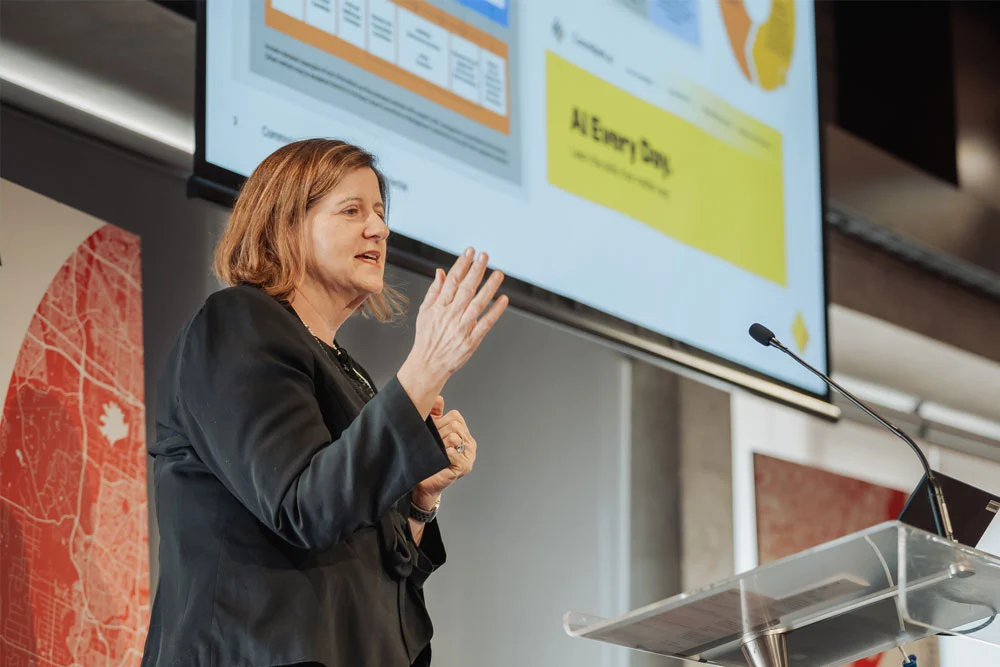
 Iffa Jayyana
 Raul Delapena Setiawan
 Rifan Muazin
 Asro
Asro