
 Suro Senen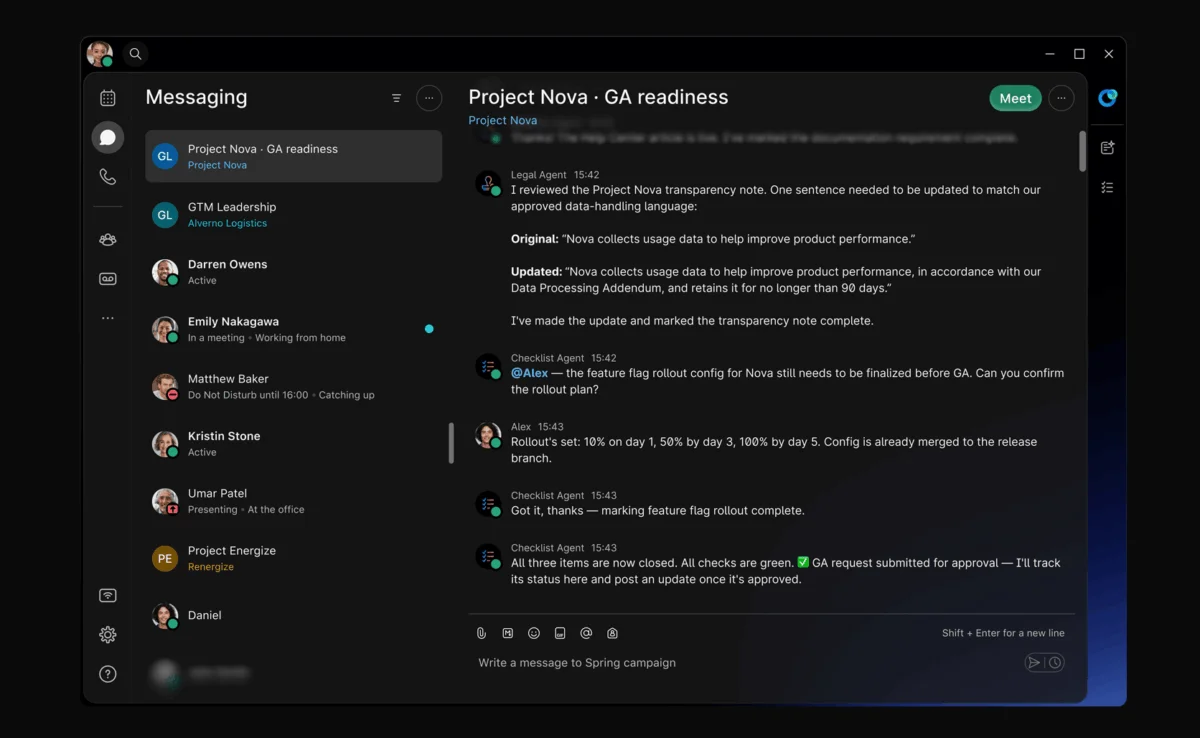
In a strategic pivot that signals a fundamental shift in how enterprise software is consumed, Cisco has announced a sweeping overhaul of its Webex ecosystem. Unveiled at the annual WebexOne conference, the update introduces "collaborative agents"—AI-driven entities designed not merely to serve individuals, but to function as integrated members of project teams. This move marks a departure from the traditional paradigm of AI as a standalone "chat assistant," positioning it instead as an active participant within the workflow of a modern enterprise.
The Evolution of Collaboration: From Tools to Teammates
For years, collaboration software has been defined by static tools: video conferencing, instant messaging, and document sharing. Cisco’s latest update, however, seeks to dismantle these silos by embedding AI agents directly into "Webex Spaces." By @mentioning an agent, users can now delegate administrative burdens—such as scheduling meetings, documenting key takeaways, and tracking project milestones—directly within the group environment.
The logic behind this design is simple: if an AI performs work in isolation, that work is lost to the team. By moving the AI into the shared workspace, Cisco ensures that the output is visible, editable, and building-block-ready for every member of the group. As Amit Barave, Cisco’s vice president and general manager for Webex Suite and AI, noted in a recent company blog post, the goal is to make AI a "shared capability."
This transition from personal productivity to team-based intelligence is a growing trend among enterprise tech giants. Slack has introduced similar concepts with its "Claude Tag," and Zoom has been aggressively iterating on its own assistant, ZoomMate. Cisco is clearly banking on the idea that the platform that best integrates these agents into the daily "flow of work" will win the battle for the enterprise desktop.
A Chronology of the Webex Transformation
The path to this AI-native vision has been a deliberate, multi-year progression for Cisco.
- Early 2024: Cisco began laying the groundwork for AI-driven summaries and noise-cancellation features, focusing on individual productivity.
- Mid-2024: The company expanded its partnership ecosystem, integrating deeper ties with industry leaders like Anthropic and OpenAI to leverage advanced large language models (LLMs).
- WebexOne (Wednesday Announcement): Cisco officially introduced the concept of "Collaborative Agents." This announcement included the unveiling of a personalized landing page and the rollout of specialized agents for tasks ranging from real-time translation to video coaching.
- Q4 2024/2025 Roadmap: The company plans to release its "Personal Agent for Webex Calling" in the first quarter of 2027, signaling a long-term commitment to agentic voice and telephony services.
- November 2024: The "Translator Agent," currently in controlled availability, is scheduled for a wider release, bringing real-time, multi-language support to desk phones and the Webex app.
Supporting Data and Technical Capabilities
Cisco’s new AI infrastructure is designed to be as versatile as it is deep. The platform is not relying solely on its own proprietary models; rather, it is embracing a "bring your own agent" philosophy. Users can now integrate Anthropic’s Claude Managed Agents—capable of executing complex, multi-step tasks in the background—and OpenAI’s "dot" agents into their daily operations.
Key AI Features and Their Functions:
- The AI Coach for Vidcast: A real-time feedback tool that analyzes a presenter’s pacing, tone, and vocabulary, providing a "simulated audience" experience to improve communication efficacy.
- Translator Agent: Supports ten global languages, including Mandarin, Hindi, German, and Portuguese. This is particularly significant for multinational organizations, as it extends functionality to legacy hardware like the Cisco 9800 Series Desk Phones.
- Personal Agent for Calling: A sophisticated screening tool that manages incoming calls, converses with the caller to determine urgency, and provides a summarized report to the user, ensuring that critical communications are prioritized.
- Personalized Landing Page: A new UI update that acts as a mission control center, surfacing high-priority tasks and suggesting actions based on a user’s historical activity and upcoming calendar events.
Official Responses and Industry Perspective
Cisco leadership views this as the natural maturation of the "connected intelligence" era. Snorre Kjesbu, Cisco’s vice president and general manager for collaboration, emphasized that the strength of these tools lies in their ability to maintain context. "It can help people prepare together, carry decisions forward, and coordinate the next steps without losing the context of the conversation," Kjesbu stated.

Industry analysts are largely optimistic, though they highlight the challenges of market saturation. Jim Lundy, CEO of Aragon Research, was particularly impressed by the depth of the new Webex assistant, noting that it possesses a unique awareness of the user’s schedule and project landscape. "In fact, I’d say that their assistant could be sold unbundled," Lundy remarked, suggesting that the AI’s utility may eventually transcend the Webex application itself.
Irwin Lazar, principal analyst at Metrigy, points out that the success of these agents will ultimately hinge on data connectivity. "The strength of the agent is dependent on its access to information," Lazar explained. "The key is enabling connectivity to external data sources such as CRM, ERP, and project management tools."
However, Lazar also noted a potential blind spot: Cisco’s current inability to capture audio from third-party or external meetings, a feature that competing platforms like Zoom have already begun to roll out.
Strategic Implications: The Cost of Intelligence
The integration of advanced AI is not without financial implications. While Cisco includes a foundational layer of AI capabilities within the standard Webex Suite ($25/user/month) and its Enterprise tiers, the most powerful "agentic" features are being siloed into a new, separate "Enhanced AI Offer" add-on.
This move mirrors the broader SaaS industry’s shift toward usage-based or premium-tier pricing for AI-heavy features. For example, while the Translator Agent is included, it is limited to 50 minutes of usage per user per month. Any volume beyond that threshold requires the purchase of an additional add-on.
Implications for the Enterprise:
- Vendor Lock-in vs. Workflow Efficiency: By embedding AI directly into the collaboration flow, Cisco is making it increasingly difficult for organizations to switch to competing platforms, as the "institutional knowledge" of the AI agents becomes deeply intertwined with the company’s internal projects.
- IT Governance: With the rise of third-party agents (Claude, OpenAI) operating within the company’s internal "Spaces," IT departments will face new challenges regarding data security, privacy, and the auditing of AI-driven actions.
- Budgeting Complexity: The move toward "add-on" pricing for advanced AI features means that IT managers can no longer rely on fixed-cost per-seat licensing. They must now forecast and manage AI consumption costs, which are notoriously difficult to predict.
Conclusion
Cisco’s vision for Webex is clear: it intends for the application to remain the primary destination for enterprise work. By evolving from a communication tool into a workspace where AI agents operate as colleagues, Cisco is attempting to bridge the gap between human collaboration and machine-driven productivity.
While the technology offers significant promise in terms of efficiency, context retention, and workflow automation, the ultimate test will be how seamlessly these agents integrate with the wider enterprise tech stack. As businesses grapple with the costs and complexities of AI adoption, the question will not be whether they need AI, but which platform provides the most stable, secure, and cost-effective home for their new digital teammates. With this update, Cisco has staked its claim to being that home.


 Dwi Wanna

 Raul Delapena Setiawan

 Muslim
 Nana Wu

 Rifan Muazin