
 Laily UPN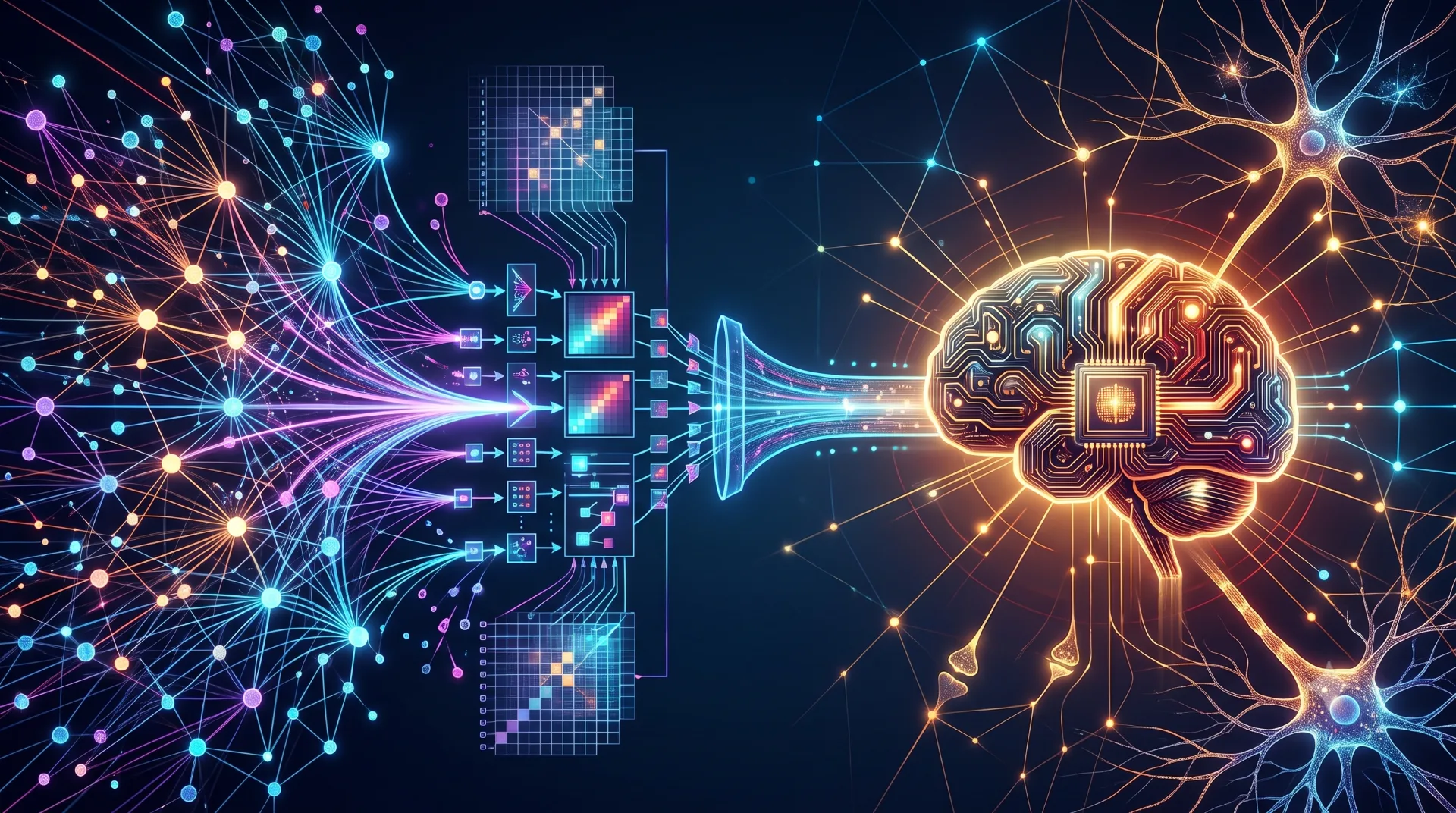
Over the past three years, the landscape of Retrieval-Augmented Generation (RAG) has undergone a tectonic shift. What began as a rudimentary method of vector similarity search over fragmented document chunks has matured into a sophisticated, graph-native paradigm known as GraphRAG. By anchoring information in Knowledge Graphs (KGs)—where nodes represent real-world entities and edges represent semantic relationships—GraphRAG allows Large Language Models (LLMs) to perform complex multi-hop reasoning, trace relational lineage, and synthesize answers that transcend the surface-level limitations of standard vector databases.
However, as enterprise practitioners attempt to scale these systems to include millions of nodes and edges, they are hitting a wall: the micro-decision bottleneck. A Knowledge Graph is a deterministic data structure, yet maintaining it requires a constant stream of probabilistic micro-decisions—decisions that, until now, have been outsourced to general-purpose autoregressive LLMs. This reliance is proving to be both a performance and a financial liability.
The Evolution of Graph-Native AI
In the early days of RAG, the industry was focused on "chunk and search." While effective for simple retrieval, this method often fails to capture the "connective tissue" of data. GraphRAG emerged to solve this by providing context through relationships.
The chronology of this development is clear:
- Phase 1 (2021–2022): Vector-based RAG. Reliance on embedding models to find semantic similarity between queries and document chunks.
- Phase 2 (2023): Early GraphRAG. Initial attempts to combine LLMs with Neo4j or similar graph stores, often hampered by brittle prompt engineering.
- Phase 3 (2024–Present): The Rise of Specialized Decision Engines. The recognition that "reasoning" and "decision-making" are two distinct cognitive tasks, requiring different architectural approaches.
The Micro-Decision Bottleneck
The core challenge in scaling a KG is that every ingestion, maintenance, and retrieval task requires hundreds of tiny, repetitive decisions. Should this entity be merged with an existing one? Which ontology property does this data field map to? Is this relationship synonymous with an existing edge?
Historically, engineers have defaulted to calling general-purpose, autoregressive LLMs (such as GPT-4 or Claude) to handle these queries. This approach presents three critical flaws:
- Latency: Autoregressive models are designed for text synthesis, not rapid classification. The overhead of token generation for a simple binary "True/False" decision creates unacceptable delays.
- Cost: Using a high-parameter LLM to categorize data fields or prune subgraphs is economically inefficient, often costing orders of magnitude more than the value of the decision itself.
- Fragility: LLMs are tuned to be creative. Forcing them to output strict, machine-readable JSON or Cypher queries requires elaborate prompt engineering and fragile regex parsing that frequently fails at the edges of probability.
System 1 vs. System 2: A New Cognitive Framework
To resolve this, architects are adopting the cognitive framework popularized by Daniel Kahneman in Thinking, Fast and Slow.
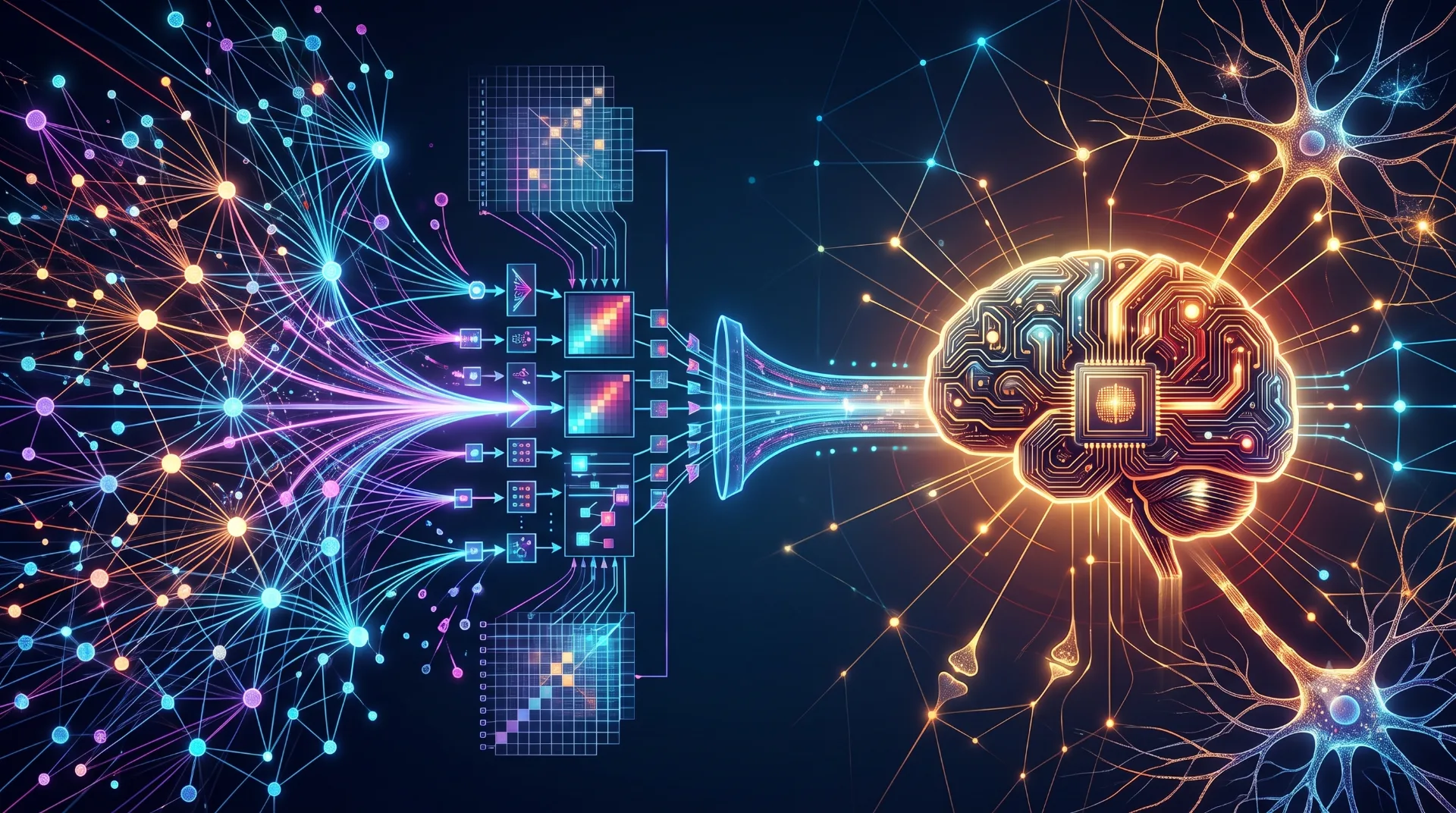
- System 2 (Slow): Deliberate, logical, and creative reasoning. This is the domain of traditional autoregressive LLMs. They excel at synthesis and complex explanation.
- System 1 (Fast): Instinctual, effortless, and rapid. This is the domain of classification and scoring—the exact requirements for graph maintenance.
Forcing a System 2 engine to act as a System 1 classifier is an architectural mismatch. The industry is now shifting toward a Dual-Engine Pattern, where specialized "System 1" models handle the heavy lifting of graph maintenance, leaving the "System 2" models to handle high-level user synthesis.
Understanding TypeSafe Jev: The System 1 Breakthrough
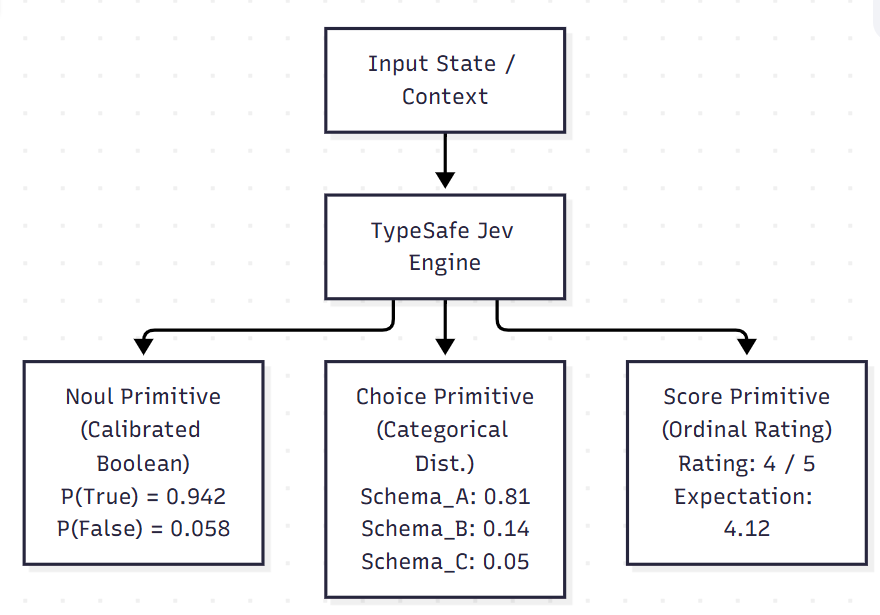
Enter TypeSafe Jev, a specialized model designed to fill the "System 1" gap. Unlike autoregressive LLMs that predict the next token in a sequence, Jev is a non-autoregressive, calibrated decision model. It does not stream prose; it executes typed, probabilistic micro-decisions in parallel.
The Three Core Primitives
Jev shifts the paradigm from "prompt engineering" to "schema declaration." Its functionality is distilled into three core primitives:
- Noul (Calibrated Boolean): Unlike standard LLMs, which are often overconfident in their outputs, Jev provides a calibrated probability $P(Y=1|X) in [0, 1]$. If Jev assigns a probability of 0.92, it means the prediction is correct approximately 92% of the time, allowing developers to set reliable thresholds.
- Choice (Categorical Distribution): This primitive maps an input to a predefined list of categorical targets, returning the probability mass distribution across all candidates. This is essential for ontology mapping.
- Score (Ordinal Rating): This calculates an expected value on a fixed scale (e.g., 1 to 5), providing a numerical evaluation of continuous properties like relationship strength or risk levels.
The Dual-Engine Graph Architecture
By combining Jev with traditional LLMs, companies can build a self-optimizing, high-precision pipeline.
Graph Construction & Enrichment (System 1 Driven)
In this stage, Jev performs the "janitorial" work of the graph.
- Entity Resolution: It identifies duplicates by evaluating entity pairs in parallel, preventing the graph from becoming fragmented.
- Cross-Ontology Mapping: It maps messy, unstandardized CRM or SQL data to a clean, canonical schema.
- Edge Weighting: It continuously scans logs to assign dynamic weights to nodes and edges, which are critical for later graph algorithms like PageRank or pathfinding.
GraphRAG Query Stage (System 1 + System 2 Hybrid)
When a user asks a question, the hybrid system kicks into gear:
- Subgraph Pruning: Before the "System 2" LLM ever sees the data, Jev’s
Noulprimitive evaluates each candidate node in a traversal. It aggressively prunes irrelevant noise, reducing context bloat by up to 90%. - Algorithmic Steering: Using the weights generated during the enrichment phase, the system guides pathfinding algorithms to prioritize the most relevant semantic paths.
- System 2 Synthesis: Finally, the autoregressive LLM receives a "perfectly curated" context, allowing it to synthesize a high-quality answer without the noise that usually leads to hallucinations.
Implications for Enterprise Scale
The move toward this dual-engine architecture has profound implications for enterprise AI.
Operational Efficiency: By offloading high-frequency tasks to Jev, companies can significantly reduce their dependency on expensive API calls. Because Jev is non-autoregressive and optimized for parallel evaluation, it operates at sub-500ms latency, making it suitable for real-time applications like fraud detection or supply chain monitoring.
Scalability: The "Graph Explosion Problem"—where traversing a few hops results in thousands of irrelevant nodes—has historically been the biggest barrier to production-grade GraphRAG. The ability to perform automated, confidence-based pruning means that graphs can grow to billions of nodes without overwhelming the downstream generative model.
Reliability: By persisting Jev’s confidence scores directly onto the graph as metadata (e.g., jev_risk_score), the Knowledge Graph becomes a self-describing, probability-aware asset. This allows developers to debug the system by tracing not just the data, but the certainty behind every connection.
Implementation Best Practices
For practitioners looking to adopt this hybrid approach, the following guidelines are essential:
- Strict Operational Separation: Do not attempt to use System 1 models for text generation, and do not expect System 2 models to be efficient classifiers. Keep the domains separate.
- Calibrate, Don’t Guess: Because Jev is calibrated, treat its outputs as statistical data. Run a small validation set (e.g., 200 labeled pairs) to determine the optimal threshold for your specific business case.
- Parallelize Ingestion: Since Jev is not restricted by sequential token generation, use asynchronous HTTP connection pools to maximize throughput during batch ingestion.
- Metadata Persistence: Treat Jev’s output as a first-class citizen in your graph database. Storing confidence scores as node properties allows for efficient filtering without re-running the decision logic.
Conclusion: The Future is Hybrid
The future of Graph AI is not found in building "bigger" models, but in building "smarter" architectures. By acknowledging the distinct cognitive requirements of graph management—moving from the slow, creative synthesis of LLMs to the fast, calibrated decisions of specialized engines like Jev—enterprises can finally overcome the latency and cost barriers that have kept GraphRAG in the prototype phase.
As the industry matures, the "Dual-Engine Pattern" will likely become the standard for any production-ready knowledge system. By delegating the mechanical, probabilistic, and repetitive tasks to a specialized System 1, we free the System 2 LLMs to do what they do best: reason, explain, and provide the insights that drive modern enterprise decision-making.


 Evan Lee Salim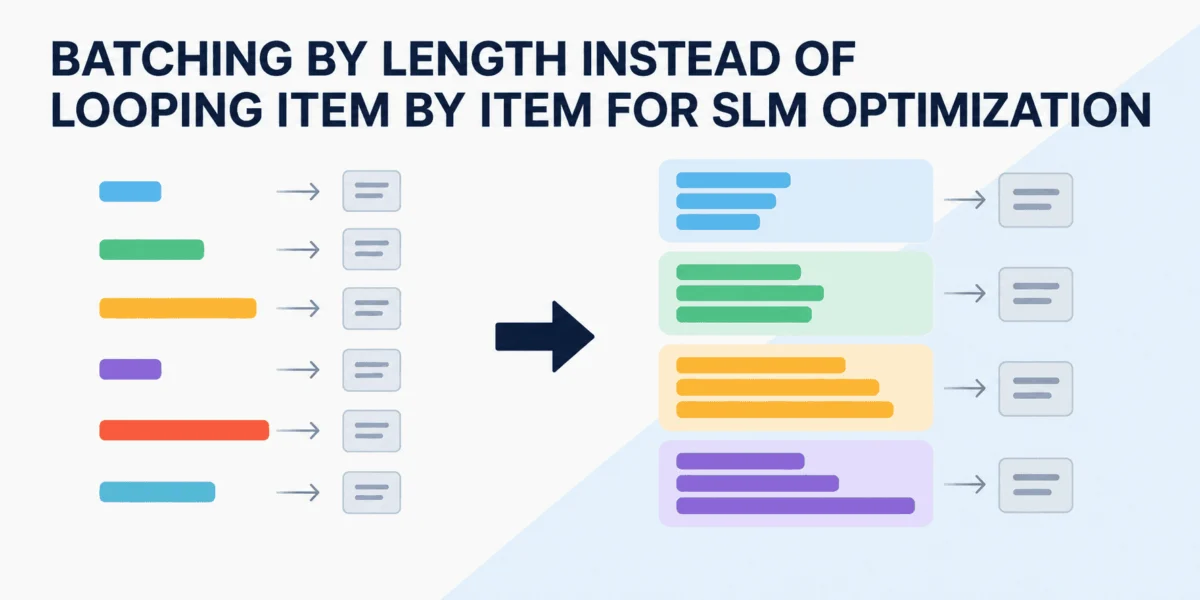
 Nana Muazin
 Nila Kartika Wati
 Jia Lissa
 Basiran
 Sagoh
Sagoh

 Lina Hope