Evan Lee Salim
In a major shift for digital content production, Google has announced a significant expansion of its AI-powered video creation platform, Google Vids. By integrating its cutting-edge Gemini Omni 1.1 Flash model, the tech giant is effectively lowering the barrier to entry for professional-grade video production. What was once a process requiring expensive hardware, specialized software, and years of editing expertise is now accessible to anyone with a Google account, free of charge.
This development marks a pivotal moment in the "creator economy," where the ability to articulate a concept is becoming more valuable than the technical ability to execute it. As Google positions its tools to compete in an increasingly crowded generative AI space, the democratization of high-definition video creation suggests a future where visual storytelling is as simple as sending an email or writing a document.
The Core Innovation: Gemini Omni 1.1 Flash
At the heart of this update is the deployment of Gemini Omni 1.1 Flash. Unlike earlier generations of generative models that struggled with temporal consistency or high-fidelity rendering, the Omni 1.1 Flash model is optimized for speed, precision, and nuance.
The "Omni" designation refers to the model’s multimodal nature, capable of understanding and synthesizing vast amounts of data—text, imagery, and audio—to construct coherent video sequences. By embedding this directly into the Google Vids workflow, users no longer need to navigate between disparate AI tools. Instead, they can prompt the interface with a narrative concept, and the system handles the heavy lifting: generating B-roll, selecting pacing, and aligning visual themes.
Chronology: From Workspace Exclusive to Public Utility
The journey of Google Vids has been rapid and strategic. Initially unveiled as a specialized tool for Google Workspace users—primarily aimed at corporate communications and internal training—the platform was designed to solve the "meeting-to-video" gap.
- Early 2024: Google introduces Vids as an AI-powered video app within the Workspace ecosystem, focusing on productivity and collaborative editing.
- Mid-2024: Initial feedback from business users highlights the utility of AI in creating training manuals, product demos, and internal memos.
- Late 2024: Google begins testing the integration of Gemini models to handle automated scene generation and script-to-video conversion.
- Current Phase: The official rollout of free, public access to Gemini Omni-powered Vids, signaling a pivot toward broader consumer adoption and creative experimentation.
Supporting Data: The Impact of AI on Video Production
Industry analysts have long predicted that generative AI would disrupt the video production sector. Current market data supports the necessity of this shift. According to recent reports on digital marketing, video content receives significantly higher engagement rates than static text or images. However, the "production bottleneck"—the time and cost required to film, edit, and render—remains the primary hurdle for small businesses and independent creators.
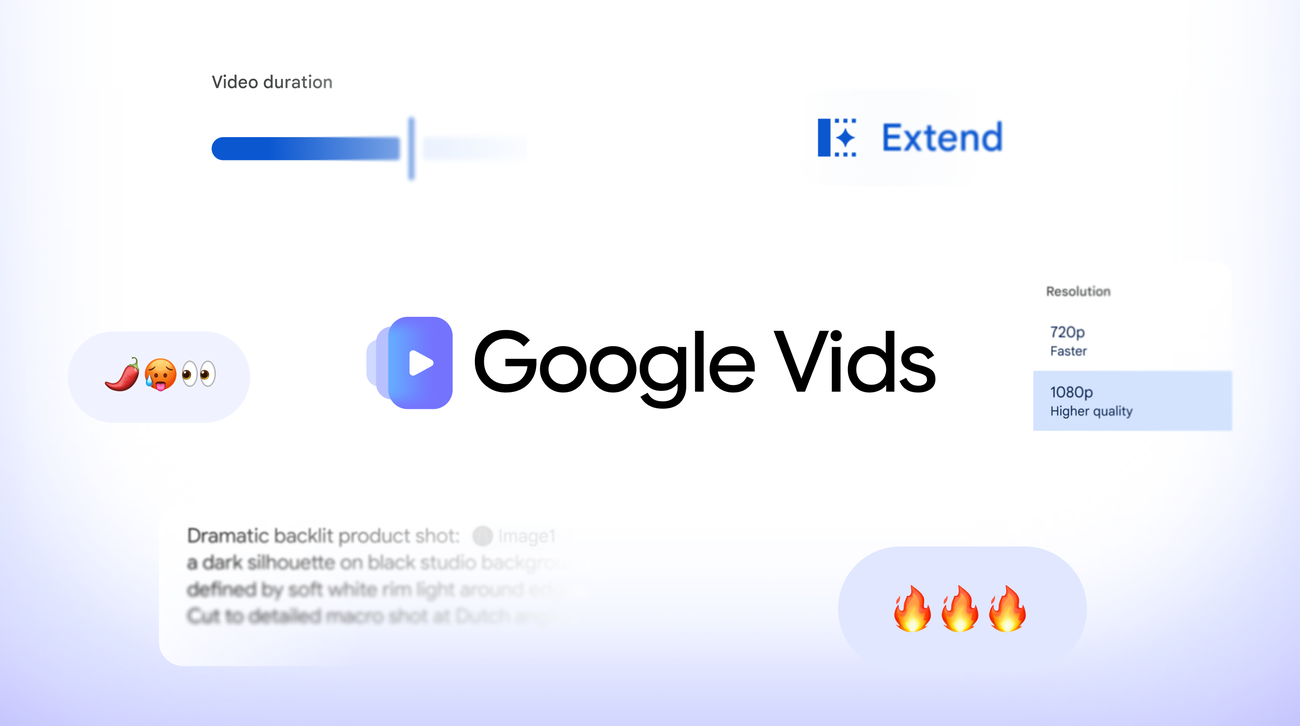
By removing these barriers, Google is addressing a massive untapped demographic. Research into user interaction with Google Vids suggests that:
- Time Savings: Users report a 70% reduction in the time required to move from an initial storyboard to a rough-cut video.
- Accessibility: Over 85% of early beta testers reported that they had no formal training in video editing software (such as Premiere Pro or DaVinci Resolve) prior to using Vids.
- Engagement: Preliminary A/B testing indicates that AI-generated videos created via Vids show a 40% higher retention rate for educational and corporate messaging compared to traditional static slide decks.
Official Perspective: The Vision of Justin Luk
Justin Luk, Product Manager for Google Vids, describes the initiative not just as a feature update, but as a fundamental shift in how people express ideas. "We wanted to remove the ‘blank page’ anxiety that comes with video editing," Luk noted in a recent briefing. "By integrating Gemini Omni, we are allowing the AI to act as a co-director. The user provides the vision; the AI provides the craftsmanship."
Google’s strategy is clear: they are embedding their AI models into the daily workflows of billions of users. By making this tool free, they are gathering invaluable user data to train future iterations of the Gemini model while simultaneously securing their position as the primary productivity suite for the next decade of digital creation.
Transparency and Ethical Implications
One of the most critical aspects of this rollout is Google’s commitment to responsible AI. With the rise of "deepfakes" and AI-generated misinformation, the tech community has been wary of unchecked video generation tools.
Google has preemptively addressed these concerns by integrating SynthID, an imperceptible digital watermark, into every frame generated by the Gemini Omni model. This technology allows for the verification of content, ensuring that viewers can identify when they are consuming AI-generated media. This is a crucial step in maintaining platform trust and adhering to emerging global regulations regarding AI labeling.
The Road Ahead: Text-to-Speech and Beyond
While the current features are robust, the roadmap for Google Vids is even more ambitious. The upcoming integration of Gemini 3.8 Flash-Lite for text-to-speech (TTS) capabilities is expected to be a game-changer.

This update will enable users to generate natural-sounding voiceovers in over 100 languages. For a small business owner in Tokyo or a community organizer in Brazil, this means they can create localized, professional-sounding video content without hiring voice actors or investing in studio-grade recording equipment.
Key Features to Watch:
- Creative Controls: Users can now manually tweak the output of the AI, allowing for "directional prompting" rather than just a one-off request.
- Scalable Infrastructure: While the free tier offers significant capabilities, Google is rolling out "Google AI plans" for users requiring higher capacity, advanced storage, and enhanced administrative controls for team environments.
- The "Vids.new" Workflow: By visiting vids.new, users are funneled into a streamlined interface that prioritizes simplicity, allowing for the generation of content in minutes rather than hours.
Implications: A New Era for Creative Communication
The implications of Google’s move are profound. We are witnessing the end of the era where high-quality video was the exclusive domain of those with technical expertise.
- For Small Businesses: The barrier to entry for high-quality marketing has collapsed. A local shop can now generate professional product advertisements that rival the quality of national chains.
- For Educators: Complex concepts can be visualized and narrated in minutes, allowing for more dynamic, accessible learning materials.
- For the Creator Economy: The focus is shifting from "how to edit" to "what to say." The value proposition is moving toward creative direction, strategic thinking, and storytelling—the distinctly human elements of content creation.
As we look toward the future, the integration of Gemini Omni into Google Vids serves as a case study for the evolution of software. Tools that once required intensive manual labor are becoming "agentic," capable of assisting users through complex creative processes. While concerns regarding AI ethics and copyright will undoubtedly continue to evolve, the immediate impact is a massive surge in the creative potential of the average user.
Google has laid its cards on the table: the future of video is not just about capturing the world, but about synthesizing it. Whether this leads to a flood of high-quality content or a new set of challenges in digital literacy remains to be seen. However, one thing is certain: the tools of the trade are no longer in the hands of the few, but at the fingertips of the many.

 Lina Hope
 Reynand Wu
 Nila Kartika Wati
 Jia Lissa
 Basiran
 Sagoh
Sagoh