
 Asep Darmawan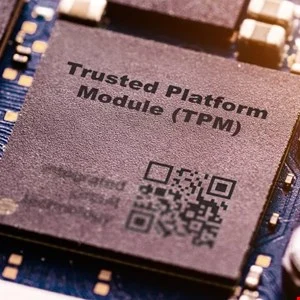
As the global cybersecurity community braces for the advent of cryptographically relevant quantum computers—machines capable of dismantling current public-key encryption standards in seconds—the race to "quantum-proof" digital infrastructure has shifted from theoretical discussion to practical engineering. While software-based cryptographic agility is a vital piece of the puzzle, the foundation of modern security lies in hardware.
On August 24, the Trusted Computing Group (TCG), a non-profit organization that sets the global standards for hardware-based security, took a monumental step toward securing the future. By releasing new guidance and a verification framework for Trusted Platform Modules (TPMs), the TCG is providing organizations with a clear roadmap to determine whether their existing hardware is truly ready for the Post-Quantum Cryptography (PQC) era.
The Critical Role of the TPM in a Post-Quantum World
At the heart of the modern computing stack sits the Trusted Platform Module. These specialized security chips, typically soldered onto motherboards or integrated directly into processors, serve as the "root of trust" for a device. They are the guardians of our most sensitive data: encryption keys, digital certificates, and biometric authentication credentials.
TPMs, particularly the current industry-standard TPM 2.0, are the bedrock of platform integrity and secure boot processes. As organizations look toward a PQC-ready future, these chips are expected to act as the anchors for trusted identities. However, there is a looming problem: not all TPMs are created equal. As the cryptographic landscape evolves, the algorithms currently used to secure these modules may become vulnerable to quantum-enabled attacks.
The TCG’s new initiative addresses a critical "trust gap." While some vendors may market their products as "quantum-ready" or "PQC-compliant," the lack of a standardized benchmark has left IT and security departments struggling to verify these claims. The TCG’s latest release aims to bring transparency to the marketplace, ensuring that "compliance" is no longer just a marketing term, but a verifiable technical standard.
A Chronology of the Standardization Effort
The path to the PTP 1.07 profile was neither quick nor simple. It required a massive, multi-year collaborative effort between the public and private sectors to address the complex intersection of legacy compatibility and quantum-resilience.
The Genesis of the PQC Initiative (2023–2025)
Recognizing that the National Institute of Standards and Technology (NIST) was nearing the finalization of PQC standards, the TCG began mobilizing its internal working groups. The goal was to translate abstract mathematical post-quantum requirements into concrete hardware specifications that could be implemented by semiconductor manufacturers.
The Massive Collaboration (March 2026)
In March 2026, the TCG orchestrated a landmark collaborative effort. Recognizing that a standard is only as good as its industry adoption, the organization brought together nearly 90 contributors from a diverse array of sectors. This coalition included heavyweights in the semiconductor and software industries, such as Intel, Google, Hewlett Packard Enterprise, Microsoft, NVIDIA, and STMicroelectronics.
This group was tasked with developing the TCG PC Client Platform TPM Profile (PTP) 1.07. The document serves as the definitive guide for designing PQC-ready TPMs, outlining the mandatory features, algorithmic agility requirements, and performance benchmarks necessary to withstand quantum-era threats.
The August 2026 Milestone
Following the development of the profile, the TCG officially released its implementation guidance on August 24. This release was accompanied by a critical verification framework designed to help enterprises audit their current fleet of hardware. For the first time, organizations have a clear, step-by-step methodology to assess whether their current TPMs meet the requirements defined in PTP 1.07.
Decoding the PQC-Ready Landscape: The New Designations
One of the most significant challenges for IT leaders is understanding the nuance between different levels of "readiness." A chip that can handle a quantum-resistant algorithm today might not be able to update to a different algorithm tomorrow if the standard changes.
To mitigate this confusion, the TCG has introduced a two-tiered classification system. While the specific nomenclature aims to simplify, the technical requirements behind these tiers are rigorous.
- Baseline Quantum-Safe Compatibility: This category identifies modules that possess the raw computational power and memory capacity to perform initial PQC operations. These are designed for platforms that require an immediate, though perhaps limited, transition to quantum-resistant standards.
- Full Cryptographic Agility: This designation is reserved for modules that support "cryptographic agility"—the ability to update, swap, or upgrade cryptographic primitives without needing a full hardware overhaul. Given that PQC algorithms are still in their infancy and may evolve, this category is the gold standard for long-term security, ensuring that devices remain protected for decades.
By categorizing TPMs this way, the TCG allows organizations to make risk-based decisions. A high-security government facility might mandate "Full Cryptographic Agility," while a standard office environment might find "Baseline" compatibility sufficient for its current lifecycle.
Official Perspectives: Why Hardware Matters
The move toward PQC-ready hardware is not merely a technical update; it is a strategic imperative. In recent statements, representatives from the TCG have emphasized that software patches alone will not be enough.
"We are entering an era where the hardware layer must be as adaptable as the software layer," noted a TCG spokesperson during the August rollout. "If the root of trust is compromised because the underlying hardware cannot handle the transition to PQC, the entire security architecture collapses, regardless of how robust your software-based encryption might be."
Industry participants, including engineers from Microsoft and Intel, have highlighted the "decades-long" lifespan of enterprise hardware. A server or workstation purchased today may still be in operation ten years from now. If that hardware cannot support the transition to quantum-safe algorithms, it creates a massive, unpatchable vulnerability in the network. This is why the TCG is also moving to enhance its certification programs—to provide a "stamp of approval" that customers can rely on when procuring new hardware.
Implications for the Enterprise
The release of the TCG guidance has immediate, far-reaching implications for Chief Information Security Officers (CISOs) and IT procurement teams.
1. Procurement and Lifecycle Management
The days of generic hardware procurement are ending. Organizations must now integrate PTP 1.07 compliance into their vendor request-for-proposals (RFPs). Procurement teams will need to ask vendors directly: "Does this device feature a PQC-ready TPM, and if so, does it meet the TCG PTP 1.07 specification?"
2. The Cost of "Quantum Debt"
Organizations that ignore this guidance are accruing "quantum debt." By continuing to deploy hardware that is not quantum-safe, these firms are essentially locking themselves into a future of expensive "rip-and-replace" upgrades. Early adoption of PTP 1.07-compliant hardware is an investment in long-term operational stability.
3. Auditing Existing Infrastructure
The TCG’s new verification document provides a blueprint for IT departments to audit their current inventory. While it is unlikely that most existing TPM 2.0 modules can be fully upgraded to PQC-ready status via firmware, understanding the current baseline is the first step toward a phased replacement strategy.
4. Regulatory Compliance
As government regulations (such as those from NIST and international cybersecurity agencies) begin to mandate quantum-safe standards, having a clear audit trail of your hardware’s PQC readiness will become a legal necessity. The TCG’s certification program is expected to become the industry benchmark for demonstrating due diligence to regulators and stakeholders.
Conclusion: Securing the Future
The transition to a post-quantum world is one of the most significant security challenges of the 21st century. It requires a fundamental rethinking of how we trust our machines. By providing a clear, verifiable standard for TPMs, the Trusted Computing Group has provided the industry with a necessary anchor.
We are no longer guessing whether our hardware can handle the quantum shift. Through the TCG PTP 1.07 profile and the new verification framework, organizations have the tools to ensure that the foundation of their digital security remains unshakable in the face of tomorrow’s most sophisticated threats. The race is on, but for those who follow these new standards, the finish line—a quantum-safe future—is now firmly within reach.


 Basiran
 Iffa Jayyana
 Raul Delapena Setiawan
 Reynand Wu
 Sagoh
Sagoh

 Azzam Bilal Chamdy
 Ali Ikhwan