
 Neng Nana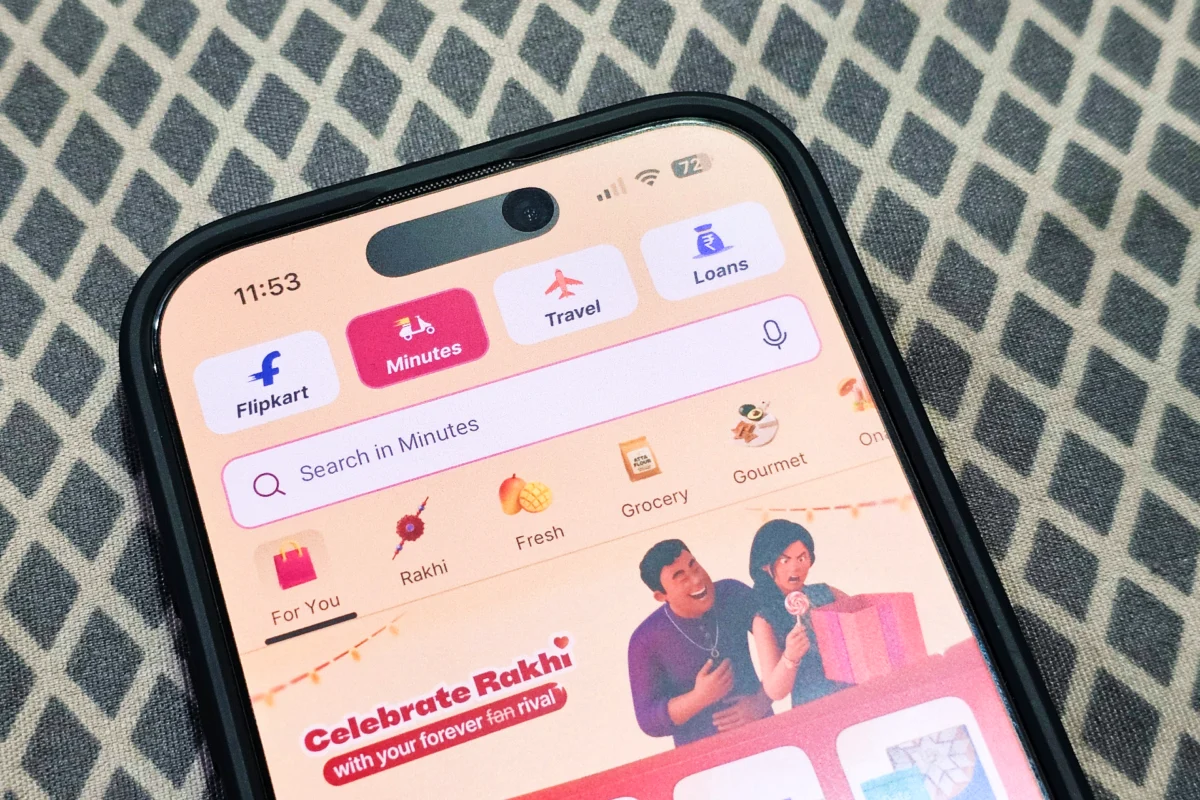
The retail landscape in India is undergoing a seismic shift. For years, e-commerce giants and local startups have engaged in a fierce tug-of-war for the consumer’s wallet, but the battlefield has now narrowed to the doorstep. As Indian consumers increasingly prioritize convenience and speed, "quick commerce"—the delivery of groceries and everyday essentials in under 20 minutes—has transitioned from a niche luxury to a standard expectation. Leading this charge is Walmart-owned Flipkart, which is rapidly closing the gap on established pioneers in a high-stakes, capital-intensive race that now includes global juggernaut Amazon.
Main Facts: The Rise of Flipkart Minutes
Flipkart’s foray into the instant-delivery segment, branded as "Flipkart Minutes," has evolved from a nascent experiment into a major operational pillar. Debuting in August 2024, the service has witnessed a meteoric rise in adoption. According to industry insiders familiar with the company’s internal metrics, Flipkart Minutes is now processing between 1.1 million and 1.2 million orders daily. This represents a staggering trajectory of growth; in November 2023, the service was managing roughly 390,000 to 400,000 orders per day.
This surge is not merely a sign of market penetration but a direct challenge to the incumbents. Flipkart’s daily volume now places it within striking distance of Swiggy’s Instamart, which currently facilitates approximately 1.4 million orders per day. By aggressively leveraging its existing, massive user base—acquired through billions of dollars in e-commerce investment over the last decade—Flipkart has successfully converted millions of "standard" e-commerce shoppers into "instant" quick-commerce users.
A Chronology of the Instant Revolution
The quick-commerce phenomenon in India did not emerge in a vacuum; it was forged in the crucible of the COVID-19 pandemic, which accelerated the demand for contactless, rapid delivery of essentials.
- 2013: The Foundation: The roots of the current market can be traced back to the birth of Grofers, which would later pivot, rebrand, and reinvent itself as Blinkit.
- 2020: The Pandemic Pivot: As lockdowns gripped the nation, Swiggy launched Instamart, leveraging its existing food-delivery logistics network to pivot toward grocery delivery.
- 2021: The 10-Minute Standard: Zepto entered the fray, popularizing the "10-minute delivery" promise. During this same year, Grofers officially transitioned into Blinkit, signaling a permanent commitment to the rapid-delivery model.
- 2024: The Big-Tech Entry: After observing the success of these specialists, retail giants finally moved. Flipkart launched "Minutes" in August 2024, signaling that the "e-commerce vs. quick-commerce" divide had officially collapsed. Simultaneously, Amazon began scaling its "Amazon Now" initiative to compete on the same turf.
This timeline reflects a broader maturation of the Indian retail sector, where the "last mile" has become the primary site of competitive differentiation.
Supporting Data: Market Dynamics and Infrastructure
While Flipkart is gaining momentum, the market remains hierarchical. According to data from the research firm Datum Intelligence, Blinkit maintains a dominant lead, processing between 3.4 million and 3.6 million orders daily. Zepto follows, with a robust 2.4 million to 2.6 million daily orders.
However, the sheer speed of Flipkart’s infrastructure build-out is what has analysts taking notice. To fuel its growth, Flipkart has expanded its network of micro-fulfillment centers (dark stores) at an unprecedented rate. In January 2024, the company operated 600 such facilities. Today, that number has climbed to between 1,020 and 1,050. The company is currently onboarding approximately 100 new dark stores every month, with a strategic goal of reaching 1,500 facilities by the end of 2026.
The Economics of Speed
The financial viability of these operations is the central concern for investors. Swiggy recently reported that more than 45% of its dark-store network has become contribution-margin positive, a sign that the "burn" phase is giving way to operational efficiency. For Flipkart, the advantage lies in its high customer retention rates. Insiders report that 65% to 70% of monthly users are repeat buyers, and transaction volume per customer has climbed 50% to 60% year-over-year.
With an average order value (AOV) between ₹400 and ₹500 ($4.20–$5.20), the basket composition is also shifting. While fruits, vegetables, and staples remain the bread and butter of the service, Flipkart is aggressively expanding into gourmet, organic, and artisanal categories to increase margins. Furthermore, through logistical optimization, the average delivery time for Flipkart Minutes has dropped to 11 minutes, down from 13 minutes just a year ago.
The Amazon Factor and Official Silence
The intensity of this race is matched only by the silence of the players involved. When approached for comment regarding their respective strategies, growth targets, and market positioning, Flipkart, Amazon, Swiggy, and Blinkit’s parent company, Eternal, declined to provide official statements.
However, the actions of the Seattle-based giant, Amazon, speak volumes. During a high-profile visit to India in June, CEO Andy Jassy highlighted that "Amazon Now" is currently the company’s fastest-growing business segment in the country. Amazon is not merely dipping its toes in; it has laid out a clear roadmap to deploy a network of over 1,000 micro-fulfillment centers across 300 cities, aiming to integrate instant delivery into its Prime membership ecosystem. This move effectively forces the entire e-commerce industry to treat quick commerce as a non-negotiable feature of the modern shopping experience.
Strategic Implications: Why There is No Turning Back
The implications for the Indian retail ecosystem are profound. Analysts at Bernstein have noted that even as broader consumption growth in India showed signs of cooling in mid-2024, the quick-commerce sector remained resilient, consistently adding new monthly active users.
The Defensive Mandate
For legacy e-commerce players, the move into quick commerce is as much defensive as it is offensive. Satish Meena, an adviser at Datum Intelligence, argues that the transition is irreversible. "Can you go back to scheduled delivery now in grocery? No," Meena says. "You will not go back."
The psychological shift in the consumer is absolute: once a user experiences the convenience of having milk, eggs, or even a smartphone charger delivered in under 15 minutes, the traditional "next-day" delivery model begins to feel antiquated. This has forced Flipkart and Amazon to cannibalize their own long-form delivery business to prevent losing the customer entirely to the "quick" specialists.
The Future of Retail
As these companies continue to scale, the competition will likely shift toward two fronts: product range and logistical precision. We are already seeing "Minutes" and its competitors expand beyond groceries into electronics, beauty products, and home essentials. This evolution suggests that the "dark store" is destined to become the warehouse of the future—a decentralized, hyper-local hub that serves as the backbone of the entire retail economy.
In the end, the winner of this race will not necessarily be the company with the most capital, but the one that manages to turn the highest density of orders with the lowest possible margin of error. As Flipkart continues its aggressive expansion, the line between "e-commerce" and "instant retail" is blurring into a single, high-speed reality that will define the next decade of Indian consumerism.


 Reynand Wu
 Sagoh
Sagoh
 Raul Delapena Setiawan

 Azzam Bilal Chamdy
 Ali Ikhwan