
 Reynand Wu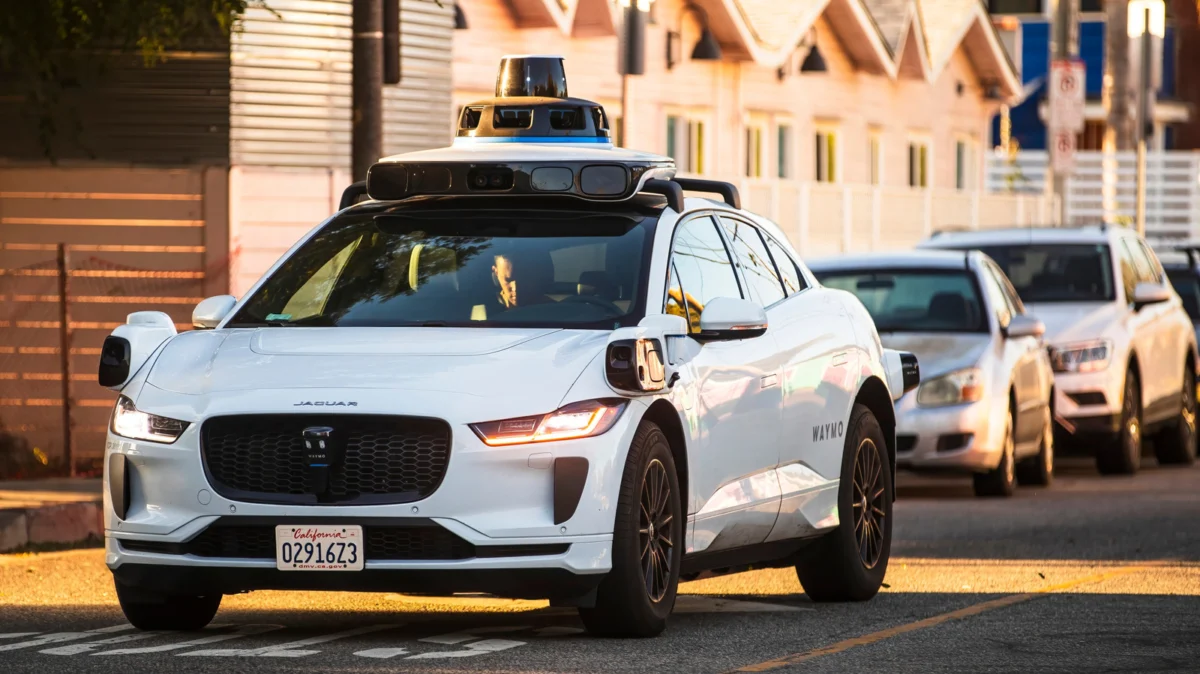
In the bustling streets of cities like San Francisco, Phoenix, and Los Angeles, residents have grown accustomed to a peculiar sight: a sleek, sensor-laden Jaguar I-PACE gliding through traffic, navigating complex intersections, and yielding to pedestrians—all without a soul in the driver’s seat. For the casual observer, this represents the pinnacle of artificial intelligence. It looks like the "self-driving car" promised by science fiction for decades. However, industry experts and the Society of Automotive Engineers (SAE) classify this achievement as Level 4 automation, leaving the industry’s "Holy Grail"—Level 5—still firmly out of reach.
The distinction between these two levels is not merely academic; it represents a fundamental shift in how we understand machine intelligence, safety, and the future of human mobility.
The SAE Hierarchy: Defining the Spectrum of Automation
To understand why Waymo’s impressive feats remain in the Level 4 category, one must first understand the SAE International’s J3016 standard, the global benchmark for driving automation.
- Level 0 (No Automation): The human driver is responsible for every aspect of the driving task.
- Level 1 (Driver Assistance): The vehicle can assist with either steering or acceleration/braking (e.g., adaptive cruise control).
- Level 2 (Partial Automation): The vehicle can handle both steering and acceleration/braking simultaneously, but the human must remain engaged and ready to intervene at all times.
- Level 3 (Conditional Automation): The vehicle can drive itself under specific conditions, but a human must be ready to take over when the system requests it.
- Level 4 (High Automation): The vehicle performs all driving tasks and monitors the environment within a specific operational design domain (ODD). No human intervention is required within these boundaries.
- Level 5 (Full Automation): The vehicle can drive anywhere a human can, under any conditions, without any geographic or environmental restrictions.
The "Operational Design Domain": The Invisible Fence
The primary reason Waymo—and its competitors—remain at Level 4 is the concept of the Operational Design Domain (ODD). An ODD acts as a "digital sandbox." It dictates the geography, road types, weather conditions, and speed ranges in which the software is authorized to operate.
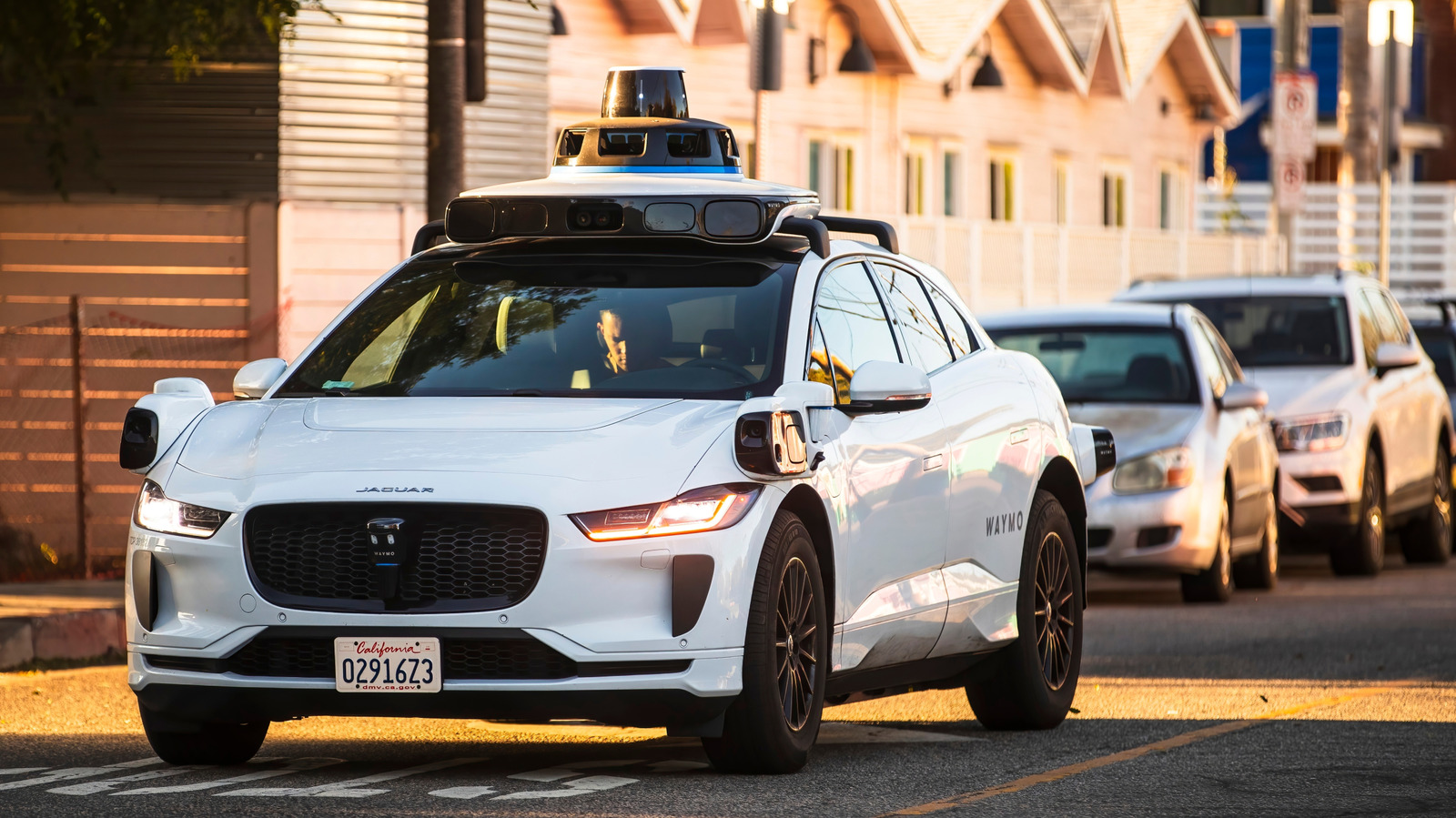
When a Waymo vehicle navigates a city, it is operating within a pre-mapped, highly scrutinized environment. The system knows the lanes, the traffic light patterns, and the typical behaviors of local drivers. It is a brilliant performance, but it is a performance bound by the constraints of its programming.
Level 5, by contrast, demands the "human equivalent." A Level 5 car would need to navigate a flooded dirt road in the Appalachian mountains during a blizzard, handle a construction zone in a rural village with no markings, and react to unpredictable wildlife—all without having ever visited that location or having a pre-existing high-definition map of the area.
A Chronology of the Autonomous Evolution
The journey to current levels of automation has been a decades-long pursuit marked by rapid breakthroughs and sobering reality checks:
- 2004–2007 (The DARPA Challenges): The U.S. Department of Defense’s DARPA Grand Challenges acted as the catalyst for modern autonomous research. The 2005 challenge saw vehicles navigate a 132-mile off-road course, proving that autonomous navigation was possible.
- 2009 (The Google Self-Driving Car Project): Google launched its secret project, which would eventually become Waymo. This shifted the focus from off-road, rugged terrain to the far more complex and unpredictable world of urban traffic.
- 2014 (The SAE J3016 Standard): The SAE published its first formal levels of automation, creating a common language that the entire automotive industry could use to discuss progress.
- 2018 (The First Commercial Robo-Taxi): Waymo One launched in the Phoenix metropolitan area, marking the transition from lab-based testing to real-world, passenger-carrying service.
- 2023–2026 (Expansion and Scaling): Major players, including Waymo and Cruise, began large-scale deployments in major U.S. cities. Simultaneously, the industry began facing intense scrutiny regarding safety in edge cases, such as extreme weather and emergency vehicle interaction.
Supporting Data: The Complexity of "Everything, Everywhere"
The transition from Level 4 to Level 5 is not a linear progression; it is an exponential jump in difficulty. According to safety research from the Automated Vehicle Safety Consortium (AVSC), the number of potential scenarios a vehicle must handle grows significantly as the ODD expands.
The "Edge Case" Problem
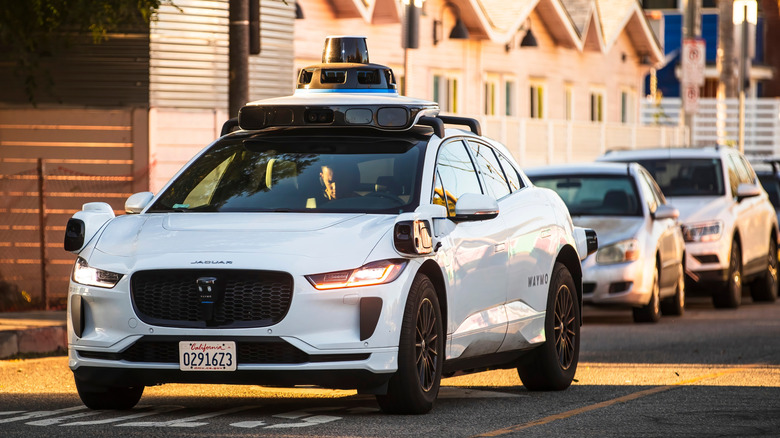
In a city like San Francisco, a Waymo vehicle might encounter a cyclist running a red light. Because the system has been trained on millions of miles of San Francisco data, it has a high probability of successfully predicting and reacting to that behavior.
However, "Edge Cases"—those rare, bizarre, or highly ambiguous situations—are where AI currently struggles. A police officer using hand signals in a snowstorm, a parade route with temporary traffic diversions, or an unmapped dirt road in the middle of nowhere are situations that require human intuition. The data required to train a system for every possible global edge case is essentially infinite.
Performance in Extreme Weather
In May 2026, reports surfaced of Waymo vehicles struggling in flooded conditions in Atlanta and San Antonio. While the company responded by restricting operations, these incidents highlighted the limitations of current sensor suites (LiDAR, radar, and cameras). In heavy rain, fog, or snow, sensors can be blinded or provide "noisy" data that makes it impossible for the software to make a safe driving decision. Level 5 requires not just better software, but a leap in hardware resilience that currently does not exist in mass-produced vehicles.
Official Responses and Industry Outlook
The National Highway Traffic Safety Administration (NHTSA) maintains a cautious stance. Their official guidance states that "Level 5 technology is not currently available in vehicles for consumer purchase." The agency emphasizes that the levels are descriptive, not a roadmap.
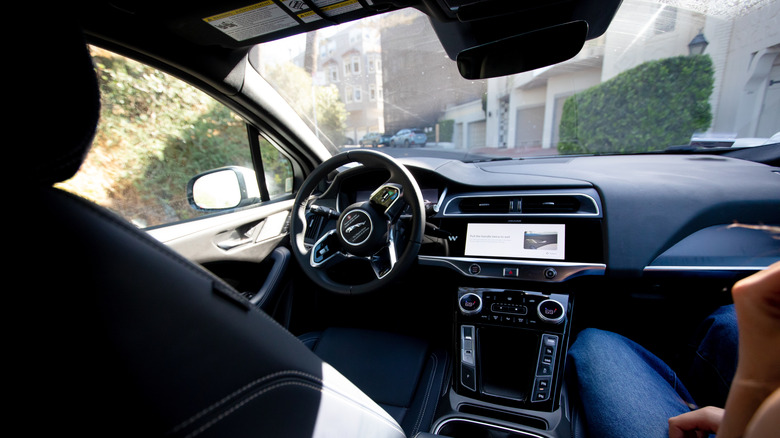
Waymo, for its part, remains transparent about its focus. In their latest white papers, the company emphasizes the "Waymo Driver"—their proprietary stack—and its ability to scale safely. They argue that "expanding the ODD" is the most responsible path forward. By slowly increasing the weather, location, and speed parameters, they are refining the system’s intelligence without making the premature, and potentially dangerous, leap to claiming full "Level 5" capability.
Other industry leaders, such as Tesla, have occasionally suggested that their vision-based approach could achieve full autonomy through massive data collection. However, these claims are frequently challenged by regulators and safety experts who note the vast difference between "driver assistance" (which Tesla’s Full Self-Driving currently is, legally speaking) and true, unsupervised "Level 5" autonomy.
Implications for the Future
The Economic Shift
The realization that Level 5 is not around the corner has significant economic implications. The "robotaxi" business model relies on a driverless vehicle being able to go anywhere, anytime. If a company is restricted to specific, high-density, well-mapped urban areas, the total addressable market is smaller. Investors are beginning to realize that the path to profitability is a slow, methodical expansion of the ODD rather than a singular "Eureka!" moment of achieving Level 5.
Regulatory Hurdles
As vehicles become more autonomous, the question of liability shifts from the operator to the manufacturer and the software developer. Level 4 systems provide a clear ODD, which helps define where the manufacturer is liable. In a hypothetical Level 5 world, where a car could be anywhere, defining liability becomes a legal nightmare. Legislators are likely to move slowly, keeping the current, more constrained model of Level 4 as the gold standard for the foreseeable future.
The Human Element
The ultimate implication is that humans are not leaving the loop anytime soon. Whether it is remote human tele-operators monitoring a fleet or the necessity of human intervention in extreme conditions, the "fully driverless" car is a target that continues to move further away the closer we get to it.
Conclusion
We are currently living in the era of "High Automation," a time where machines can perform feats once thought impossible. Waymo’s ability to navigate complex urban environments is a triumph of engineering. Yet, conflating Level 4 with Level 5 does a disservice to the complexity of the task. Level 5 is not just about the vehicle’s "intelligence"; it is about the mastery of the entire, chaotic, and unpredictable world.
As we look toward the remainder of the decade, the industry’s success will not be measured by who claims to reach Level 5 first, but by who can safely, reliably, and consistently expand the boundaries of where their vehicles can go. For now, the steering wheel—or the lack thereof—remains a powerful symbol, but it is the invisible map of the ODD that truly dictates where the future of transportation will travel.



 Sagoh
Sagoh
 Raul Delapena Setiawan

 Azzam Bilal Chamdy
 Ali Ikhwan