
 Reynand Wu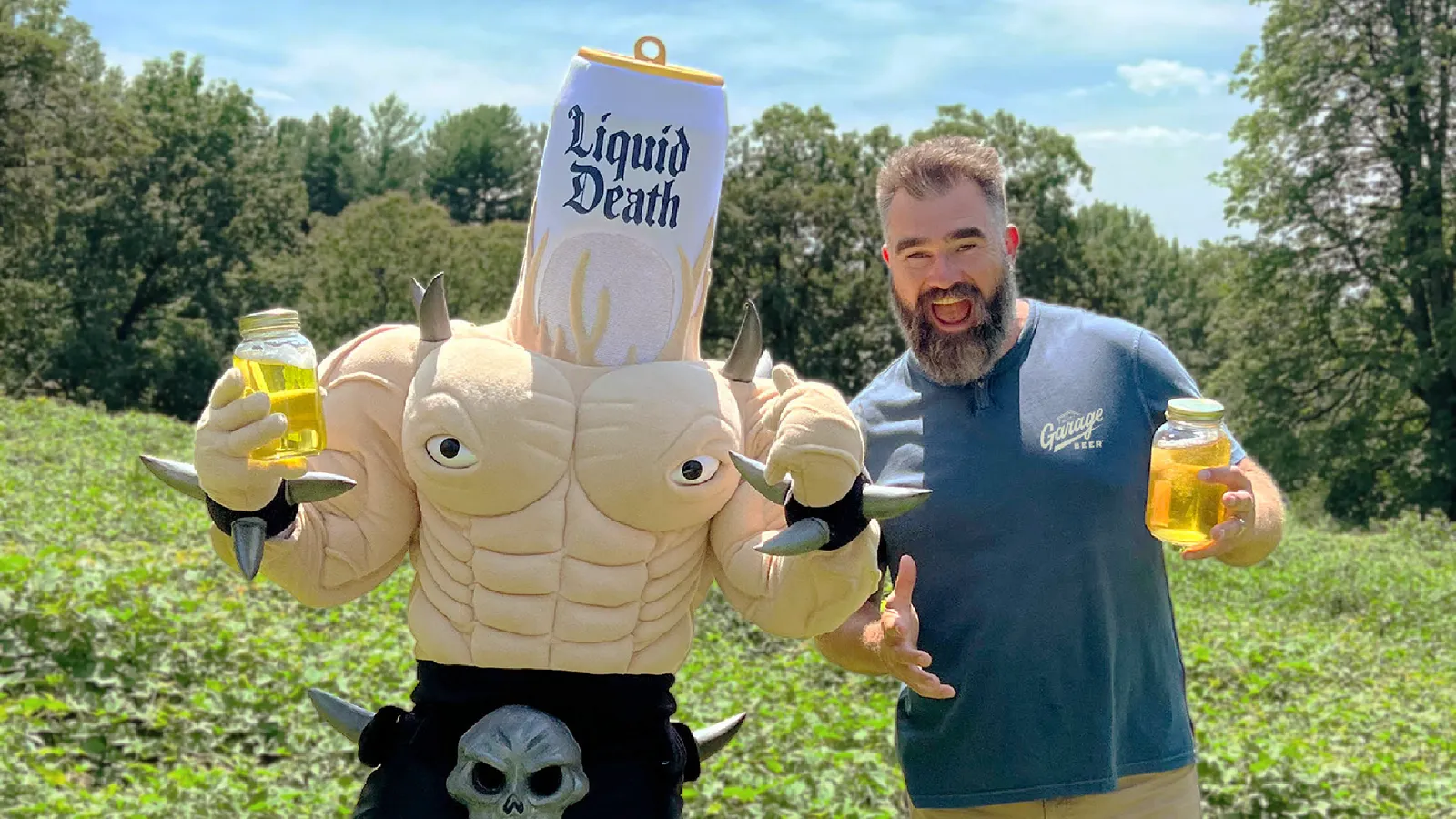
In the rapidly evolving landscape of artificial intelligence, the industry’s greatest bottleneck is not necessarily the scarcity of advanced chips or the availability of venture capital. It is, quite literally, the heat. As AI models grow in complexity, the data centers required to house them have become behemoths of resource consumption, specifically regarding water. A new, unorthodox partnership between the irreverent beverage brand Liquid Death and the independent beer label Garage Beer has launched a satirical campaign that seeks to highlight the environmental footprint of AI—by asking the public to "pee on computers."
While the campaign employs a crude, shock-value sense of humor, it underscores a burgeoning "Not In My Backyard" (NIMBY) sentiment that has begun to dominate local government meetings and town halls across the United States.
The Environmental Cost of Artificial Intelligence
The infrastructure powering the generative AI revolution is physically demanding. Large-scale data centers are massive, climate-controlled facilities that house thousands of servers, which generate significant amounts of heat during operation. To prevent these systems from crashing, operators rely on massive cooling systems, which frequently utilize water-intensive evaporation techniques.
Recent studies, including reports from the Environmental and Energy Study Institute (EESI), indicate that a single large data center can consume up to 5 million gallons of water per day. This is roughly equivalent to the daily water usage of a medium-sized American city. As drought conditions persist in many parts of the country and local water tables face increased pressure, the intersection of technological progress and ecological sustainability has become a flashpoint for public debate.
For many, the promise of an AI-driven future is being overshadowed by the immediate reality of water scarcity and local infrastructure strain. As the Gallup poll recently revealed, over 70% of Americans oppose the construction of AI data centers in their immediate vicinity, with nearly half of respondents expressing strong opposition. This public sentiment has transformed data center zoning into one of the most contentious issues in contemporary land-use politics.
A Campaign Born of Irreverence and Insight
The music video released by Liquid Death and Garage Beer on Tuesday is designed to cut through the noise of traditional corporate environmental messaging. It features NFL icon and Garage Beer co-owner Jason Kelce, who appears in the video engaging in a performance that is as jarring as it is memorable.
The 90-second clip begins with Kelce relieving himself into a jar, a provocative act intended to grab the viewer’s attention before he pivots to a didactic explanation of the data center cooling crisis. The video evolves into a musical number, featuring the brand’s "Murder Man" mascot and a cast of characters who join Kelce in a chorus that ironically asks the public to "pee on computers, together, to save humanity."
The campaign goes beyond the screen, promoting a "Coolant Collector" product that encourages consumers to participate in the absurd spectacle by sending their waste to data centers of their choosing. While the humor is intentionally crass, the underlying strategy is calculated. Liquid Death’s vice president of creative, Andy Pearson, notes that the team wanted to avoid the "preachy" tone often associated with environmental activism.
"When you look at the data, it is literally the one thing that unites all Americans right now, across the spectrum," Pearson said. "We’re positioning our energy drink as a light beer of energy—it’s fewer calories, it’s lighter, it’s more drinkable—so that was the strategy."
Chronology: From Retail Synergy to Social Satire
The partnership between Liquid Death and Garage Beer did not begin as a crusade against AI infrastructure. It started as a practical business arrangement: a co-packaging agreement designed to get both brands into more retail settings. However, the collaborative energy between the two companies quickly outgrew the retail space.
- Phase One (Early Development): The companies identified a shared brand identity rooted in indie-spirit, comedy, and a desire to challenge the status quo.
- Phase Two (The Writer’s Room): Liquid Death, known for its in-house creative process, convened a writer’s room that included outside comedians and contributors. It was comedian Sabrina Jalees who initially pitched the concept of focusing on data center cooling, recognizing the absurdity of using precious water resources to keep servers at a functional temperature.
- Phase Three (Creative Refinement): The team looked for inspiration in historical social movements that utilized music to drive awareness, specifically citing 1980s benefit events like "Live Aid" and "Hands Across America." The audio company Butter was brought on board to compose a song that mirrored the earnest, anthemic style of those era-defining benefit tracks.
- Phase Four (Execution): With the addition of Jason Kelce—a figure already associated with the brand through his wife, Kylie Kelce’s, previous work—the campaign was finalized for social media and connected TV channels.
The "Not In My Backyard" Problem
The political reality of data center expansion is increasingly grim for Big Tech. From rural Virginia to the high deserts of Arizona, local residents are forming grassroots coalitions to block the construction of data centers. Their arguments center on three primary pillars: water rights, energy grid stability, and noise pollution.
Industry analysts suggest that the data center industry has a "politics problem." While the demand for AI compute power continues to scale exponentially, the physical space to build these facilities is shrinking as public scrutiny increases. Companies are forced to navigate a complex web of environmental impact assessments, zoning board hearings, and increasingly hostile town hall meetings.
The Liquid Death and Garage Beer campaign taps directly into this frustration. By framing the data center issue as a collective struggle, the brands are leveraging the public’s anxiety to build brand affinity. It is a cynical but effective way to position two independent companies as the "common man’s" allies against the perceived encroachment of corporate tech giants.
Official Responses and Corporate Strategy
For Garage Beer CEO Andy Sauer, the collaboration was a natural fit. "Garage Beer and Liquid Death share a similar sense of humor and approach to marketing," Sauer said in a statement. "The partnership felt natural from the start, and the video gave us a chance to bring both brands’ personalities together in a way that was fun, unexpected and very us."
Liquid Death’s creative strategy has always relied on this type of "anti-marketing." By leaning into the absurdity of their products—canned water and light beer—they have successfully positioned themselves as disruptors. Using a high-profile figure like Jason Kelce allows the campaign to bypass the skepticism consumers usually have toward corporate environmentalism. By not taking themselves seriously, the brands are able to broach serious topics without being dismissed as "greenwashing."
The Broader Implications for AI and Society
The success of this campaign may signal a shift in how consumer brands interact with the political and environmental concerns of their target demographics. As the AI sector continues to dominate headlines, the disconnect between the digital convenience of chatbots and the physical reality of resource-heavy infrastructure will only widen.
The long-term implications are twofold:
- Increased Transparency: Data centers will likely be forced to move toward more sustainable cooling solutions, such as closed-loop systems or liquid immersion cooling, to mitigate public backlash.
- Corporate Activism: We are likely to see more brands adopting the "Liquid Death model"—using humor and viral content to highlight the externalities of the industries their competitors operate in.
While it is unlikely that anyone will actually begin shipping their waste to data centers, the campaign succeeds in bringing a dry, technical, and often ignored problem into the mainstream cultural conversation. It asks a fundamental question: Is the convenience of an AI-generated email worth the cost of millions of gallons of water?
Ultimately, the campaign serves as a reminder that as we build the digital future, we are still tied to the physical world. Whether that reality is met with policy changes or bizarre music videos featuring NFL stars, the cooling crisis is one that the AI industry can no longer afford to ignore. The "Great Cooling Crisis" has arrived, and it has, quite unexpectedly, become the subject of the year’s most provocative marketing stunt.


 Iffa Jayyana
 Raul Delapena Setiawan

 Sagoh
Sagoh

 Azzam Bilal Chamdy
 Ali Ikhwan