
 Asro
Asro
In an era where attention spans are measured in milliseconds and algorithmic trends shift overnight, the ability to provoke a laugh has become the ultimate currency in digital marketing. However, for many brands, the chasm between "trying to be funny" and "actually being funny" is wide, treacherous, and often filled with cringeworthy marketing failures. Seeking to bridge this gap, Snapchat has released a groundbreaking new report that attempts to demystify the comedic sensibilities of younger generations, providing a blueprint for brands desperate to remain relevant.
The Evolution of Digital Humor: A New Social Language
To older generations, modern youth culture can often feel like a foreign language. When a teenager talks about "aura farming," "uncs," or the latest cryptic meme format, the uninitiated are left scratching their heads. Yet, as Snapchat rightly notes in its recent industry report, this isn’t just mindless slang; it is a fundamental shift in how Gen Z and younger Millennials communicate.
Humor has always been a primary driver of engagement. From the punchlines of early television to the viral sketches of the Vine era, comedy acts as a universal connector. However, the mechanics of humor have undergone a radical transformation. Today, comedy for younger audiences is characterized by irony, absurdity, self-deprecation, and a deep-seated reliance on hyper-specific inside jokes that evolve in real-time.
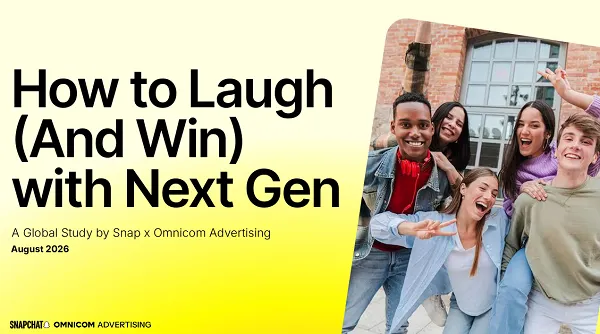
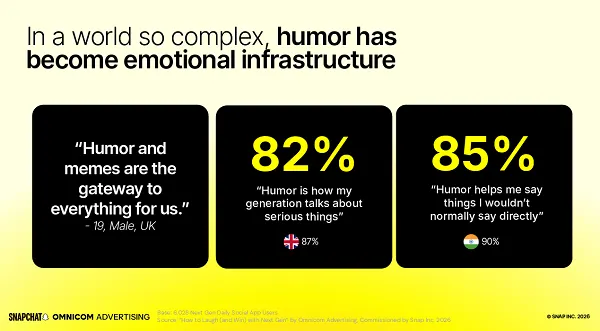
Snapchat’s report highlights that for Gen Z, humor is not merely a form of entertainment—it is a "primary social language." It is the glue that holds online communities together and the filter through which they process global events, personal struggles, and brand interactions.
Methodology: Mining the Data of Millions
To move beyond anecdotal evidence and surface-level observations, Snapchat partnered with global advertising powerhouse Omnicom. The study is extensive, surveying more than 6,000 social media users aged 13 to 28 across six diverse markets: the United States, the United Kingdom, Canada, France, Germany, and India.
The goal was to move past the "what" and understand the "why." By analyzing the preferences and habits of this vast, geographically diverse cohort, the researchers sought to identify common threads in what makes a piece of content "share-worthy." The resulting data offers a rare, granular look at the intersection of brand messaging and digital comedy, providing marketers with a map of the current cultural landscape.

The Marketing Paradox: Demand vs. Execution
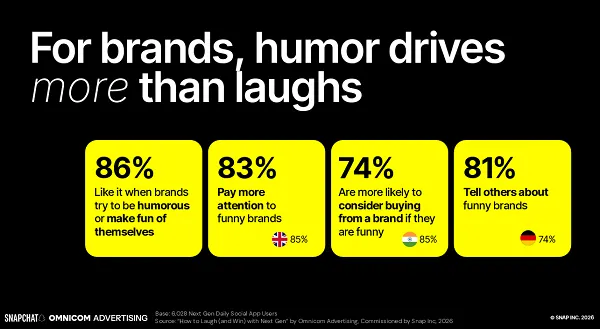
The findings are both encouraging and cautionary for the advertising industry. Data from the report confirms that young audiences are not inherently allergic to brand-led humor; in fact, they are actively looking for it. When asked about their preferences, a significant majority of respondents indicated that they enjoy seeing brands participate in trends and utilize humor in their promotional campaigns.
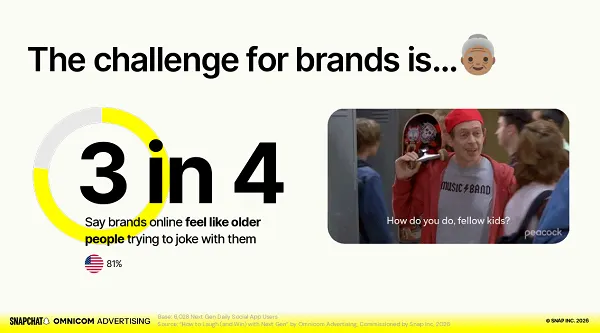
However, the report also serves as a stark reality check. While the appetite for funny brand content is high, the execution is frequently lacking. The data reveals that when brands attempt to leverage humor, they often fall flat, resulting in content that feels forced, out-of-touch, or—worse—desperate.
This disconnect between the intention to be funny and the reception of the audience is the central problem facing modern social media teams. When a brand uses a meme incorrectly or references a trend that has already "died" in the eyes of the internet, the resulting backlash can damage brand equity far more than a staid, traditional advertisement ever could.

The Mechanics of Comedy: A Structural Breakdown
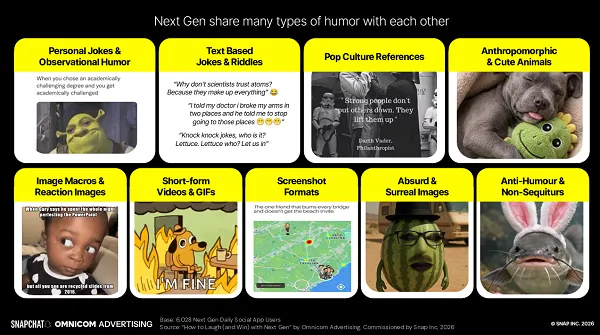
In a move that is perhaps unprecedented for a social media platform, Snapchat has attempted to break down the "mechanics" of being funny. The report offers a basic structural framework for comedy writing, designed to guide marketers through the process of developing content that resonates with younger demographics.
The framework suggests that successful comedic content generally relies on three pillars:
- Relatability: The humor must be grounded in the lived experience of the audience.
- Timing and Context: The content must be current and reflect the specific "vibe" of the platform.
- Authenticity: The brand must sound like a human, not a committee.
By providing these guidelines, Snapchat is effectively attempting to teach a "comedic literacy" to marketers. The report outlines specific scenarios and formats that have proven successful in the past, encouraging brands to move away from polished, high-production-value commercials toward the lo-fi, authentic, and often chaotic aesthetic that dominates feeds like Snapchat’s Spotlight or TikTok.
The Limits of Commodification: Can "Funny" Be Taught?
Despite the value of Snapchat’s guide, a critical question remains: Can comedy truly be reduced to a checklist?
The industry consensus suggests that there is a hard limit to what a report can achieve. Creativity, and specifically the ability to write sharp, engaging, and resonant comedic content, is a subjective skill that often defies commodification. There is a "human element" to comedy—a sense of timing, self-awareness, and cultural nuance—that simply cannot be learned from a PowerPoint presentation.
If a brand lacks an authentic understanding of its audience, even the most sophisticated "how-to" guide will likely fail to produce a viral hit. The most successful brand accounts on social media are not the ones that follow a manual; they are the ones that hire talent with a native understanding of internet culture and give them the autonomy to take risks.
Strategic Implications for Modern Brands
For CMOs and marketing teams, the implications of this report are threefold:
1. Shift from Production Value to Cultural Value
Brands must move away from the traditional "glossy" advertising model. High-definition production often signals to a younger audience that an ad is "corporate," which can act as a barrier to engagement. Instead, brands should lean into the aesthetic of the platform—using mobile-first formats, user-generated-style content, and a more casual tone.
2. Radical Self-Awareness
Before a brand attempts to be funny, it must conduct a "cringe audit." This involves evaluating whether the brand’s voice is genuinely compatible with humor. Not every product or service is suited for comedy. A brand that tries to be funny when it is fundamentally seen as "serious" or "corporate" will likely face mockery. Authenticity requires knowing when to sit out a trend.
3. Empowering Human Creators
The era of the "brand account" being run by an automated scheduling tool is over. To successfully integrate humor, brands must empower their social media managers to act like creators. This means less internal oversight, faster approval processes, and a culture that encourages experimentation.
Looking Ahead: The Future of Brand-Consumer Interaction
As we look toward the future of digital advertising, the barrier between "content" and "advertisement" will continue to blur. Snapchat’s effort to quantify humor is a testament to the fact that social media platforms are no longer just places where people communicate—they are the primary theaters where culture is created.
The brands that win in the coming years will be those that treat their audience with respect, acknowledging that they are sophisticated consumers who can instantly identify when a brand is "trying too hard." While Snapchat’s report cannot magically bestow a sense of humor upon a brand, it provides a vital starting point for those willing to do the work.
In conclusion, the most important takeaway for marketers is that humor is a relationship, not a tactic. It requires trust, empathy, and a willingness to be vulnerable. If a brand can successfully navigate the complexities of modern digital comedy—by embracing the absurdity of the internet while maintaining a clear sense of its own identity—it stands to gain something far more valuable than a click: it earns a place in the conversation.
Ultimately, Snapchat is providing the tools, but the brands themselves must provide the soul. In the digital age, being funny is no longer just a nice-to-have; it is a business imperative. The companies that learn to speak the language of their customers will thrive, while those that remain stuck in the past will find themselves scrolling through a digital landscape they no longer understand.


 Ammar Sabilarrohman
 Nana Wu
 Lina Irawan


 Suro Senen
 Jia Lissa