
 Nana Wu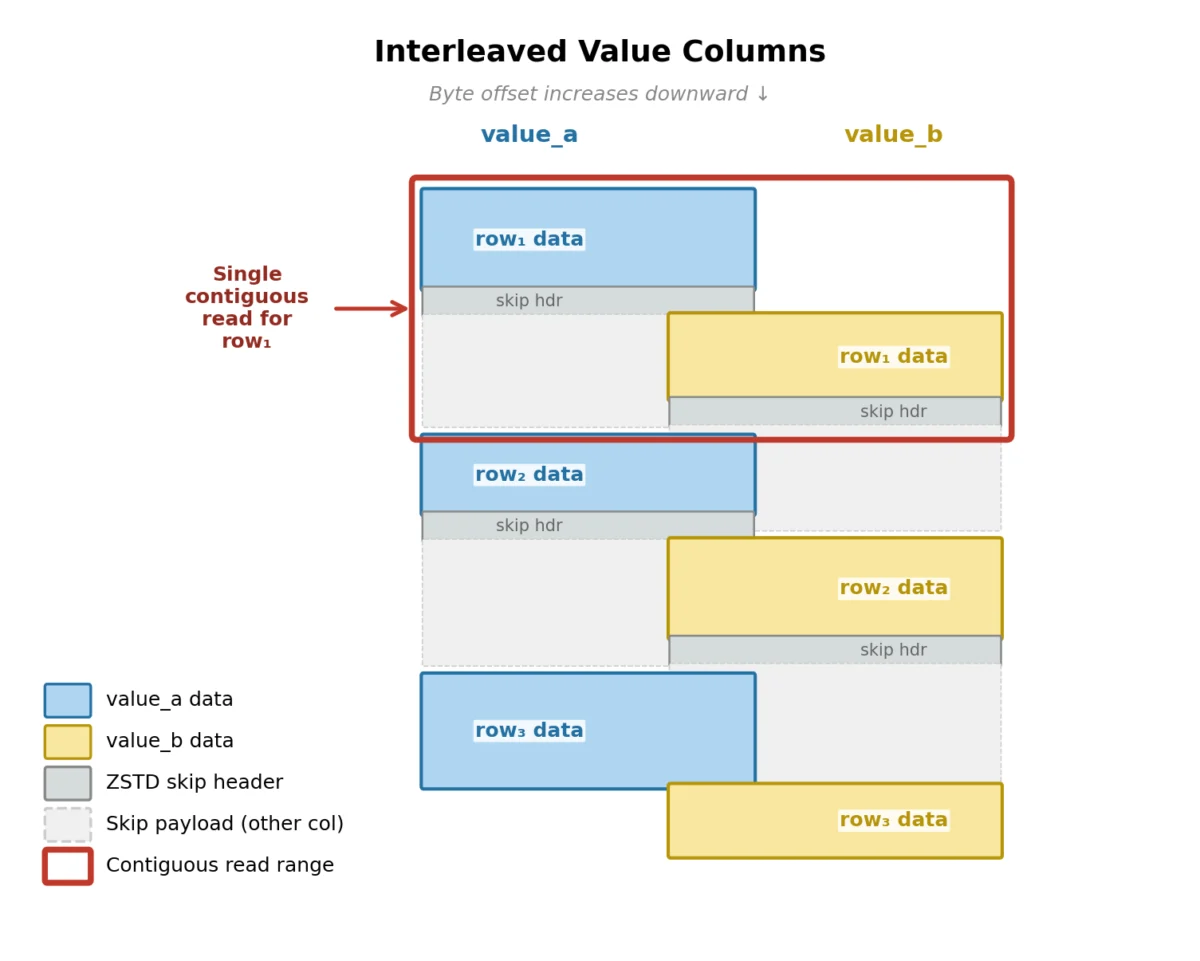
In the modern data-driven enterprise, a silent crisis is brewing. Companies like Spotify maintain massive data ecosystems where exabytes of historical information sit in cold storage—GCS or S3 buckets—while only a fraction of that data is available for real-time applications. To provide a personalized user experience or to fuel an AI agent capable of answering complex historical queries, engineers have traditionally relied on Key-Value (KV) stores like Bigtable or DynamoDB. However, as data scales, the cost of keeping vast swaths of history in these high-performance, high-cost systems becomes economically untenable.
This architectural schism has forced a compromise: developers either limit the "context window" of their AI agents to what can fit in expensive memory-resident stores, or they accept the agonizing latency of traditional SQL-based analytical engines. Enter Random Access Parquet (RAP), a breakthrough approach that promises to transform the data lake from a static repository into a high-performance, interactive serving layer.
The Core Problem: The Latency of Analytical Engines
To understand the innovation behind RAP, one must first recognize the fundamental disconnect between how we store data and how we access it. Online services require "point queries"—instantaneous lookups of specific user data. Conversely, distributed SQL engines like Trino or BigQuery are engineered for massive throughput, not surgical precision.
When a user asks an AI agent, "What was I listening to last summer?" the request initiates a complex, multi-stage retrieval process. The data spans billions of users and thousands of daily Parquet files. If an engine has to scan even a fraction of those 90,000 files, the query planning and job scheduling overhead—often lasting several seconds—renders the "interactive" requirement impossible.
The bottleneck isn’t the cloud storage itself. Modern cloud infrastructure is remarkably fast; GCS and S3 Express One Zone can deliver data in single-digit millisecond latency. The bottleneck lies in the query engines that treat every file as a haystack, requiring layers of metadata parsing, footer fetching, and row-group scanning that create a "dependent read chain." Each link in this chain requires a round-trip to the cloud, adding tens of milliseconds of latency per request.
Chronology: The Evolution of Data Serving
The journey to RAP follows a clear evolution in big data architecture:
- Phase 1: The Monolithic Warehouse (Pre-2010s): Data was centralized in relational databases. While fast, they could not scale to petabyte levels, leading to massive costs and performance degradation.
- Phase 2: The Data Lake Era (2010s): Companies shifted to "store everything" models using Hadoop and later Cloud Object Storage. This solved the storage cost problem but introduced the "analytical bottleneck" for real-time needs.
- Phase 3: The Hybrid Serving Layer (2015–2023): To bridge the gap, engineers implemented a dual-storage strategy: analytical data in the lake, and "hot" serving data in KV stores. This required complex ETL pipelines, massive data duplication, and the inherent risk of data drift between the two systems.
- Phase 4: The RAP Paradigm (Present): RAP eliminates the need for the second system. By creating an external index over existing Parquet files, organizations can achieve KV-store performance directly on top of the data lake.
The RAP Approach: Eliminating the Scan
RAP functions by replacing scanning with lookup. By generating an external index that maps specific keys (like a user_id) directly to file locations and row numbers, the system bypasses the "discovery" phase of a query.
The External Index Mechanics
The index acts as a high-speed directory. Instead of reading footers and metadata across thousands of files, the system queries the index—which is itself distributed and naturally scalable—to find the exact byte range needed. This reduces the process to an $O(1)$ lookup followed by a single, parallelized ranged read.
Importantly, this process is agnostic to the existing storage format. RAP operates on standard Parquet files that are already being used for machine learning pipelines and batch analytics. This "zero-copy" architecture means that companies no longer have to pay for the storage of the same data twice.
Supporting Data: Optimizing for Performance
While RAP works on existing, unmodified Parquet files, its true power is unlocked through intentional file preparation. By shifting how data is written, engineers can minimize I/O overhead to a point where a query becomes a single, tiny fetch.
Key Optimization Strategies
- Concentrating Data: Through techniques like Sorting by Key and Co-grouping, data for a single user is localized. This ensures that when the index points to a location, the relevant data is contiguous, minimizing the number of reads.
- Bytes per Read: By implementing One Page per Key or ZSTD frame resets, the system ensures that the reader retrieves only what is necessary. In a standard Parquet file, one might have to read a 4MB page to extract 100 bytes of data; with these optimizations, that 100-byte fetch becomes possible without the surrounding "noise."
- Read Operations: Perhaps the most significant optimization is the use of Blobs and Variants or Interleaving Columns. By restructuring the physical layout of the file, multiple columns required for a point query can be fetched in a single contiguous operation.
The following table summarizes the trade-offs:
| Optimization | Point-lookup Benefit | Analytics Tradeoff |
|---|---|---|
| Sorting by Key | Fewer files/pages per key | None |
| Coarser Partitioning | Fewer files to index | Reduced partition pruning |
| One Page per Key | Entire page is the result | Modest PageIndex growth |
| Interleaving Columns | Single contiguous read | Increased I/O for single scans |
| Covering Index | No storage read required | Index size increase |
Official Perspectives and Industry Implications
Industry architects note that the shift toward RAP is symptomatic of a larger trend: the "AI-ification" of the data stack. As LLMs become the primary interface for users, the demand for "grounding" these models in vast, historical datasets is unprecedented.
"The bottleneck for AI agents is not the intelligence of the model, but the accessibility of the context," says one lead data architect familiar with the implementation. "If an AI agent can only answer based on what’s in a cache, it’s a toy. If it can answer based on the entire historical record of the data lake, it’s a product."
The Economic Implications
The economic argument is arguably the most compelling for enterprise CTOs. By utilizing RAP, the cost per query drops from the overhead of managing a massive, distributed KV-store cluster to the raw cost of cloud storage reads. Furthermore, the operational complexity of keeping two systems in sync—the "ETL tax"—is removed entirely.
Secondary Indexing and Flexibility
RAP does not force a rigid structure. Because it relies on external indexes, secondary lookups (e.g., querying by product_id after having indexed by user_id) can be added by creating new access structures. This allows data teams to pivot their query strategies based on changing business needs without having to rewrite or re-partition petabytes of underlying data.
Conclusion: The Future of the Data Lake
The introduction of Random Access Parquet represents a fundamental pivot in data engineering. By bridging the gap between analytical throughput and interactive point lookups, RAP effectively collapses the distinction between the "Data Lake" and the "Serving Layer."
For companies like Spotify, this means the historical data that was once relegated to long-term storage reports can now serve as the active memory for AI agents. The era of choosing between "fast" and "cheap" is drawing to a close. With RAP, the industry is moving toward a future where one dataset—the one already sitting in the lake—can serve both the rigorous analytical needs of the business and the rapid-fire, interactive demands of the AI-powered future.
As more organizations adopt this pattern, the data lake will transition from a cold, quiet archive into the beating heart of the real-time enterprise. The haystack is still there, but thanks to RAP, we no longer need to burn it down to find the needle.


 Lina Hope
 Nila Kartika Wati
 Suro Senen
 Jia Lissa
 Evan Lee Salim

 Ali Ikhwan