 Nana Muazin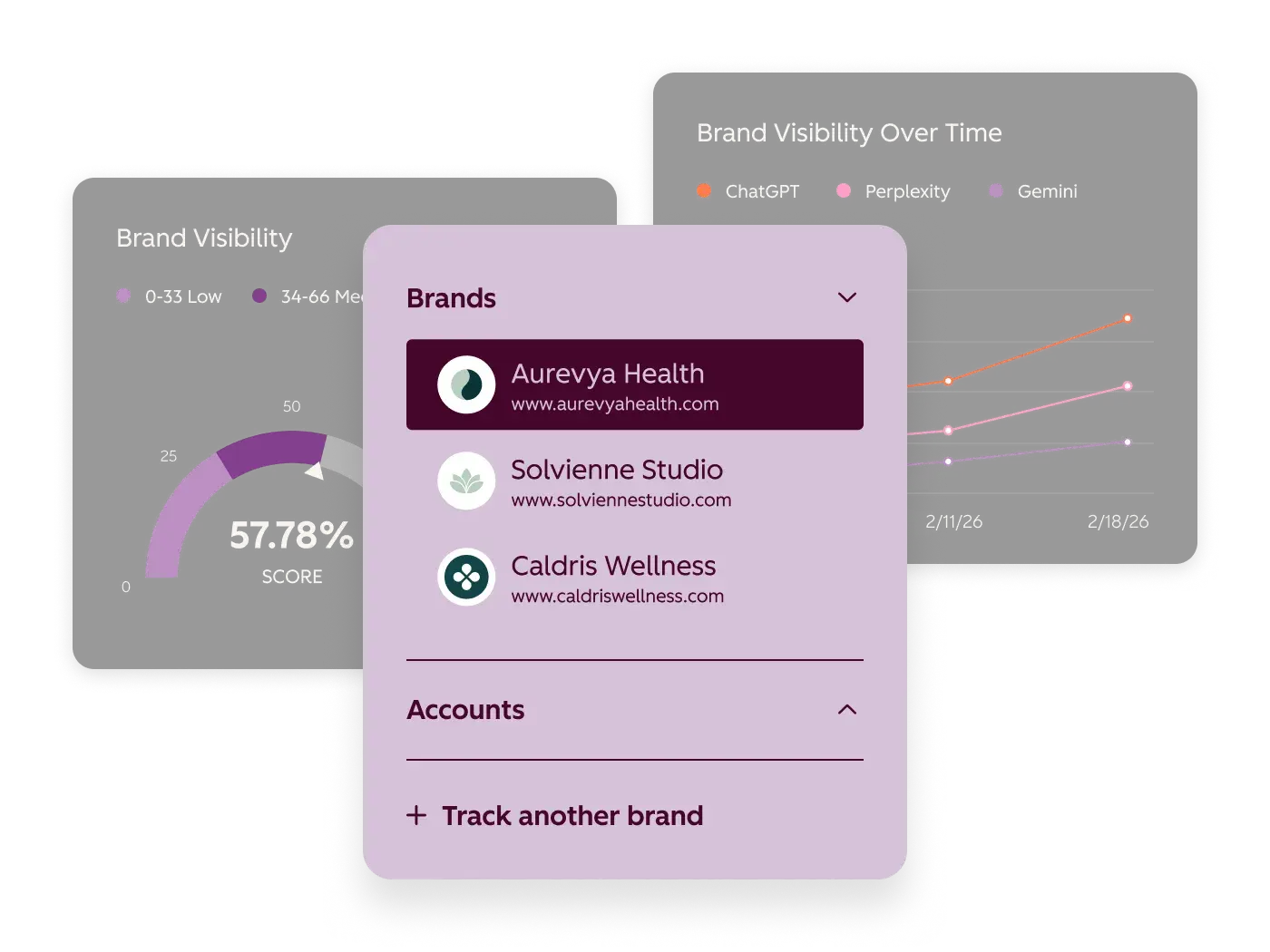
The landscape of search is undergoing a structural revolution. For two decades, "Search Engine Optimization" (SEO) has been synonymous with ranking for blue links on Google. However, the emergence of generative AI—ChatGPT, Gemini, Perplexity, and Google AI Overviews—has shifted the goalposts. Today, users increasingly rely on synthesized, conversational answers rather than a list of websites. This shift has birthed a new discipline: Answer Engine Optimization (AEO).
As businesses race to remain visible in these AI-driven responses, a new category of software has emerged. Profound and Semrush have established themselves as early leaders in this space, each offering distinct approaches to tracking AI visibility. Meanwhile, HubSpot has entered the fray with a CRM-integrated solution that aims to connect AI visibility directly to the bottom line. This article breaks down the evolution of AEO, the technical differences between these platforms, and how marketing leaders should decide which tool aligns with their strategic goals.
What is AEO and Why Does It Matter?
At its core, SEO is about securing traffic through search engine result pages (SERPs). AEO, conversely, is about securing "mention share" within the generative output of an AI model. When a user asks an AI agent a complex question, the model synthesizes information from various sources to provide a definitive answer. If your brand is not cited in that output, you are effectively invisible to that user.
The Shift in Buyer Behavior
The urgency of AEO stems from a fundamental change in how buyers conduct research. In the past, a user might click through three or four websites to synthesize an opinion. Today, the "zero-click" experience is becoming the norm; users ask the AI to perform the synthesis for them and act upon the first response provided. If your brand is not part of that initial consideration set, your chances of converting that lead drop significantly.
AEO vs. SEO: The Messy Reality
While AEO shares much of its DNA with traditional SEO—such as the need for authoritative content, structured data, and high-quality topical relevance—the metrics for success are entirely different. In SEO, you track rankings (position 1, 2, 3). In AEO, you track "visibility," "sentiment," and "citation frequency." Furthermore, whereas SEO is heavily influenced by backlinks and domain authority, AEO is heavily influenced by the training data of the LLM and the real-time retrieval-augmented generation (RAG) processes that pull from the web.
Profound vs. Semrush: A Comparative Chronology of Capabilities
To understand the current market, we must look at how these tools evolved.
The Rise of Profound
Profound was built as a "pure-play" AEO tool. Recognizing that AI search was fundamentally different from Google’s traditional index, the founders focused on browser-based emulation. By mimicking the exact experience of a human user—down to the browser environment—Profound captures high-fidelity data on how AI answers queries. This has made it a favorite for brands that require deep, granular insight into how their brand is being narrated by AI.
The Evolution of Semrush
Semrush, conversely, began as a massive, multi-faceted SEO suite. Its entry into AEO was an extension of its existing dominance in keyword tracking and site auditing. Leveraging a database of over 239 million tracked LLM prompts, Semrush provides a "birds-eye view" of AI visibility. It is less about deep, browser-based emulation and more about scaling AI tracking alongside traditional SEO workflows.
Supporting Data: Feature Breakdown
When selecting a tool, the "engine coverage" is often the most overlooked factor. Many entry-level tools only track ChatGPT, which is a major blind spot.
| Feature | Profound | Semrush | HubSpot AEO |
|---|---|---|---|
| Core Focus | Pure-play AEO | SEO + AI Visibility | CRM-integrated AEO |
| Data Capture | Browser-based | Historical DB | Live query context |
| Engines Tracked | Up to 10 | 4 Major Engines | ChatGPT, Gemini, Perplexity |
| Pricing Entry | $99/mo | $199/mo | $50/mo |
Engine Coverage: Why Diversity Matters
If your target audience is B2B, they are likely using Perplexity for technical research. If you are a B2C brand, ChatGPT and Gemini are likely your primary drivers. Profound offers a tiered approach that allows for deeper engine tracking as you scale. Semrush includes major AI engines in its paid tiers, but limits the number of custom prompts, making it better suited for teams already integrated into the Semrush ecosystem.
The Power of Server Log Analytics
One area where Profound distinguishes itself is in "Agent Analytics." By reading server logs directly, Profound can identify which AI bots are crawling your site, regardless of whether your site is JavaScript-heavy. This provides a level of technical transparency that traditional site crawlers (like those used in Semrush) often miss.
Official Perspectives: The Role of CRM Integration
HubSpot’s approach to AEO represents a departure from the "tool-only" mindset. According to HubSpot’s product philosophy, AEO is not a siloed task for SEO specialists; it is a critical component of the marketing funnel.
"By connecting AEO to the CRM," a HubSpot spokesperson noted, "we allow teams to see which AI-driven leads are actually converting into revenue." This integration removes the guesswork of "vanity metrics." Instead of just reporting that your brand appeared in an answer, you can track that specific touchpoint through the customer journey to a closed-won deal.
Implications: Building Your AEO Strategy
If you are looking to operationalize AEO within your organization, follow this three-phase framework.

Phase 1: The Audit
Before you buy, you must baseline. Use the HubSpot AEO Grader to understand your current visibility. Simultaneously, check your server logs. If your site is already being crawled by GPTBot or PerplexityBot, you have an opportunity to optimize your existing content for higher authority before you spend a dime on new software.
Phase 2: Strategic Prompt Research
Do not fall into the trap of tracking hundreds of keywords. Start with 20 to 30 "high-intent" prompts that reflect the actual questions your customers ask before purchasing.
- Profound is best for those who want to see exactly what the user sees.
- Semrush is best for those who want to discover new prompts based on massive historical data.
Phase 3: Attribution
The biggest failure in AEO today is the "last-click" attribution model. Because AI tools often strip out referral data (appearing as "Direct" traffic), you must build dedicated segments in your analytics tools. Use your CRM to tag traffic from AI sources so you can prove the ROI of your AEO efforts to stakeholders.
Conclusion: Which Tool Fits Your Workflow?
The decision between Profound, Semrush, and HubSpot depends entirely on your current stack and team structure:
- Choose Profound if: You are an AEO-first team or an agency that needs high-fidelity, browser-captured data and granular server-log insights. It is a specialized tool for specialized outcomes.
- Choose Semrush if: You are already heavily invested in the Semrush ecosystem. The ability to manage your traditional SEO, local SEO, and AI visibility in one dashboard is a massive productivity multiplier for small-to-mid-sized marketing teams.
- Choose HubSpot AEO if: Your priority is revenue attribution and team alignment. If you need to prove to leadership that your AI visibility is generating pipeline, the native connection to the CRM is the most powerful tool in your arsenal.
The Final Word
The "answer engine" era is not coming; it is already here. Whether you are using the deep technical insights of Profound, the massive data scale of Semrush, or the integrated CRM power of HubSpot, the goal remains the same: ensure that when a customer asks a question, your brand is the answer. Start with your baseline today, refine your content for AI readability, and ensure you are measuring success in revenue, not just rankings.


 Ali Ikhwan
 Layla Zulfa
 Ammar Sabilarrohman
 Suro Senen
 Jia Lissa
 Evan Lee Salim