
 Suro Senen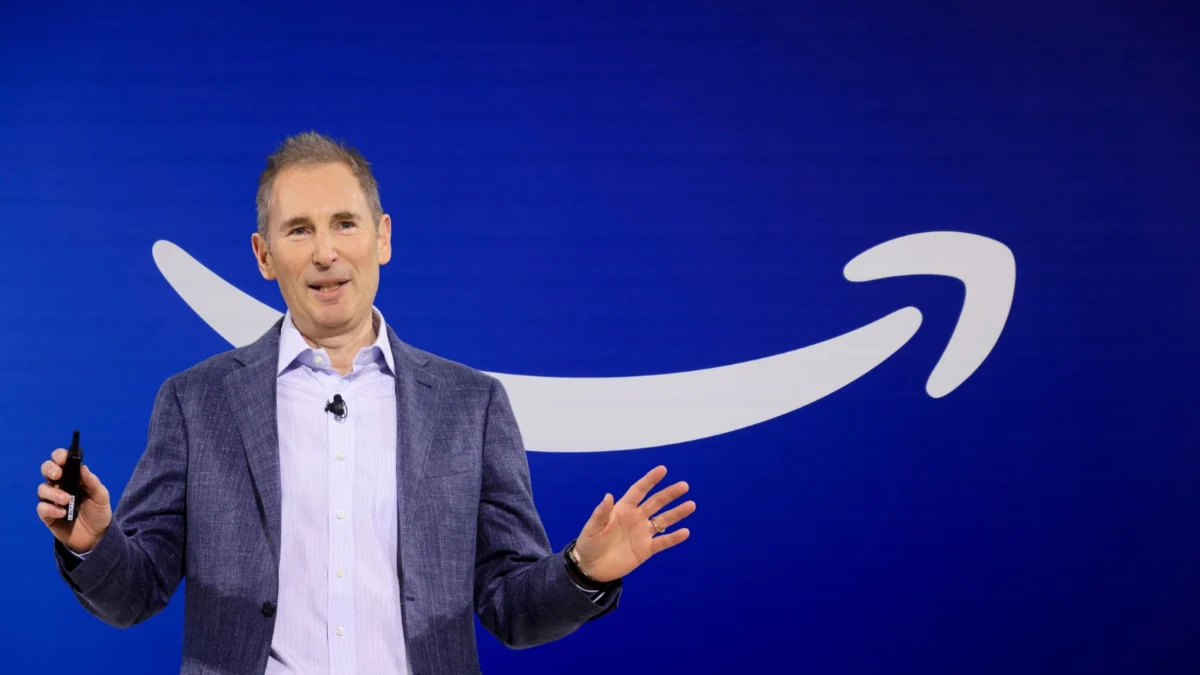
In the landscape of modern digital marketing, few stories are as transformative as the rise of Amazon. Once perceived primarily as a logistics and retail behemoth, the company has pivoted with surgical precision to become a dominant force in the global advertising market. With its most recent earnings report, Amazon has not only signaled its resilience but has cemented its status as a foundational pillar of the digital advertising ecosystem, rivaling legacy giants like Google and Meta.
Main Facts: A Financial Powerhouse
The numbers released in Amazon’s latest quarterly earnings call paint a picture of an organization firing on all cylinders. The headline figure—a staggering $76 billion in advertising revenue over the trailing 12 months—demonstrates that Amazon’s ad business is no longer a peripheral experimental unit; it is a primary engine of profit.
In the second quarter alone, the company generated $20 billion in advertising revenue, a 26% increase compared to the same period last year. This growth is mirrored by a robust top-line performance, with net sales reaching $200.6 billion, a 20% year-over-year surge. Perhaps most importantly, Amazon Web Services (AWS)—the company’s cloud computing division—contributed $42.2 billion in revenue, marking a 37% year-over-year increase. These figures underscore a diversified revenue stream that provides Amazon with the capital necessary to fuel its aggressive content and technology acquisitions.
The Chronology of an Advertising Giant
Amazon’s path to dominance was not an overnight occurrence. It was a methodical process that began with the integration of "Sponsored Products" into its search results.
- Phase 1: The Search Foundation: By leveraging the "bottom-of-the-funnel" intent—where shoppers are already searching for specific products—Amazon created the most valuable ad real estate in e-commerce. Sponsored Products remain the cornerstone of their strategy.
- Phase 2: The Infrastructure Play: As Amazon built out its own Demand-Side Platform (DSP) and advertising server technology, it moved beyond its own storefront to capture off-site traffic, essentially building an internal "adtech stack" that rivals the largest players in the industry.
- Phase 3: The Content Pivot: With the acquisition of MGM and the aggressive expansion of Prime Video, Amazon transitioned from a retail-first entity to a media-first entity. By introducing ads into Prime Video, the company unlocked premium "brand-awareness" budgets that were previously out of reach for pure-play e-commerce search ads.
- Phase 4: The Live Sports Era: The current chapter is defined by live events. Securing streaming rights for the NFL and moving into NBA broadcasting has turned Prime Video into a destination for massive, real-time audiences, providing the scale that advertisers crave.
Supporting Data: By the Numbers
The sheer scale of Amazon’s media ecosystem is best illustrated by its recent performance in content and sports broadcasting:
- Prime Video Engagement: The platform’s original series Off Campus captured an impressive 36 million viewers within its first 12 days of premiere. This proves that Amazon’s proprietary content strategy is successfully converting retail customers into streaming viewers.
- The NBA Effect: During the first year of Prime Video’s streaming rights for the NBA, the platform successfully on-boarded 30 new advertisers. These are brands that previously might have focused on traditional cable television, now migrating their budgets to Amazon’s data-rich, addressable environment.
- Search Ad Dominance: Despite the flashiness of streaming, CEO Andy Jassy highlighted that Sponsored Products remain the "key driver of growth." This confirms that for all the expansion into entertainment, the core retail search engine remains the most profitable unit per dollar spent by advertisers.
Official Responses: The Leadership Perspective
During the investor earnings call, Amazon CEO Andy Jassy struck a tone of measured optimism. He emphasized that the company’s success in advertising is a direct reflection of its commitment to delivering value to both consumers and sellers.
"Our ability to connect brands with customers at the precise moment of intent is what sets us apart," Jassy stated. He noted that the integration of AI-driven tools—designed to help sellers optimize their campaigns—has lowered the barrier to entry for small and medium-sized businesses, thereby increasing the overall volume of ad spend on the platform.
Jassy also pointed to the synergy between AWS and the ad business. The massive compute power required to process billions of search queries and real-time ad auctions is provided by AWS, creating an internal loop of efficiency that few competitors can match. When asked about the future of Prime Video ads, Jassy emphasized that the company is "deliberately choosing a path of gradual integration" to ensure that the user experience remains seamless while maintaining high conversion rates for advertisers.
Implications: The Shift in the Ad-Tech Ecosystem
The implications of Amazon’s growth are profound for the broader marketing industry.
1. The Death of the "Walled Garden" Debate
For years, the industry debated whether Amazon, Google, or Meta would win the digital advertising war. The current data suggests that the "winner" is not a single entity, but rather that Amazon has successfully carved out a unique space that sits at the intersection of retail and media. Unlike social media platforms that rely on "interruption" advertising, Amazon’s ads are often perceived by the consumer as helpful shopping suggestions. This inherent advantage in consumer sentiment is a massive competitive moat.
2. The Migration of Television Budgets
The inclusion of 30 new NBA advertisers on Prime Video signals a seismic shift. Traditional TV networks are losing their grip on live sports, which were once the final bastion of linear broadcasting. As these budgets migrate to Amazon, we are seeing the final phase of the transition from traditional linear TV to programmatic streaming. Amazon’s ability to pair live sports with the ability to "shop the screen" represents a conversion metric that traditional TV simply cannot offer.
3. The Future of AI in Advertising
With $42.2 billion in AWS revenue, Amazon is clearly at the forefront of the AI arms race. For advertisers, this means the future of buying media on Amazon will be increasingly automated. We are moving toward a future where "Campaign Management" is handled by generative AI agents that can create assets, target audiences, and adjust bids in real-time, all within the Amazon ecosystem. This will likely lead to even higher margins for Amazon and a lower cost-of-acquisition for sophisticated brands.
4. Regulatory Scrutiny
With such immense power comes inevitable scrutiny. As Amazon continues to dominate both the marketplace where goods are sold and the advertising platform where sellers must buy their visibility, regulators in the EU and the U.S. will likely take a closer look at potential conflicts of interest. The company will need to navigate the fine line between providing a high-quality service and maintaining an "open" marketplace for third-party sellers.
Conclusion: What’s Next?
As we look toward the remainder of the fiscal year, all eyes will be on how Amazon balances its retail growth with its media ambitions. The company has successfully proven that it can generate massive revenue from its search bar, and it is now proving that it can command the attention of the television viewer.
For industry professionals, the takeaway is clear: Amazon is no longer an optional platform in a media plan. It is a mandatory, high-performing, and increasingly complex ecosystem that requires dedicated investment, specialized talent, and a deep understanding of its proprietary ad-tech stack. Whether through the search-based power of Sponsored Products or the reach of its expanding streaming portfolio, Amazon has successfully integrated itself into every stage of the consumer journey, making it arguably the most formidable player in the modern digital economy.


 Pevita Pearce
 Reynand Wu
 Ammar Sabilarrohman

 Jia Lissa
 Evan Lee Salim

 Ali Ikhwan