
 Dwi Wanna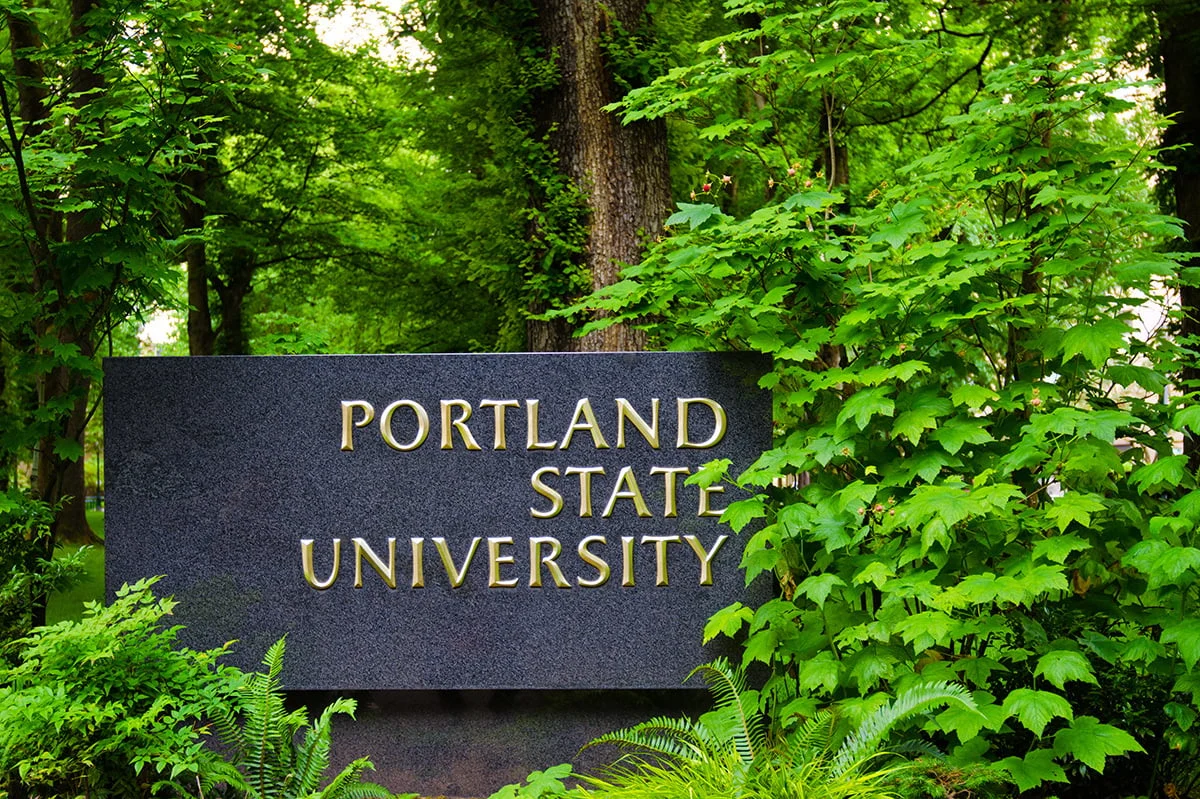
Portland State University (PSU) is facing one of the most turbulent periods in its history. As the institution grapples with a persistent $35 million budget shortfall, President Ann Cudd has confirmed a painful restructuring plan that will see the closure of two major academic departments and the termination of 36 full-time faculty and academic professional positions. The announcement, delivered during a press conference on Tuesday, marks the culmination of months of tense negotiations and serves as a stark indicator of the broader financial pressures currently squeezing Oregon’s public higher education landscape.
The Core Facts: A Downsized Academic Landscape
The administration’s final plan for budgetary reconciliation is a direct response to a fiscal gap that has widened over several years, exacerbated by a significant decline in enrollment. Over the last 14 years, the university’s student population has contracted by one-third, forcing administrators to reconcile falling tuition revenue with fixed operational costs.
Under the current directive, the university will shutter its University Studies department—the hub of the university’s general education curriculum—and the Department of Conflict Resolution. Beyond these closures, the university will implement targeted staff reductions across several other departments, including:
- The Portland Center: International student programs.
- Educator Licensure: Programs governing teacher certification.
- Leadership, Learning, and Counseling: Specialized graduate studies.
- Humanities and Social Sciences: Significant cuts within the history, philosophy, and world languages and literatures departments.
Of the 36 individuals facing termination, eight are tenured professors, a detail that has sparked significant alarm within the academic community. The timeline for these departures is staggered, with academic professionals slated to exit by December 15, 2026, and instructional faculty remaining until the conclusion of the 2026–2027 academic year on June 15, 2027.
A Chronology of Conflict: From Proposal to "Final Plan"
The path to these layoffs was neither short nor quiet. The administration’s initial “provisional plan,” unveiled in May 2026, was significantly more aggressive, calling for the elimination of 52 positions, including 12 tenured faculty members.
Upon receiving the initial notices, the faculty union—the PSU-American Association of University Professors (PSU-AAUP)—invoked Article 22 of their collective bargaining agreement. This provision allows departments facing potential elimination to present alternative cost-saving strategies to the administration. Formal negotiations began on July 6, with union representatives working to salvage as many positions as possible.
While the union successfully negotiated a reduction in the total number of layoffs from 52 to 36, the finalized plan still represents a significant blow to the university’s intellectual infrastructure. The union, led by President Bill Knight, maintains that the current administration is opting for “managed decline” rather than seeking the systemic investment necessary for growth.
Financial Realities and the $35 Million Gap
The current cuts represent $16 million in savings for the university, leaving a remaining deficit of $19 million to be addressed over the next two years. President Cudd has indicated that the university will approach this remaining balance through a combination of attrition, the elimination of vacant positions, and other operational efficiencies.
The Debate Over State Funding
A central point of friction between the union and the administration involves the role of the Oregon State Legislature. Union leaders have repeatedly urged President Cudd to request emergency financial assistance from the state, citing a precedent set by Southern Oregon University, which secured state funding following a declaration of financial exigency in 2025.
However, President Cudd has resisted this path, arguing that Portland State’s situation does not meet the extreme threshold of a state-funded emergency. “We have a runway—but a short runway—for dealing with our problems on our own terms,” Cudd stated during the press conference. She expressed skepticism regarding the likelihood of a major cash infusion from the state, noting that Oregon’s current budget climate is notoriously challenging.

Conversely, 17 elected Oregon officials issued a letter to the Board of Trustees on July 17, formally requesting a pause in the layoffs. These officials argued that the university should instead focus on a collaborative effort to secure increased funding when the Legislature convenes in January.
Internal Critique: Enrollment and Marketing
Beyond the immediate layoffs, the union has leveled sharp criticism at the administration’s historical failure to market the university effectively. Bill Knight pointed out that PSU invests only 17 percent of the budget on marketing and recruitment compared to peer institutions of similar size.
“It is very sad that the president hasn’t been willing to fight for positive growth and transformation of the university,” Knight said during a post-announcement briefing. “This is a ‘final plan’ that is only one step in a much larger process. Their positions may still be saved; we can still find change and solutions that will generate those possibilities.”
In response to these critiques, President Cudd acknowledged that marketing must become a priority. She noted that the university intends to roll out a new, metrics-driven recruitment strategy in the coming year, aiming to tie spending directly to tangible enrollment gains.
The Human and Institutional Implications
The decision to terminate tenured faculty represents a major shift in the university’s culture. Tenure is traditionally viewed as the bedrock of academic freedom and institutional stability; its erosion at Portland State is viewed by many as a signal of a deepening crisis that extends beyond simple accounting.
For the students, the closure of the University Studies department—the primary vehicle for general education—raises questions about the future of the core curriculum. If the university’s foundational educational framework is being dismantled to save costs, students and faculty are left to wonder what kind of institution will remain once the $35 million deficit is finally balanced.
Moving Forward: A Divided Path
The situation at Portland State remains fluid. While the administration has finalized this round of layoffs, the faculty union has not ceased its advocacy. The union is currently mobilizing students, alumni, and community members to petition the Board of Trustees, urging them to prioritize institutional growth over austerity measures.
President Cudd remains steadfast in her position that the university must act now to secure its financial future. “We’ve made these decisions guided by our future and focused strategic plan,” Cudd said. “Our core purpose is to support learners to follow their dreams and achieve their goals for a better life for their families and communities.”
As the academic year progresses, the tension between the administration’s push for fiscal sustainability and the union’s demand for institutional expansion will continue to define the discourse at Portland State. With $19 million still to be reconciled over the next two years, the final chapter of this budget crisis has yet to be written. The university stands at a crossroads: it must either prove that these cuts are the "medicine" required for a lean, efficient future, or face the prospect of a long-term decline that could permanently diminish its standing in the Pacific Northwest’s educational ecosystem.

 Siti Muinah
 Nana Muazin
 Nila Kartika Wati
 Jia Lissa
 Basiran
 Sagoh
Sagoh

 Lina Hope