
 Neng Nana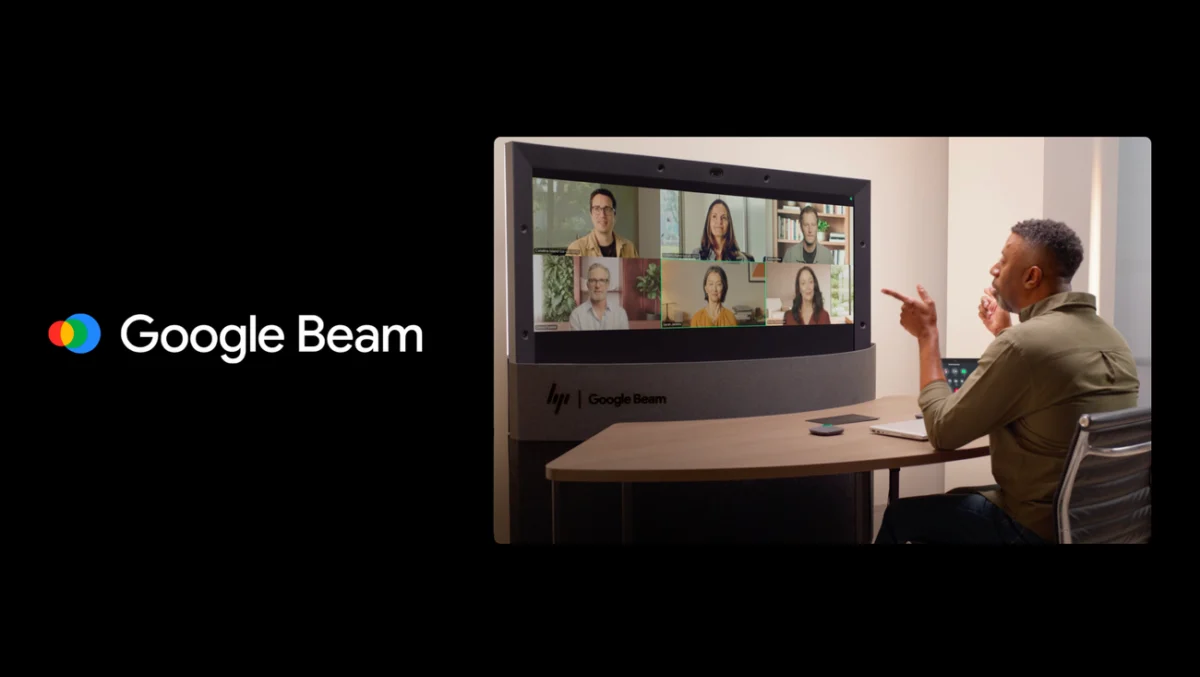
In an era where the “hybrid work” model has become the standard for global enterprises, the limitations of traditional video conferencing are becoming increasingly apparent. For years, professionals have navigated the "sea of tiny boxes"—a grid-based visual interface that often leaves remote participants feeling like mere observers rather than active collaborators. To address this, Google has unveiled a significant experimental evolution of its high-fidelity communication platform, Google Beam. By leveraging immersive display technology and spatial audio, Google is attempting to solve the “inclusion gap” that has long plagued remote teams, aiming to make virtual meetings feel less like a digital broadcast and more like a shared physical experience.
The Core Challenge: The Inclusion Gap in Hybrid Meetings
The fundamental problem with contemporary video conferencing is the erosion of social cues. Human communication relies heavily on non-verbal signals—eye contact, subtle shifts in posture, and the ability to detect who is speaking based on spatial orientation. When these cues are flattened onto a two-dimensional screen, the cognitive load required to track a conversation increases significantly, leading to “Zoom fatigue” and a diminished sense of belonging for remote attendees.
Google Beam, the company’s flagship project for true-to-life communication, was designed to transcend these barriers. The latest experimental update seeks to extend this "presence-first" philosophy to group meetings, ensuring that even those joining from standard laptops or mobile devices can be integrated into the physical environment of a conference room.
Chronology of Development: From Concept to Immersive Reality
The journey toward more natural digital interaction has been a multi-year effort within Google’s research labs.
- Initial Development: Google Beam began as a pursuit of “telepresence” that utilized advanced depth-sensing cameras and high-resolution displays to create the illusion of a window into another room.
- The Scaling Problem: Early iterations were limited by hardware requirements—specifically, the need for both parties to have specialized, high-end equipment.
- The Shift to Hybrid Integration: Recognizing that a global workforce cannot always access high-end hardware, Google pivoted to a more inclusive model. This involved developing software capable of rendering non-Beam users in a way that respects their proportions and spatial context.
- The Current Experiment: Today’s announcement represents the convergence of this research. By integrating HP Dimension’s immersive display technology, the platform can now dynamically render participants from disparate devices, positioning them as if they were seated around a table with in-room participants.
Supporting Data: Quantifying the Human Connection
The shift toward immersive communication is not merely an aesthetic upgrade; it is backed by compelling behavioral data. Google’s internal research into the efficacy of these new display techniques reveals a significant shift in meeting dynamics.
Key Performance Indicators (KPIs) of Improved Connectivity:
- Social Connection: Participants utilizing the updated Beam interface reported a 50% stronger sense of social connection compared to those using traditional grid-based video platforms. This suggests that spatial positioning helps the brain perceive colleagues as real, present individuals rather than icons.
- Contribution Efficiency: There was a documented 21% increase in the reported ability to contribute to conversations. When remote participants feel they are "at the table," the psychological barrier to interrupting, gesturing, or speaking up is lowered, leading to a more democratic flow of information.
- Spatial Awareness: By anchoring audio to the specific location of the virtual participant on the screen, cognitive processing is streamlined. The brain spends less energy determining who is speaking, allowing more energy to be dedicated to the content of the discussion.
Official Perspectives: Collaborating for the Future of Work
The success of Google Beam relies heavily on its ability to integrate with existing ecosystems. Rather than forcing users into a proprietary silo, Google is working closely with major industry players like Zoom to ensure that "best-in-class" features remain accessible.
Jeff Smith, Head of Product at Zoom Workplace, highlighted the strategic importance of this integration:
"Zoom is known for meetings that just work, and now we’re bringing our most-loved features into Google Beam for Zoom to deliver a best-in-class collaboration experience for every meeting."
This partnership underscores a broader industry realization: the future of work is not about one singular platform, but about interoperability. By embedding the high-fidelity rendering capabilities of Beam into the familiar interface of Zoom, Google and its partners are creating a seamless transition for employees who are already accustomed to specific workflows.
Technical Implications: How it Works
The magic of the new Google Beam experiment lies in the intersection of hardware and artificial intelligence. The system utilizes real-time image processing to interpret the incoming video feed of a remote participant. Through depth estimation and background segmentation, the system places that participant into a virtual "seat" on the display.
The Role of Spatial Audio
Visuals alone are insufficient for true presence. The system utilizes spatial audio algorithms that sync with the visual rendering. If a participant is positioned on the right side of the screen, the audio is routed through a right-side speaker array. This spatial anchor ensures that the direction of the voice matches the position of the person, reinforcing the "in-room" illusion.
Automated Optimization
One of the most critical aspects of this update is its "set it and forget it" nature. The optimization happens automatically for every participant, regardless of whether they are joining from a high-end office workstation or a home office laptop. This removes the burden of technical setup from the user, ensuring that the technology stays in the background, allowing the conversation to remain the focal point.
Broader Implications: The Future of Remote Collaboration
As this technology matures, the implications for global enterprise are profound.
1. The Death of the "Second-Class Citizen"
In many hybrid meetings, remote participants are treated as second-class citizens—they struggle to be seen, their audio is often muffled, and they are excluded from the peripheral social interactions that occur before and after a meeting. Google Beam’s approach effectively levels the playing field, making the remote participant’s presence as tangible as that of the person sitting next to you.
2. Global Talent and Cultural Cohesion
For companies that rely on distributed teams, the ability to maintain a strong company culture is a constant struggle. When video conferencing becomes a true-to-life experience, teams can engage in the "watercooler" style of spontaneous interaction that is otherwise impossible across time zones.
3. The Hardware-Software Symbiosis
The collaboration with HP Dimension suggests that the future of the office will be defined by specialized hardware designed to disappear. As displays become more immersive and spatial audio becomes standard, the "meeting room" will effectively become an infinite space, bounded only by the quality of the network and the fidelity of the rendering software.
Conclusion: Looking Ahead
While the current update is labeled as an "experiment," it signals a clear trajectory for the future of communication technology. Google is betting that the path forward isn’t just better bandwidth or higher resolutions, but a more accurate representation of the human experience.
As Google continues to refine these tools and roll them out to a broader user base via beam.google, the industry will be watching closely. If these metrics hold true across larger, more diverse groups, we may be looking at the beginning of the end for the "sea of tiny boxes." In the near future, the most important seat in the room might be the one occupied by the person who isn’t actually there at all.
For now, the focus remains on iteration, refinement, and the continued integration with tools like Zoom and Google Workspace. The goal is clear: to make distance irrelevant and to ensure that no matter where an employee sits, they are always part of the conversation.


 Azzam Bilal Chamdy
 Layla Zulfa
 Asro
Asro
 Laily UPN
 Iffa Jayyana
 Raul Delapena Setiawan
 Siti Muinah