
 Nila Kartika Wati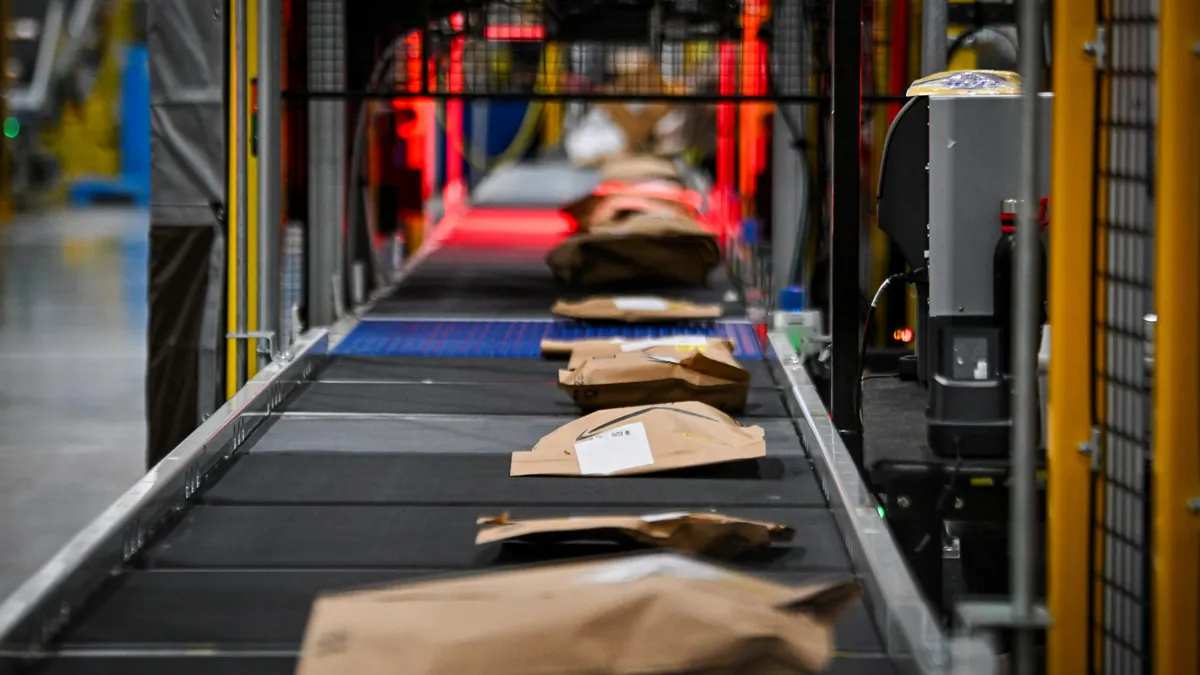
Detroit, MI – May 22, 2026 – A significant legal victory has been granted to an Amazon fulfillment center worker in Michigan who alleges she faced severe homophobic harassment and was subsequently terminated in retaliation for reporting the abuse. A federal judge has ruled that the worker can proceed with her discrimination and retaliation claims against Amazon, finding that the company’s stated reasons for her dismissal may be a deliberate fabrication to mask retaliatory actions.
The ruling, issued on May 19, 2026, by U.S. District Judge Robert White, is a crucial step forward for the employee, whose identity is protected by court documents, in her fight for justice against the e-commerce giant. The case, Williams v. Amazon.com Services LLC, centers on allegations of pervasive homophobic slurs and mistreatment by third-party delivery drivers, known as "flex drivers," who regularly interacted with the plaintiff in her role within the fulfillment center’s dispatch department.
Judge White’s decision allows a jury to consider whether Amazon’s justification for the worker’s termination – insubordination stemming from alleged failure to properly check flex driver routes – was a pretext for illegal retaliation, in violation of the Michigan Elliott-Larsen Civil Rights Act. This finding is supported by evidence suggesting that key company representatives were aware of the worker’s complaints and allegedly altered their behavior and provided contradictory guidance, ultimately leading to her dismissal.
The Genesis of the Complaint: A Pattern of Harassment
The plaintiff, an employee at Amazon’s Hazel Park, Michigan, fulfillment center, was responsible for coordinating with flex drivers who collected and delivered packages. It was within this capacity that she reportedly endured "intense" harassment based on her sexual orientation. According to court filings, homophobic slurs were directed at her "once or twice a week" by these external delivery personnel. The employee meticulously documented at least three separate incidents of this egregious behavior, with the most recent reported occurrence in October 2022.
The emotional toll of this persistent harassment, coupled with a perceived lack of decisive action from her superiors, led the worker to escalate her concerns. Around the same period as her latest report of harassment, she engaged in a meeting with an HR representative and her direct supervisor. During this discussion, she voiced her deep frustration over the company’s apparent inaction to address the ongoing abuse. Her pursuit of resolution extended further when she formally lodged complaints with Amazon’s internal ethics committee.
Following her engagement with the ethics committee, the worker reported a palpable shift in the demeanor of her supervisor and the HR representative. She described their attitudes as having "whole[ly] changed," becoming "very rude," and leading her to feel as though she had a "target on [her] back." While Amazon did reassign her to a different department in an effort to minimize her interactions with the problematic flex drivers, the underlying issues of harassment and the subsequent alleged retaliation remained unresolved.
A Escalating Conflict: The Path to Termination
The situation further deteriorated in December 2022. After the HR representative formally closed her harassment complaint, citing a "lack of evidence," the worker renewed her appeals to Amazon, expressing her dissatisfaction with the company’s failure to adequately address the harassment and requesting a change in supervision. This plea for a new supervisor went unanswered.
Approximately one week later, the very same supervisor who had been the subject of the worker’s complaints initiated a disciplinary meeting with her. The grounds for this meeting were the worker’s alleged failure to meticulously verify the routes of flex drivers. This resulted in a formal write-up for insubordination. Shortly thereafter, the HR representative and a site leader made the decision to terminate the worker’s employment, citing this insubordination report as the primary justification.

Legal Repercussions: Challenging the Termination
The terminated employee vehemently contested her dismissal, arguing that it constituted unlawful retaliation for her protected activities of reporting harassment and seeking a resolution to her complaints. She contended that her termination was not a consequence of legitimate performance issues but rather a direct reprisal for speaking out against a hostile work environment.
Amazon, in its defense, maintained that the termination was a direct result of the worker’s documented insubordinate conduct and her failure to adhere to company protocols. The company asserted that its actions were based on objective performance evaluations and were not influenced by her prior harassment complaints.
The Judge’s Verdict: Evidence of Pretext
However, Judge Robert White found compelling reasons to believe the worker’s claims. In his ruling, he stated that there was sufficient evidence for a jury to conclude that Amazon’s proffered reason for termination was indeed pretextual. The court’s decision was heavily influenced by several key factors:
- Awareness of Complaints and Behavioral Shifts: The judge noted that both the supervisor and the HR representative were fully aware of the worker’s harassment complaints. Their subsequent change in behavior, described by the worker as becoming "rude" and creating a hostile atmosphere, provided a crucial link between her reporting and their subsequent actions.
- Contradictory Guidance and Omissions: Perhaps the most damning piece of evidence came to light during a deposition. The supervisor admitted to providing the worker with instructions that were contradictory to the very conduct for which she was later written up and terminated. This admission strongly suggested a deliberate effort to build a case against the employee.
- Positive Performance Feedback: Prior to the disciplinary actions that led to her termination, the worker had received positive feedback regarding her work ethic. Her site leader had described her as a "good" and "hard" worker, which appeared to contradict the narrative of insubordination that Amazon later presented.
In his written opinion, Judge White articulated the significance of these findings: "The last fact suggests that [the supervisor] intentionally omitted relevant information to make the write-up more damning than it originally was; clear evidence of a pretext designed to mask retaliation." This statement underscores the court’s belief that the termination was not an honest assessment of performance but a calculated maneuver to punish the employee for her protected disclosures.

Dismissal of Other Claims and Amazon’s Stance
While the retaliation claim has been given the green light to proceed to trial, Judge White did dismiss some of the worker’s other allegations. Specifically, he ruled that the evidence presented did not establish a hostile work environment claim. The judge reasoned that Amazon had taken steps to address and mitigate the harassment, including involving security personnel and working to ban the offending drivers from the facility. This suggests that the court acknowledged Amazon’s efforts to some degree, even as it found their actions regarding the individual employee’s termination to be potentially retaliatory.
In response to the ruling, Amazon provided a statement to HR Dive, emphasizing its commitment to a safe and inclusive workplace. Montana MacLachlan, an Amazon spokesperson, stated, "We don’t tolerate discrimination, harassment, or retaliation in our workplace. We investigate any reports of such conduct and take appropriate action against anyone found to have violated our policies." This statement reiterates Amazon’s official stance on workplace misconduct and suggests that their internal processes are designed to address such issues.
Broader Implications: Accountability in the Gig Economy
This ruling has significant implications for how large employers, particularly those heavily reliant on contract or flex workers, handle employee complaints and allegations of harassment. The case highlights the critical importance of robust internal complaint mechanisms and the legal ramifications of failing to act appropriately.
- Employee Protections: The decision reinforces the legal protections afforded to employees who report workplace discrimination and harassment. It signals that companies cannot simply dismiss such claims or retaliate against employees for raising them.
- Scrutiny of Termination Justifications: Employers will likely face increased scrutiny of their termination justifications, especially when those justifications follow closely on the heels of employee complaints. The burden of proof will be on the employer to demonstrate that the termination was based on legitimate, non-retaliatory grounds.
- The Role of Third-Party Conduct: The case also brings into focus the challenges employers face in managing the conduct of third-party contractors. While Amazon may not directly employ the flex drivers, the court’s willingness to consider their actions as contributing to a potentially hostile environment, and the company’s subsequent response to the employee’s complaints about them, is a critical aspect of the legal proceedings.
- Accountability for Management: The ruling places a greater emphasis on the accountability of supervisors and HR representatives. Their awareness of harassment and their actions following employee complaints are now under a more intense legal microscope.
As the case moves forward, it will undoubtedly serve as a precedent for similar situations, underscoring the need for transparency, fairness, and a genuine commitment to addressing all forms of workplace discrimination and retaliation. The legal battle between the Amazon worker and the e-commerce giant is far from over, but this judicial decision represents a crucial victory for the plaintiff and a strong message to corporations about their obligations to protect their employees. The outcome of the trial will be keenly watched by legal experts, employee advocates, and the business community alike.

 Nana
Nana
 Siti Muinah
 Raul Delapena Setiawan
 Reynand Wu
 Sagoh
Sagoh

 Azzam Bilal Chamdy
 Ali Ikhwan