
 Nana Muazin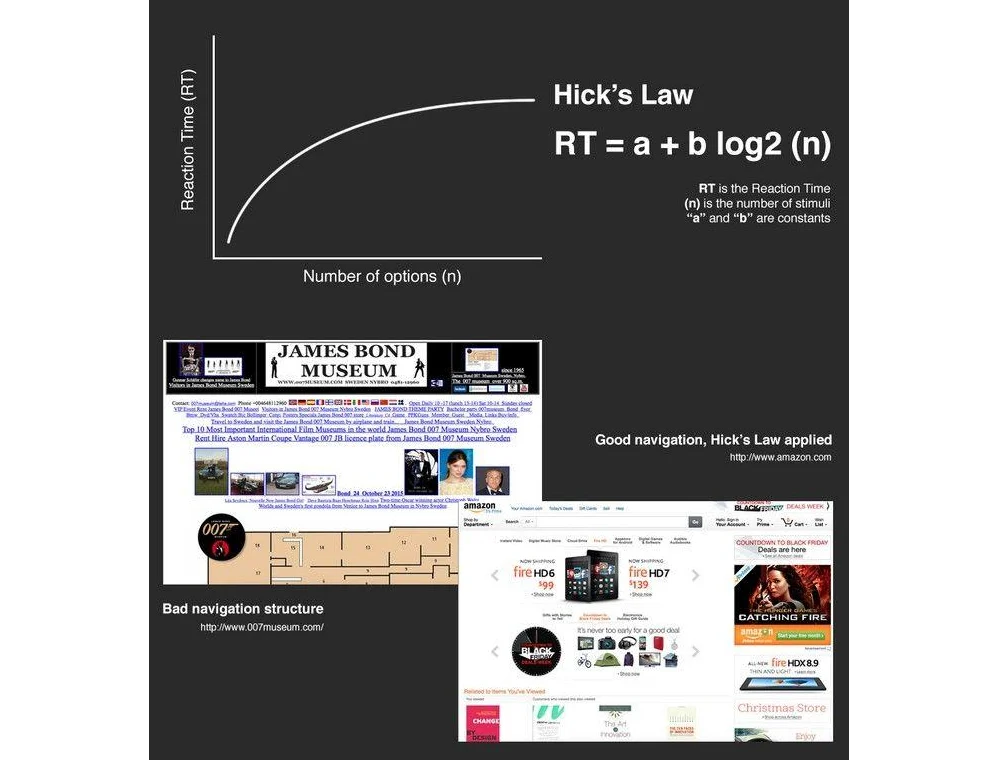
In the high-stakes economy of the late 2020s, the cost of a friction-heavy interface has evolved from a nuisance into a massive financial liability. What was once dismissed as "lost clicks" is now recognized as millions of dollars in wasted engineering spend, squandered acquisition budgets, and long-term erosion of brand equity. As a veteran UX designer who has navigated the digital landscape since the early mobile-first era, I have witnessed a fundamental shift in the boardroom: design has moved from a "cosmetic preference" to the primary engine of business survival.
The UX design role today is as much about rigorous research and quantitative analytics as it is about pixel-perfect layouts. To bridge the gap between creative teams and executive decision-makers, we must speak the language of the boardroom: data. Facts do not just advocate for the user; they prove that UX is a non-negotiable requirement for a healthy bottom line.
1. The Financial Gravity of Design
The following ten data-backed pillars represent the current reality of the digital world. These are not merely "design tips"; they are clinical, evidence-based imperatives for financial growth in an increasingly saturated market.
Fixing Issues in the Design Phase is 100 Times Cheaper
The "1:100 rule" remains the most compelling financial argument for design-led development. Research from the IBM Systems Institute and Segue Technologies confirms that resolving a usability flaw during the prototyping phase is exponentially cheaper than correcting it post-launch. When a team discovers a fundamental navigation flaw after deployment, the cost is not merely the time to rewrite code; it is the compounding interest of technical debt, the erosion of developer morale, and the tangible revenue lost while users struggle with a broken flow. UX is, in essence, engineering insurance.
Performance as a Primary Design Element
Performance is the foundational layer of user experience. A visually stunning interface is objectively worthless if the user bounces before it renders. Data is uncompromising: 47% of users expect a page to load in two seconds or less. Missing this window is a financial catastrophe. Retailers lose an estimated $2.6 billion annually due to latency. When mobile load times increase from one to three seconds, bounce rates spike by 32%, and conversion rates plummet from 40% to 29%. Conversely, a 0.1-second improvement in load time can lift retail conversions by over 8%—proving that speed is a direct lever for revenue.
The 50-Millisecond Impression
Users form an opinion about a website’s visual appeal in approximately 50 milliseconds. This visceral, "gut-feeling" reaction is a primitive survival mechanism that determines whether a user stays or leaves. With 94% of these first impressions being strictly design-related, if your interface feels dated or cluttered, users will subconsciously project that lack of quality onto your entire product offering. Your content, no matter how valuable, effectively does not exist if your design fails to earn those first few seconds of attention.

Hick’s Law: The Tax of Complexity
Stakeholders frequently labor under the misconception that more options equate to more value. Psychology suggests the opposite. Hick’s Law states that the time required to make a decision increases with the number of choices available. Every unnecessary menu item or redundant form field is a cognitive tax on the user. Top-performing digital products have learned to ruthlessly simplify; if you want to increase revenue by tomorrow, identifying and deleting one unnecessary field from your checkout flow is a proven path to immediate optimization.
The Strategic Use of White Space
"White space" is often misunderstood by non-designers as "wasted" real estate. In reality, it is a surgical tool for focus. Strategic use of whitespace can increase content comprehension by up to 20%. In an era where human attention spans have dropped to approximately eight seconds, simplicity is the ultimate luxury. By allowing data to breathe, we lower the user’s cognitive load, guiding them naturally toward conversion points like "Buy" or "Sign Up" buttons.
2. Behavioral Psychology and Digital Momentum
The Goal Gradient Effect
One of the most potent psychological hacks in the UX arsenal is the "Goal Gradient Effect." Users are more motivated to complete a task if they believe they have already made progress. A classic experiment showed that a 10-stamp coffee card with two pre-filled stamps was completed significantly faster than an 8-stamp card with zero pre-fills. In digital products, utilizing a progress bar that starts at 15%—simply for signing up—increases onboarding completion rates by over 40%. We are not just designing screens; we are managing the user’s dopamine and sense of momentum.

Readability and the 20% Rule
Many stakeholders demand more text "above the fold," but data proves that proper typography and spacing are far more effective at driving engagement. Optimal line height (1.5x the font size) and paragraph width reduce "visual noise," allowing the brain to process information with less effort. If the text is hard to read, the product is hard to buy.
The Scanability Mandate
Users do not read websites; they scan them. On a typical page, users consume only 20% to 28% of the text. Because users follow "F-patterns" or "Spotted patterns," designing for reading is a tactical error. We must design for scanning through the use of bold subheadings, bullet points, and high-contrast call-to-action buttons.
The Magic of Five Users
Common wisdom once suggested massive, expensive user studies. However, testing with just five users typically uncovers 85% of usability problems. After the fifth user, the ROI of additional testing diminishes rapidly. Competitive advantage today belongs to teams that embrace frequent, small-batch user testing—test five, iterate, and repeat. It is the most cost-effective way to build a bulletproof, user-centric product.

3. The 9,900% ROI: The Financial Bottom Line
The most staggering statistic in the industry remains the 9,900% ROI of UX investment. On average, every $1 invested in UX returns $100. This is not magic; it is the mathematical result of increased conversions, improved retention, and drastically reduced customer support costs. When a product is intuitive, it ceases to be a burden on support teams.
4. The Maturity of UX Organizations
Beyond individual metrics, we must address the cumulative effect of a mature UX practice. Companies with high design maturity consistently see 32% higher revenue growth and 56% higher total returns to shareholders compared to their peers. These organizations move beyond mere "delight" and into "user efficiency." When a firm shaves 30 seconds off a workflow for 1,000 employees, they are reclaiming hundreds of thousands of dollars in annual productivity.
However, an "experience gap" remains. While 80% of companies believe they deliver a superior experience, only 8% of customers agree. This massive disconnect is the greatest market opportunity of our time.

5. The Role of AI in the Modern UX Stack
AI has not replaced these ten facts; it has accelerated their application. AI-driven personalization can now adapt white space, content density, and layout in real-time based on individual user behavior. AI has transformed UX from a static blueprint into a living, breathing guide. Yet, the fundamental psychological truths—our need for speed, our 50-millisecond judgments, and our desire for progress—remain unchanged.
Conclusion: Bridging the Strategy Gap
As we move deeper into the late 2020s, the line between "design" and "business strategy" has effectively vanished. Companies that lead in design outperform their competitors by 1.7x in revenue growth.
UX design is no longer a team you hire to "make things look nice." It is the research-driven, data-backed discipline that ensures your digital product is not a cost center, but a high-performance, revenue-generating machine. We are officially past the era of subjective opinions. The data is clear, the psychology is proven, and the ROI is undeniable. The only question remaining for leadership is whether you are ready to let the facts lead your design, or if you will wait for your competitors to do it first.

 Sagoh
Sagoh
 Asep Darmawan
 Raul Delapena Setiawan
 Reynand Wu


 Azzam Bilal Chamdy
 Ali Ikhwan