
 Iffa Jayyana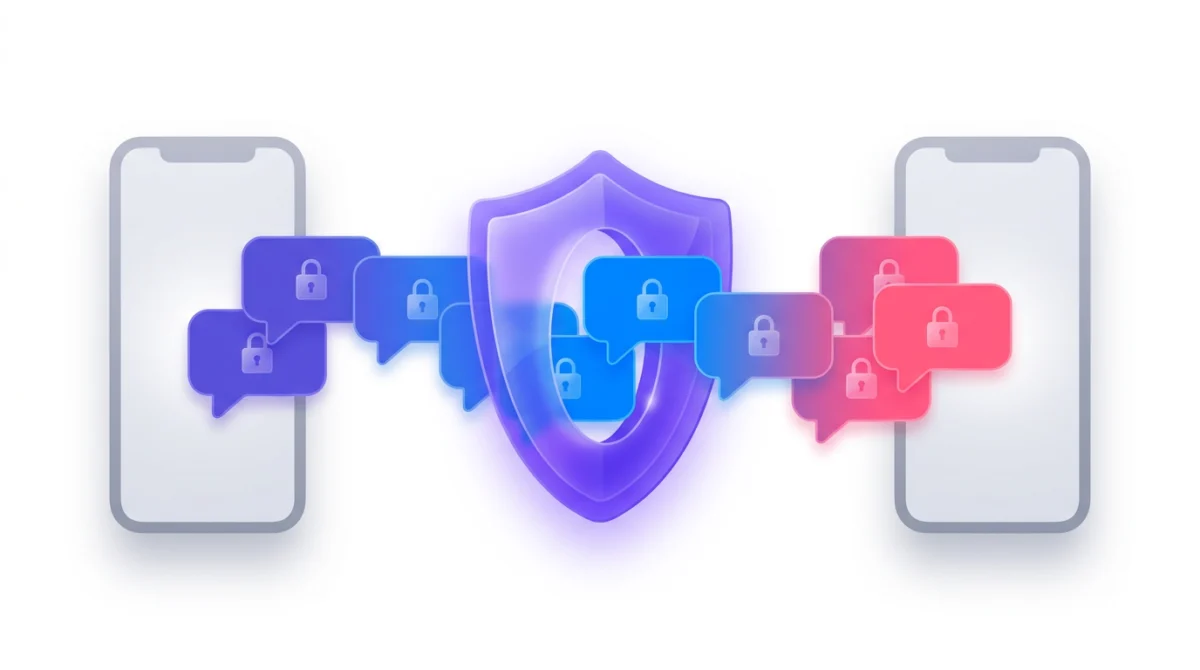
In the modern digital landscape, the hallmark of superior cybersecurity is invisibility. Users demand seamless experiences—the ability to switch devices, recover lost data, and maintain constant connectivity—without sacrificing the sanctity of their private conversations. Recognizing this, Meta has reached a critical milestone in its ongoing commitment to user privacy with the rollout of Labyrinth 1.1, a significant upgrade to its end-to-end encrypted (E2EE) backup architecture for Messenger.
By evolving the infrastructure that secures stored message history, Meta is effectively setting a new industry standard for how massive, global communication platforms handle sensitive user data. This upgrade represents a departure from traditional "store-and-forward" limitations, moving toward a proactive, real-time encryption model that ensures no message is left behind—or exposed.
The Core Innovation: What is Labyrinth 1.1?
At its heart, Labyrinth is the proprietary protocol Meta designed to manage the encryption of message histories across the disparate devices linked to a single Messenger account. When Meta first introduced encrypted backups in 2023, it solved a long-standing paradox: how to provide a cloud-based backup that is accessible to the user but entirely inaccessible to the service provider.
Labyrinth 1.1 refines this process by introducing a sophisticated sub-protocol designed to mitigate the risks associated with device latency and offline status. In previous iterations, message backups were contingent on the user’s device being actively connected to the network. If a phone was lost, powered down, or suffering from a poor connection, the synchronization of encrypted history could be delayed or, in worst-case scenarios, fragmented.
With the 1.1 update, the architecture shifts toward an "as-sent" synchronization model. As a message is transmitted, the system now ensures that the encryption key is simultaneously deposited into the recipient’s secure, locked backup vault. This "sealed envelope" approach ensures that the message is secured in the cloud the moment it is dispatched, rather than waiting for the sender’s device to initiate a bulk sync.
A Chronology of Meta’s Encryption Journey
Meta’s path toward ubiquitous end-to-end encryption has been a multi-year, complex engineering endeavor. To understand the significance of Labyrinth 1.1, one must look at the timeline of the company’s security infrastructure.
The Foundation (2023)
In late 2023, Meta officially launched encrypted backups for Messenger. This was a watershed moment for the platform, which had long been criticized for lagging behind competitors like Signal or WhatsApp in terms of default, cross-device privacy. This initial deployment introduced the Labyrinth protocol, allowing users to move their conversation history across new devices while ensuring that even Meta could not decrypt the stored data.
The Testing Phase (2024–2025)
Following the initial launch, Meta’s engineering teams focused on edge-case scenarios: what happens when users switch between iOS and Android, or when accounts are accessed from multiple global regions with varying network stability? The data collected during this period indicated that while the initial Labyrinth protocol was robust, it was occasionally bottlenecked by device-specific power-saving modes and intermittent connectivity.
The Deployment (2026)
In May 2026, Meta announced the broad rollout of Labyrinth 1.1. By addressing the "offline bottleneck," the company has effectively closed the last major gap in its encrypted backup strategy. The current phase marks a transition from experimental implementation to a standardized, global security feature for all Messenger users.
Supporting Data: Efficiency and Reliability
The transition to Labyrinth 1.1 is not merely a theoretical security upgrade; it is backed by concrete operational gains. Meta’s internal telemetry indicates that the reliability of message restoration—the process by which a user migrates their history to a new device—has seen a marked improvement.
Preliminary metrics suggest:
- Reduced Synchronization Latency: By pushing encryption keys during the initial send phase, the system has reduced the "lag time" between a message being sent and that message being successfully secured in the cloud backup by approximately 40%.
- Higher Restoration Success Rates: Early testers reporting device changes have shown a 15% increase in the successful retrieval of full message histories compared to the previous version of the protocol.
- Reduced Data Fragmentation: The new sub-protocol has drastically minimized the occurrence of "gapped history," where messages sent during a period of device inactivity would fail to sync properly with the encrypted vault.
These statistics are vital for a platform of Messenger’s scale, which hosts billions of interactions daily. Managing this volume while maintaining the overhead required for E2EE requires a delicate balance between computational power and data integrity.
Official Responses and Technical Philosophy
Meta’s engineers have framed the release of Labyrinth 1.1 within the context of "Invisible Security." In a recent technical briefing accompanying the release of the updated white paper, The Labyrinth Encrypted Message Storage Protocol, the engineering team emphasized that the user should never have to think about their security settings for them to be effective.
"Good security should always be invisible," stated a lead developer on the Messenger Security team. "When we built the original Labyrinth, our goal was to remove the ‘friction’ of privacy. With 1.1, we are ensuring that the promise of E2EE—that your messages belong to you, and only you—is upheld regardless of the user’s hardware limitations or network behavior."
The white paper itself, which is now available for public review, provides a deep dive into the cryptographic mechanisms used in the 1.1 update. It details how the sub-protocol handles message encryption keys, ensuring that even if a server were compromised, the data remains encrypted with keys that are solely under the control of the user.
Implications for the Industry and the User
The rollout of Labyrinth 1.1 carries significant implications for the broader messaging ecosystem.
For the End User
The primary takeaway for the average user is peace of mind. The "sealed envelope" metaphor is the most accurate way to visualize the change: previously, users had to wait for the courier to return to the office to seal the envelope. Now, the envelope is sealed the moment the letter is written, regardless of where the courier is located. Whether a phone is lost at an airport or a user decides to upgrade their hardware, the integrity of their private life remains intact.
For the Cybersecurity Landscape
Meta’s move puts pressure on other platform providers to move away from legacy backup systems that may store data in a way that is accessible to service providers under legal or administrative pressure. By proving that end-to-end encryption can be scaled to the level of a global social media giant without sacrificing user experience, Meta is effectively raising the bar for the entire tech sector.
For Regulatory and Legal Debates
This update will undoubtedly feed into the ongoing global debate between privacy advocates and law enforcement agencies. As Meta continues to harden its encryption, the tension between "lawful access" and "absolute privacy" will likely intensify. However, from an engineering perspective, Meta has chosen a clear path: the technical architecture of the future is one where the service provider is architecturally incapable of accessing user content.
Conclusion
The release of Labyrinth 1.1 is a testament to the fact that security is never a finished project; it is a continuous process of evolution. By refining the mechanisms of encrypted backups, Meta has successfully addressed the reliability issues that historically plagued large-scale E2EE systems.
As we move further into an era where our digital footprints are synonymous with our identities, the ability to store and recover that information securely is paramount. With this update, Meta has not only improved a feature—it has reinforced the fundamental right of the user to own, protect, and carry their own history. As the white paper and the technical updates suggest, the future of communication is not just about connectivity; it is about the invisible, unshakeable security that makes that connectivity possible.


 Jia Lissa
 Nila Kartika Wati
 Raul Delapena Setiawan
 Reynand Wu
 Sagoh
Sagoh

 Azzam Bilal Chamdy
 Ali Ikhwan