
 Ammar Sabilarrohman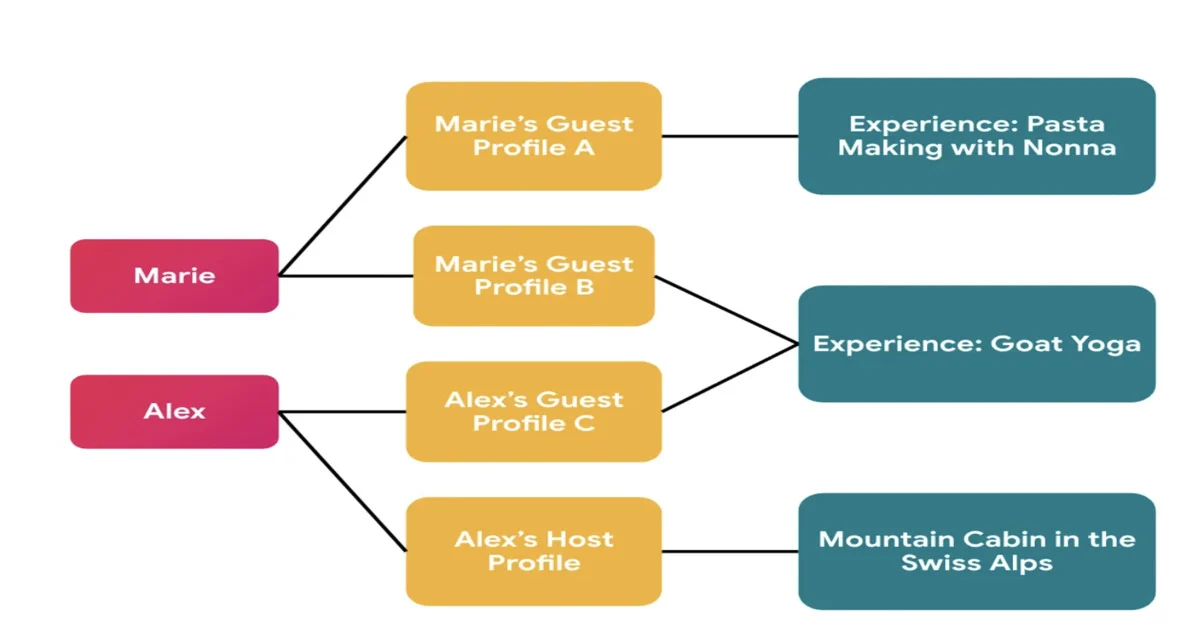
In a significant architectural pivot, Airbnb has unveiled a redesigned identity and connection model aimed at facilitating richer, more spontaneous social interactions within its "Experiences" platform. By decoupling internal user identity from externally visible, context-specific profiles, the company is attempting to solve a modern digital dilemma: how to foster community and trust among strangers without sacrificing individual privacy.
This structural overhaul marks a departure from the traditional, monolithic social graph model, moving instead toward a granular, relationship-based access control system. As the company pushes deeper into social-first travel, these changes represent not just a feature update, but a foundational shift in how Airbnb manages user data at scale.
The Core Philosophy: Moving Beyond the Global Profile
For years, the standard for social platforms has been the "global profile"—a static, persistent digital identity that follows a user across every interaction. While this model simplifies development, it creates significant privacy risks, particularly when users interact with people they have never met.
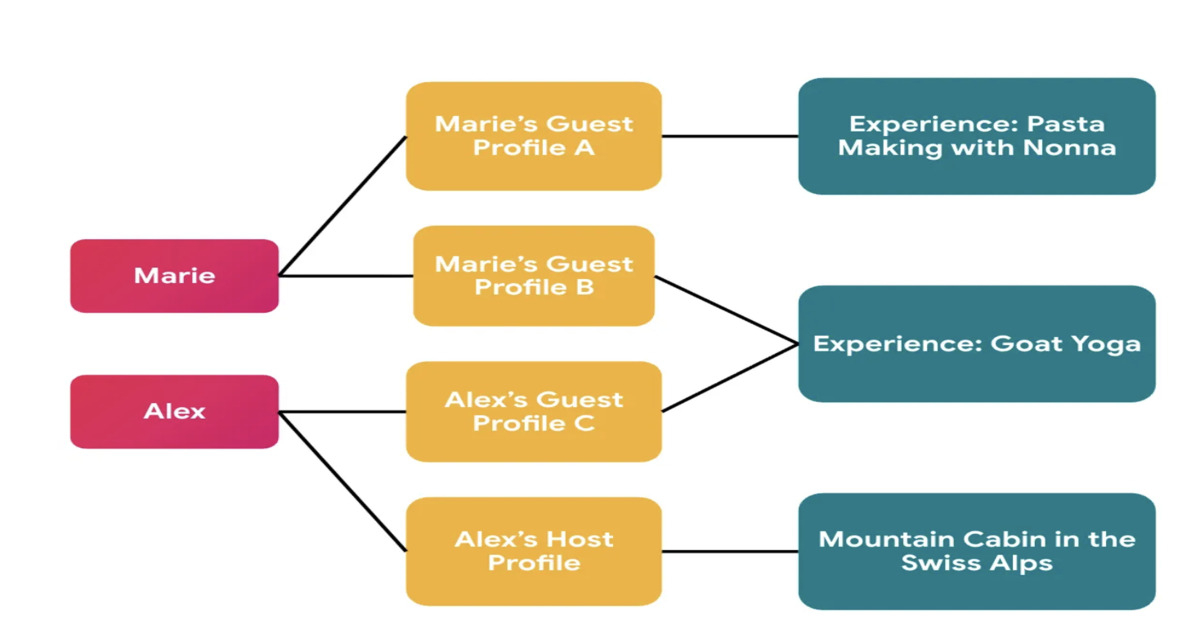
Airbnb’s new model replaces this static global profile with "scoped identities." Under this framework, a user’s presence is bifurcated: an internal, persistent identifier remains for backend services and trust/safety operations, while an externally visible profile is generated specifically for the context of a single Experience.
By isolating these profiles, Airbnb prevents the "social graph leakage" that often occurs when a participant in a group hike or a cooking class can track a fellow participant across different events or even outside the platform. Each profile exists only within the ecosystem of that specific activity. Once the interaction concludes, the connections are essentially siloed, ensuring that a user’s social footprint remains contained within the scope of their immediate environment.
Chronology of a Technical Transformation
The transition to this privacy-first model was not an overnight shift. It represented a multi-year effort requiring deep coordination across engineering, product, and legal departments.
- Phase 1: Conceptualization and Privacy Audit (2024): Recognizing the need to scale social features without compromising user safety, Airbnb’s engineering teams initiated a comprehensive audit of their data access patterns. The goal was to identify where "leaks"—instances where global IDs were exposed to other users—were occurring in the legacy codebase.
- Phase 2: Tooling Development: To manage the scale of the migration, the team built automated auditing tools. These scanners mapped user data access points across the entire Airbnb repository, categorizing them by the owning team.
- Phase 3: The Migration (2025): Throughout 2025, engineering squads performed a massive refactoring of the codebase. This phase was characterized by "human-in-the-loop" updates, where AI-assisted tools suggested code refactors, which were then manually vetted by engineers to ensure that business logic remained intact.
- Phase 4: Deployment and Enforcement (Early 2026): With the migration complete, the system was moved to active enforcement using Himeji, Airbnb’s centralized authorization framework. This ensured that privacy was no longer a matter of frontend display, but a hard constraint at the data access layer.
Technical Pillars: Himeji and Data Access Control
The backbone of this new privacy architecture is Himeji, Airbnb’s proprietary, scalable system for authorization. Traditionally, many applications enforce privacy via interface-level logic—effectively "hiding" a button or a link if a user shouldn’t see it. However, this is notoriously prone to bugs and exploits.
By moving enforcement to the data access layer, Airbnb has ensured that even if a frontend component were to malfunction or a malicious user were to attempt to query the API directly, the system would reject the request. Himeji evaluates "relationship-based access control" (ReBAC) policies at runtime.
When a user requests information about another participant in an Experience, Himeji asks: Do these two users share a common context? If the answer is no, the system refuses to return the requested profile information. This shift from "static attribute-based access" to "dynamic relationship-based access" is a sophisticated architectural pattern that sets a new industry standard for platform privacy.
Supporting Data: The Scale of the Migration
The sheer scale of this project highlights the complexity of modern software engineering. The migration involved:
- Repository-wide auditing: Scanning millions of lines of code to identify identity-related data calls.
- Automated vs. Human Review: Utilizing AI-assisted refactoring to handle the heavy lifting of code modifications, while relying on human oversight for critical path validation.
- Cross-functional Alignment: Coordinating the efforts of dozens of engineering teams to ensure that the change in identity semantics did not break core services, such as payment processing, booking confirmations, or safety reporting.
The success of the migration depended on the clear separation between operational identity (required by Airbnb to manage the booking and legal compliance) and social identity (what the other traveler sees). By keeping these separate, the company managed to maintain its stringent safety requirements while offering users the freedom to interact pseudonymously when desired.
Official Perspectives and Industry Implications
In a recent LinkedIn post, Joy Jing, a lead engineer on the project, emphasized that the goal was to support "social interactions without compromising user privacy." This reflects the "privacy-by-design" mantra that has become a requirement for global tech firms under increasing regulatory scrutiny, such as GDPR in Europe and CCPA in California.
From an industry perspective, Airbnb’s approach serves as a blueprint for other marketplaces and social networks. The trend of "contextual privacy" is moving away from the "all-or-nothing" social media models of the 2010s. Companies are realizing that trust is a fragile commodity; by explicitly limiting how much information a user can glean about a peer, platforms can actually encourage more participation. If a user feels that their personal history is protected, they are more likely to engage in community activities.
Implications: The Future of Social Experiences
The implications of this architectural shift extend far beyond simple privacy settings. By creating a robust framework for ephemeral, context-specific social graphs, Airbnb has unlocked several future possibilities:
1. Increased Participation in Social Experiences
Users are often hesitant to join group activities with strangers due to concerns about data privacy. By guaranteeing that their profile is scoped only to that specific activity, Airbnb effectively lowers the "friction of participation."
2. Enhanced Safety and Fraud Prevention
Because Airbnb retains the ability to link these scoped identities back to a single, verified "Global Identity" in the backend, they maintain the ability to enforce safety standards and ban bad actors. The system is designed to provide transparency to the user while maintaining total visibility for the platform’s trust and safety teams.
3. A New Standard for Platform Engineering
The use of Himeji and automated auditing tools demonstrates that privacy is not just a policy document, but an engineering discipline. As platforms become more complex, the ability to enforce "contextual privacy" programmatically will likely become a competitive advantage.
4. Regulatory Resilience
With global regulators looking closely at how companies track and link user behavior, Airbnb’s proactive move to compartmentalize user data positions them well. By building a system that makes cross-context tracking technically difficult, they are effectively "future-proofing" against potential privacy litigation.
Conclusion: Balancing Connection and Privacy
The redesign of Airbnb’s identity model is a testament to the fact that technical debt is often a barrier to innovation. By choosing to refactor their identity layer—a notoriously difficult task in a large-scale distributed system—Airbnb has cleared the path for a new wave of social innovation.
The company has successfully demonstrated that privacy and social connectivity are not necessarily at odds. Through the intelligent application of centralized authorization, automated code migration, and a clear-headed approach to identity semantics, they have built a foundation where users can be part of a community without being exposed to the risks of a global, persistent digital footprint.
As the digital economy continues to prioritize "Experience" over mere "Transactions," the ability to provide safe, controlled, and private social interactions will become the hallmark of the next generation of successful platforms. Airbnb’s latest engineering feat ensures they are well-positioned to lead that charge, proving that the most important features in software are often the ones that the user never actually sees.
About the Author
Leela Kumili is a senior technology analyst and investigative journalist specializing in distributed systems, platform architecture, and digital privacy trends. With a background in software engineering, Kumili focuses on the intersection of human-centric product design and the complex backend systems that make modern platforms possible.


 Jia Lissa
 Nila Kartika Wati
 Raul Delapena Setiawan
 Reynand Wu
 Sagoh
Sagoh

 Azzam Bilal Chamdy
 Ali Ikhwan