
 Ali Ikhwan
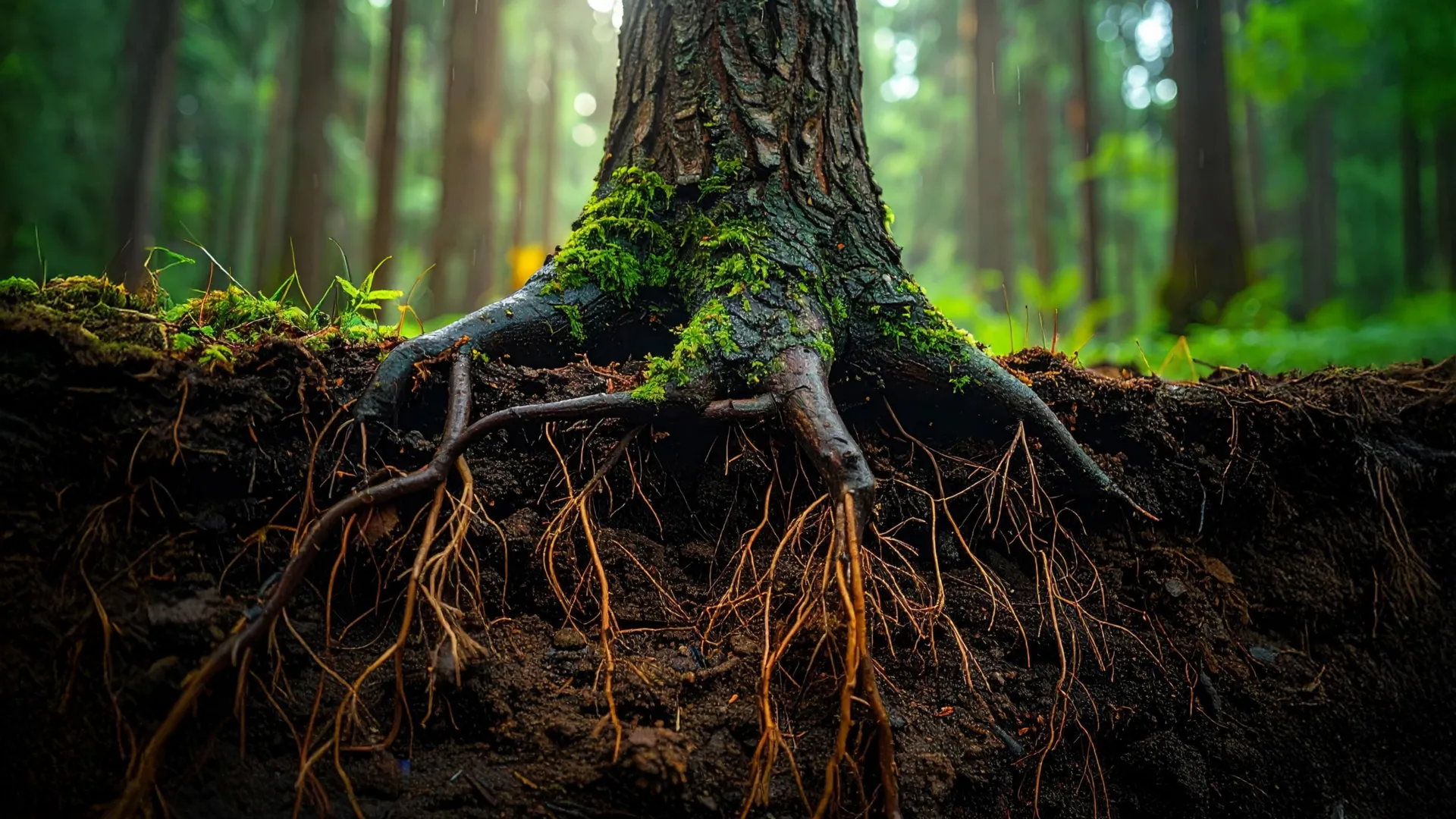
In the global effort to mitigate climate change, much of the focus rests on carbon sequestration—the ability of forests to act as "sinks" for carbon dioxide. However, a silent, powerful process is occurring beneath the forest floor that has recently come into sharper focus. New research suggests that forest soils are playing a more robust role in removing methane—a potent greenhouse gas—from the atmosphere than previously understood, and that the shifting climate may, counterintuitively, be accelerating this natural filtration process.
For decades, the scientific consensus has leaned toward the pessimistic, with meta-analyses suggesting that climate change would inevitably cripple the ability of soil microorganisms to process methane. But a comprehensive, long-term study conducted by researchers at the University of Göttingen and the Baden-Württemberg Forest Research Institute (FVA) has challenged this narrative, providing a nuanced perspective on how our ecosystems adapt to a warming planet.
The Mechanics of Methane Sequestration
Methane ($CH_4$) is a formidable driver of global warming. While it remains in the atmosphere for a shorter duration than carbon dioxide, its capacity to trap heat is vastly superior, making it a critical target for climate policy. Fortunately, the earth possesses a natural biological scrub: methanotrophic bacteria. These specialized microorganisms reside within the upper layers of forest soil and consume methane as their primary energy source, effectively neutralizing the gas before it can contribute to the greenhouse effect.
The recent study, published in the journal Agricultural and Forest Meteorology, utilized an unprecedented dataset gathered over 24 years across 13 forest sites in southwestern Germany. The findings were startling: methane absorption rates in these forests increased by an average of 3% annually. This discovery suggests that the relationship between climate change and soil health is not a monolithic decline, but a complex, localized interaction that demands deeper investigation.
A Two-Decade Chronicle of Soil Monitoring
The strength of the Göttingen-FVA study lies in its temporal scope. In environmental science, short-term data often captures "noise" rather than "signal," which can lead to erroneous conclusions. By observing 13 distinct forest sites over nearly a quarter of a century, the researchers were able to filter out seasonal anomalies and focus on long-term climatic trends.
The Methodology of Measurement
To achieve such granular precision, the research team employed a dual-method approach:
- Soil Gas Profiles: Every two weeks, researchers extracted air samples from thin tubes installed at varying depths beneath the soil surface. By analyzing the chemical composition of these gases, the team could map the "methane gradient"—how much gas was entering the soil versus how much was being consumed at depth.
- Airtight Chamber Analysis: To validate the profile data, the team utilized independent, airtight chambers placed directly onto the forest floor. By monitoring the concentration of methane within these sealed environments over time, they could calculate precise flux rates, confirming that the soil was indeed acting as a net sink for the gas.
This rigorous, longitudinal approach allowed the scientists to see past the snapshots of individual seasons, providing a rare, high-resolution view of how forest soils respond to the gradual shift in global temperatures and precipitation patterns.
Supporting Data: Why Drier Soils Perform Better
The core of the study’s findings revolves around the physics of soil porosity and microbial activity. The data indicated a strong correlation between reduced rainfall, higher temperatures, and increased methane uptake.
The Porosity Factor
When soil is saturated with water—common in high-rainfall environments—the microscopic voids between soil particles become filled with liquid. This creates a barrier to diffusion; methane, being a gas, struggles to move through wet soil to reach the bacteria waiting to consume it. Conversely, in drier conditions, these pores remain filled with air. This increased "soil aeration" acts as a highway, allowing atmospheric methane to penetrate deeper into the soil profile where it can be efficiently processed by methanotrophic microbes.
Accelerated Microbial Metabolism
The study also suggests that moderate increases in temperature can stimulate microbial activity. While extreme heat can eventually prove detrimental to biological life, the warming observed in the study sites appeared to nudge the methanotrophic bacteria into a more active state, increasing their metabolic consumption of methane. When combined with the improved gas diffusion provided by drier soil, the net result was a significant, sustained increase in methane sequestration.
Official Responses and Scientific Context
The lead author of the study, Professor Martin Maier of the Department of Crop Sciences at the University of Göttingen, emphasized that these findings provide a necessary counterpoint to existing climate models.
"Our long-term data shows that climate change does not necessarily have a negative impact on how much methane forest soils absorb," says Professor Maier. He draws a sharp distinction between his findings and the prevailing international research, specifically citing a prominent US-based study that reported an 80% decline in methane uptake linked to increased rainfall.
Maier argues that these discrepancies are not necessarily contradictions, but rather evidence of the extreme regional variability of climate change. "While the largest study to date from the US found a decline in methane uptake due to increasing rainfall, our significantly more comprehensive field study in southwestern Germany found the opposite," he notes. The official stance of the research team is that we are currently viewing the climate through a fractured lens; without long-term, site-specific monitoring, we risk drawing global conclusions from local phenomena that may not apply elsewhere.
The Broader Implications: A Complex Future
It is critical to clarify that these findings do not imply that climate change is "good" for forest ecosystems. The researchers are careful to avoid the "silver lining" trap. Increased methane uptake is a specific, isolated process that does not negate the catastrophic impacts of drought, wildfires, or biodiversity loss associated with a warming climate.
The Importance of Regional Nuance
The study serves as a warning against the dangers of "meta-analysis bias." When scientists aggregate data from disparate environments—such as tropical rainforests, boreal forests, and temperate woodlands—into a single global average, the resulting trends can obscure the reality of how individual ecosystems function.
A Call for Persistent Monitoring
Professor Maier’s team stresses that the future of climate science must move toward sustained, decade-long monitoring programs. "Our results make it clear that taking a series of measurements over many years and running monitoring programs are indispensable for assessing the real effects of climate change," Maier concludes.
The implication for policy is clear: we cannot rely on broad, generalized climate models to manage forest resources. Localized, longitudinal data is the only way to accurately predict how different regions will respond to the changing climate. If we are to understand whether a specific forest will become a methane source or a methane sink in the coming decades, we must treat every forest as a unique biological machine, subject to its own specific climatic pressures.
In summary, the Göttingen-FVA study forces a recalibration of our expectations. It reminds us that nature often possesses hidden mechanisms of resilience. While these findings offer a glimmer of hope regarding the soil’s role in methane mitigation, they also highlight the profound uncertainty that remains. As the world continues to warm, the only constant will be change—and it is our responsibility to maintain the long-term, rigorous observation required to understand exactly how our planet is adapting to the climate we have created.


 Iffa Jayyana
 Reynand Wu

 Asep Darmawan


 Sagoh


 Nana Muazin
