Siti Muinah
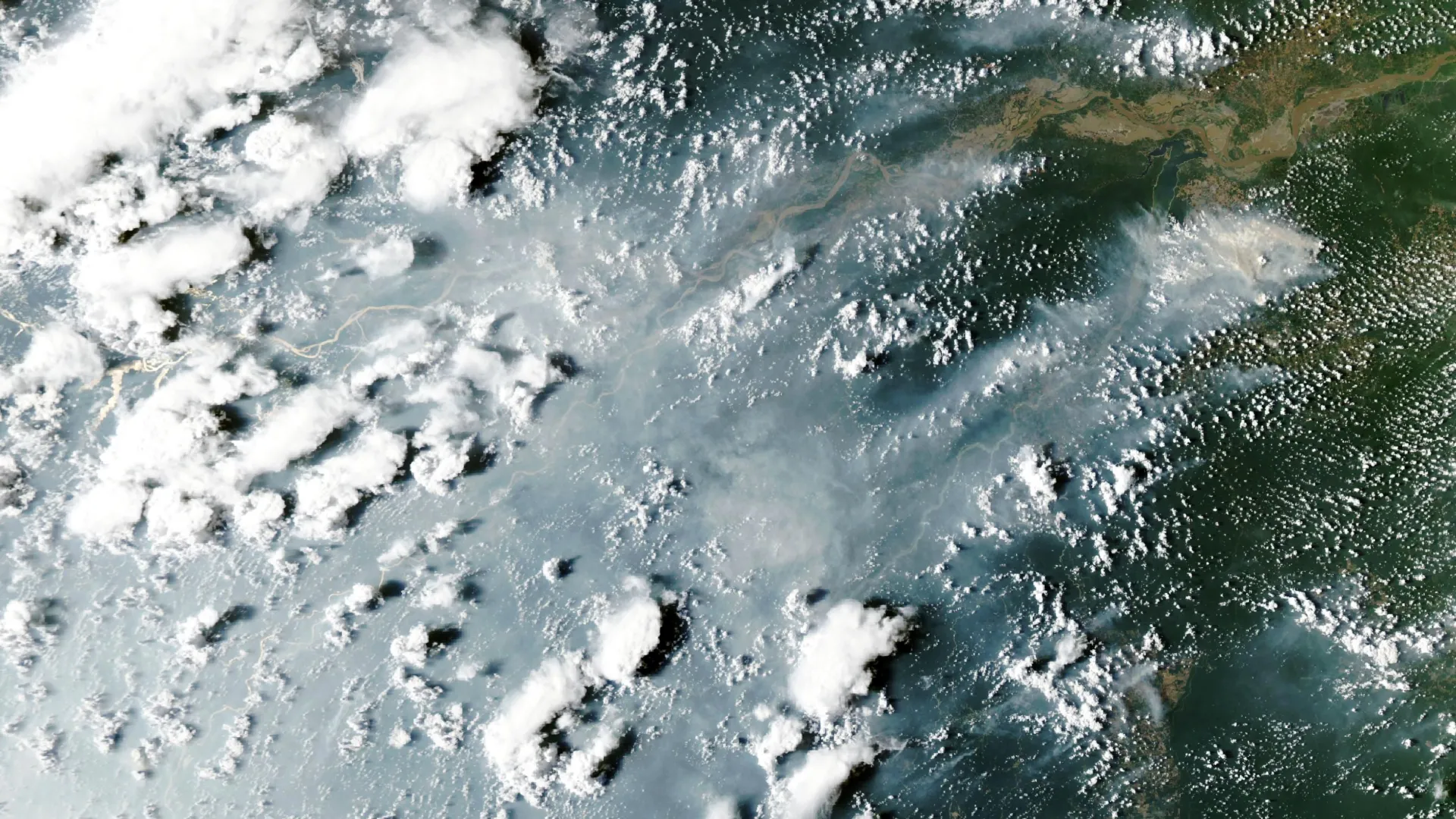
The Amazon rainforest, the world’s most critical terrestrial carbon sink, is currently locked in a desperate battle against an escalating wildfire crisis. Fueled by a severe, prolonged drought linked to the 2026 El Niño phenomenon, thousands of fires are sweeping through the Brazilian landscape. These blazes are not merely consuming forest; they are creating a public health emergency, choking major urban centers with hazardous smoke, and threatening to permanently alter the delicate biodiversity of the tropical basin.
As of late 2026, the situation has escalated into a regional catastrophe. NASA satellite observations indicate that the crisis is part of a global "cascade" of fire activity, with the Amazon serving as the second—and most vulnerable—domino to fall following earlier outbreaks in Indonesia.
The Chronology of an Escalating Disaster
The current crisis did not emerge overnight; it is the culmination of shifting meteorological patterns that began in mid-2026.
The Indonesian Prelude (August 2026)
The sequence began near the equator in Indonesia, where months of drought conditions facilitated massive peat fires. These blazes, which consume carbon-rich organic soil, served as the harbinger of the broader El Niño-driven climate event. By August, dense smoke had blanketed entire islands, and the destruction of hundreds of homes signaled that the drought’s reach was global.
The Amazonian Surge (September – October 2026)
By September 2026, the focus of the wildfire activity shifted to the central and eastern Amazon. NASA’s satellite monitoring systems, including the Fire Information for Resource Management System (FIRMS) and the Global Fire Emissions Database (GFED), began recording a sharp, alarming spike in fire detections.
The epicenter of this activity focused on the forests surrounding Manaus and Santarém—vital transportation and commercial hubs—extending eastward toward the mouth of the Amazon River. On October 12, 2026, the MODIS instrument aboard NASA’s Aqua satellite captured a harrowing image: massive, sprawling plumes of smoke rising from both sides of the Amazon River, effectively turning the sky over northern Brazil into a dark, suffocating canopy.
The Impending Path (Late 2026 – 2027)
Scientists from NASA’s Goddard Space Flight Center warn that the crisis is far from over. The fire activity is expected to migrate northward through November and December 2026, threatening the Brazilian states of Roraima and Amapá, as well as territories in Venezuela, Guyana, and Suriname. Looking further ahead, the southern Amazon regions of Brazil and Paraguay face a precarious 2027, as drought conditions are projected to peak in those areas by August and September.
Supporting Data: When Technology Meets the Forest Canopy
The effort to quantify the destruction is as complex as the fire behavior itself. NASA scientists, including Douglas Morton and assistant research scientist Shane Coffield, are utilizing cutting-edge satellite technology to gain a clearer picture of the devastation.
The Detection Gap
One of the most concerning revelations from the current research is that traditional monitoring systems may be significantly undercounting the number of active fires. While instruments like MODIS and VIIRS are the gold standard for tracking heat signatures, they face immense physical hurdles.
"On some of the smokiest days, we have very few detections, and we know that isn’t right," says Coffield.
The dense rainforest canopy, coupled with heavy cloud cover and thick, persistent smoke, often acts as a screen, concealing the low-burning fires that creep through the forest floor’s understory. By analyzing "candidate fires"—heat signatures that fall just below the detection thresholds of official products—researchers have identified that in areas like Santarém, the actual number of fires may be 40 percent higher than previously reported.
Air Quality and Human Impact
The human toll of these fires is starkly reflected in air quality data. In Manaus, a city of over 2 million people, fine particulate matter (PM2.5) concentrations soared beyond 135 micrograms per cubic meter in October. These microscopic particles, which bypass the body’s natural defenses to lodge deep in the lungs, placed the city in the second-worst category of the regional air quality index. The result was a city brought to a standstill: schools were shuttered, youth sports leagues were suspended, and public gatherings were prohibited as officials urged residents to remain indoors.
The "Domino Effect" and Ecological Fragility
Douglas Morton, a leading Earth system scientist, describes the situation as a "cascade" of tropical fires. This is not an isolated Brazilian problem, but a global phenomenon tied to rainfall disruptions. When the El Niño pattern disrupts precipitation across the tropics, the forest’s natural fire defenses—its moisture—vanish.
The Human Catalyst
Perhaps the most sobering aspect of this crisis is its origin. While lightning occasionally ignites fires in dry regions, the Amazon is historically too humid for natural ignition. Morton notes that less than 1 percent of Amazonian fires are caused by lightning. The current surge is almost entirely the result of human activity.
In the face of extreme drought, traditional land-management techniques have turned lethal. Fires intended to clear brush from grazing land or dispose of crop residue are escaping control, racing into the parched understory of the rainforest. With rainfall in Manaus recorded at 95 percent below normal in August and 60 percent below normal in September, the forest has been primed to act like tinder.
The Legacy of Past Burns
The ecological damage is compounded by the "burn history" of the region. Forests that were affected by the 2015-2016 and 2023 El Niño events are once again at the center of the flames. These previously burned areas are fundamentally weakened; their canopies are thinner, allowing more sunlight to reach the floor and further dry out the vegetation.
"It’s so striking—and frustrating—that this is happening all over again," says Morton. Because tropical rainforest species have not evolved to survive fire, these repeated events can lead to a long-term degradation of the ecosystem, shifting the forest from a lush carbon sink to a dry, degraded landscape that may never fully recover its original biodiversity.
Official Responses and Strategic Intervention
The scale of the threat has necessitated a shift in how researchers and local authorities track and manage the fires.
Bridging the Knowledge Gap
Collaborations between NASA and organizations like MapBiomas are now essential. By providing granular, corrected location data to local land-use authorities, scientists hope to provide a tactical advantage for firefighters on the ground. These partnerships aim to identify where uncontrolled fires are most likely to jump from agricultural land into protected forest zones.
A Call for Immediate Caution
Despite the dire projections, experts argue that the situation is not entirely hopeless for every region. While some areas are already in the grip of the fire season, regions yet to experience the full force of the drought—such as parts of northern Brazil and neighboring South American countries—have a narrow window of opportunity.
"Given the intensity of this El Niño, this really is the year for people to avoid burning at all costs," Morton emphasizes. Public awareness campaigns and strict enforcement of fire bans are being touted as the most effective immediate tools to prevent the expansion of the current crisis.
Implications for the Future of the Amazon
The 2026-2027 wildfire crisis represents a critical juncture for the Amazon rainforest. As the climate continues to fluctuate under the influence of global phenomena like El Niño, the thresholds of the Amazonian ecosystem are being tested.
- Biodiversity Loss: The repeated burning of primary forest threatens to permanently alter the structural integrity of the Amazon, potentially leading to the loss of species that cannot adapt to the increased frequency of fire.
- Global Climate Feedback: As the Amazon loses its ability to store carbon due to fire-induced tree mortality, the rainforest risks shifting from a climate solution to a climate contributor, releasing vast stores of sequestered carbon back into the atmosphere.
- Public Health Crisis: The urban impact in places like Manaus underscores the need for better health infrastructure and early warning systems for air quality, as climate-induced smoke events become a recurring feature of the regional landscape.
As researchers continue to refine their satellite monitoring to "see through the smoke," the international community watches with growing concern. The Amazon is currently burning, but the lessons learned during this, the most recent "domino" to fall, will define the strategies required to protect the planet’s lungs for decades to come. With the return of seasonal rains not expected until late 2026 or early 2027 in some regions, the immediate future of the Amazon depends on a combination of extreme vigilance, human restraint, and a deeper understanding of the cascading climate forces at play.

 Basiran
 Azzam Bilal Chamdy

 Ammar Sabilarrohman

 Muslim

 Suro Senen

 Neng Nana