
 Layla Zulfa
The landscape of supply chain planning (SCP) is currently defined by a paradox: while the volume of data, the sophistication of AI, and the agility of cloud platforms have reached unprecedented heights, the core methodology of planning remains tethered to outdated paradigms. For decades, the industry has oscillated between the rigid constraints of packaged software and the maintenance-heavy burden of custom-coded solutions. As we navigate a volatile global market, it is time to challenge whether these traditional approaches—and the ecosystems that support them—are actually serving the modern enterprise.
The Great Debate: Custom Code vs. Packaged Applications
For years, the decision-making process for supply chain leaders has been framed as a binary choice: build a custom solution or purchase an off-the-shelf application. Each path presents a distinct set of risks and rewards that have defined the failure and success of digital transformation initiatives.
The Packaged Application Promise
Packaged applications were sold on the promise of "best practices." The premise was simple: why reinvent the wheel when you can purchase software that codifies the standard, proven methodologies of the industry? Proponents argued that these systems would deliver faster business outcomes at a lower cost, providing a plug-and-play solution that standardized workflows across the organization.
However, the reality has rarely aligned with the marketing. In practice, organizations frequently find themselves trapped by the limitations of their chosen software. Extensive customizations are often required to accommodate unique business needs, leading to complex, fragile integrations and a loss of the very "best practices" the software was meant to enforce. By the time a system is fully implemented, the underlying business reality has often shifted, rendering the "standard" process obsolete.
The Custom Code Liability
On the other side of the spectrum, custom-built applications offer total control. They are designed to fit the business like a glove. Yet, the long-term lifecycle costs are often drastically underestimated. As technical debt accumulates, and as the original developers retire or move on, the code becomes a black box. In an era where cybersecurity threats are escalating and operational requirements morph rapidly, custom applications often become a liability rather than an asset, leaving firms unable to adapt to the pace of modern market volatility.

Digital Transformation: A History of Stagnation
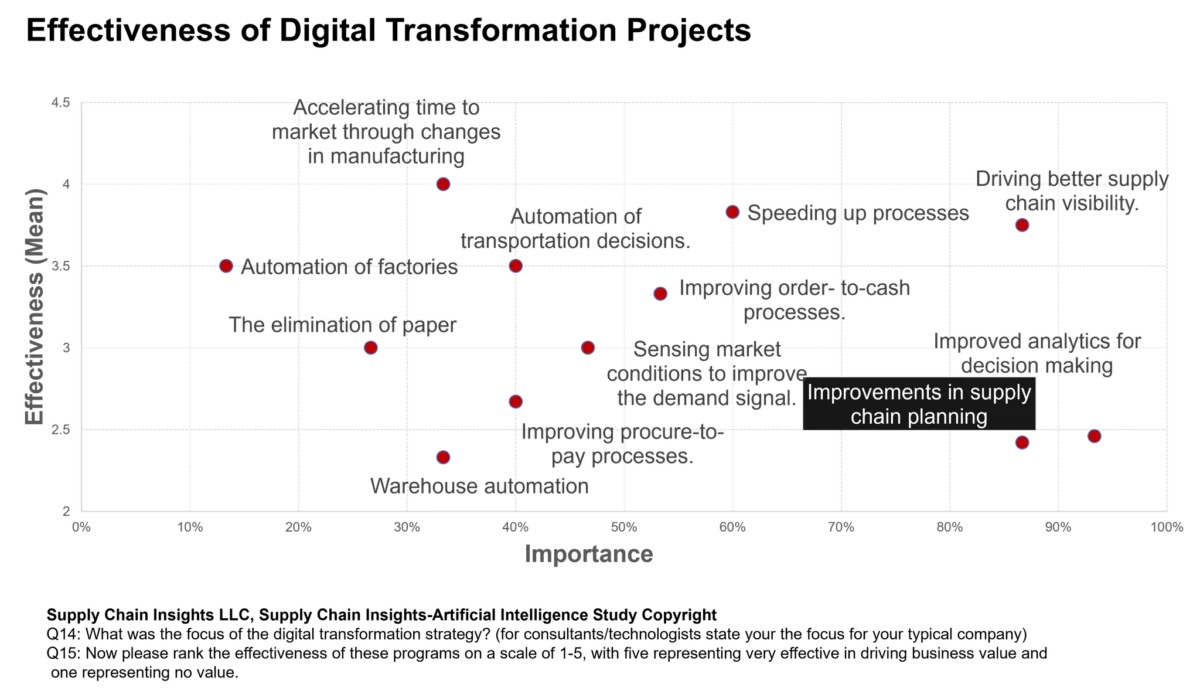
The failure of digital transformation in supply chain planning is well-documented, yet rarely addressed with the necessary honesty. Data consistently shows that despite massive investments, the needle on planning effectiveness has barely moved.
Chronology of Implementation Friction
- The ERP Era (1990s–2000s): Companies prioritized transactional systems. Planning was treated as a sub-module of ERP, focusing on execution rather than strategic foresight.
- The "Best-of-Breed" Wave (2000s–2010s): Businesses attempted to integrate specialized planning engines, but the lack of unified data models led to the "siloed planning" syndrome.
- The AI/ML Hype Cycle (Present): The current ecosystem—comprised of consultants, academics, and software vendors—is primarily focused on making legacy processes faster. They are automating the status quo rather than questioning whether the status quo is still relevant.
The fundamental issue is that line-of-business leaders often possess a deep understanding of transactional systems (orders, inventory, finance) but lack the same grasp on planning systems. This imbalance has allowed the industry to prioritize technical speed over strategic alignment, ultimately failing to deliver the "end-to-end" visibility that is promised at every industry conference.
A New Architectural Paradigm: The "In-Between" Option
If the binary choice between custom and packaged is failing, what is the alternative? The answer lies in the democratization of data and the rise of cloud-native data platforms like Snowflake and Databricks.
Interoperability as the New Standard
We are moving away from the era of "tight integration"—which is often synonymous with vendor lock-in—toward "interoperability." By utilizing modern data platforms as the backbone, organizations can treat traditional SCP solutions as a "system of record" rather than a rigid workflow engine.
This "in-between" architecture allows IT teams to build agile, customized plugins on top of the established SCP software. This approach fills the "black holes" in the supply chain—the areas where standard software fails to capture the nuance of a specific company’s operations—without discarding the benefits of a robust system of record. It is a modular, scalable approach that treats the supply chain as a flexible ecosystem rather than a monolithic block.
The Illusion of End-to-End Planning
One of the most persistent myths in the supply chain industry is the existence of a true "end-to-end" (E2E) planning solution. Despite the fervor of recent sales pitches, no software provider currently offers a comprehensive E2E process that survives the complexities of global trade, regional demand fluctuations, and supply disruptions.
Use Cases and the Planning Gap
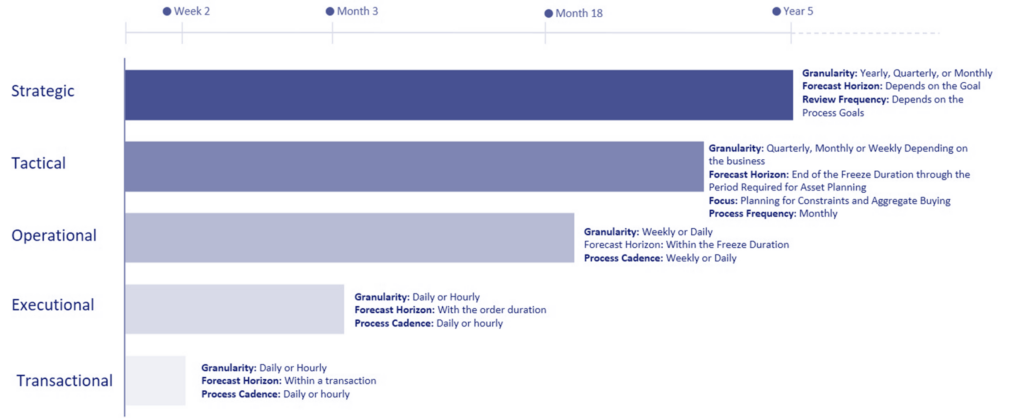
Consider the disconnect between various time horizons:
- Strategic Planning: Often detached from tactical execution.
- Tactical Planning: Frequently suffers from "sandbagging" by regional teams.
- Execution: Often forced to override planning due to real-time anomalies.
When these horizons are treated as separate activities rather than an integrated stream of decision-making, the organization suffers. True progress requires shifting from "planning as a forecast" to "planning as a capability," where data flows freely across these time horizons, governed by clear decision-making logic.
Orchestration: Defining the Rules of Engagement
The term "orchestration" has become the industry’s favorite buzzword, yet it is rarely defined with any precision. In a professional context, orchestration must be viewed as the alignment of data, functional processes, and governance.
The Governance Mandate
As we transition toward autonomous agents and AI-driven workflows, the question is no longer "what can the software do?" but rather "who has the authority to make the decision?" and "what constitutes a high-quality decision?"
Without a governance framework, automation can be dangerous. If an AI agent optimizes for inventory reduction without understanding the impact on customer service levels, it may achieve a mathematical success while creating a business failure. We have seen firsthand how collaborative programs degrade when regional teams manipulate data to suit their local KPIs.
To achieve true orchestration, organizations must move beyond the software-centric view and implement a human-in-the-loop governance structure. This involves:
- Defining Agent Behavior: Establishing strict guardrails for what AI can and cannot do.
- Workflow Transparency: Ensuring that human stakeholders understand how an autonomous decision was reached.
- Outcome Accountability: Ensuring that performance metrics are tied to the actual business outcome, not just the accuracy of the model.
Implications for the Future
The next time a technology vendor approaches your organization promising the benefits of "orchestration," it is imperative to move beyond the pitch. Ask them these three critical questions:
- How is the governance of this automation defined?
- How does this system interoperate with our existing data ecosystem, and where are the boundaries of its decision-making authority?
- How does the system handle the handover between human judgment and algorithmic output?
Conclusion: The Potential for Redefinition
The evolution of supply chain technology is undeniably exciting. However, the true value lies not in the software itself, but in our willingness to rethink the work. We must move away from the obsession with "installing" solutions and toward the practice of "engineering" resilient, flexible workflows.
As the leaves change and we look toward the next fiscal year, the challenge remains: are we going to continue automating the errors of the past, or will we seize the opportunity to redefine what supply chain planning can achieve? The potential is there, but it requires us to break the mold, reject the vendor-imposed status quo, and start building systems that reflect the reality of our dynamic, modern world. The dialogue is open—the next step is yours.


 Evan Lee Salim
 Jia Lissa

 Rifan Muazin

 Basiran

 Dwi Wanna
