
 Basiran
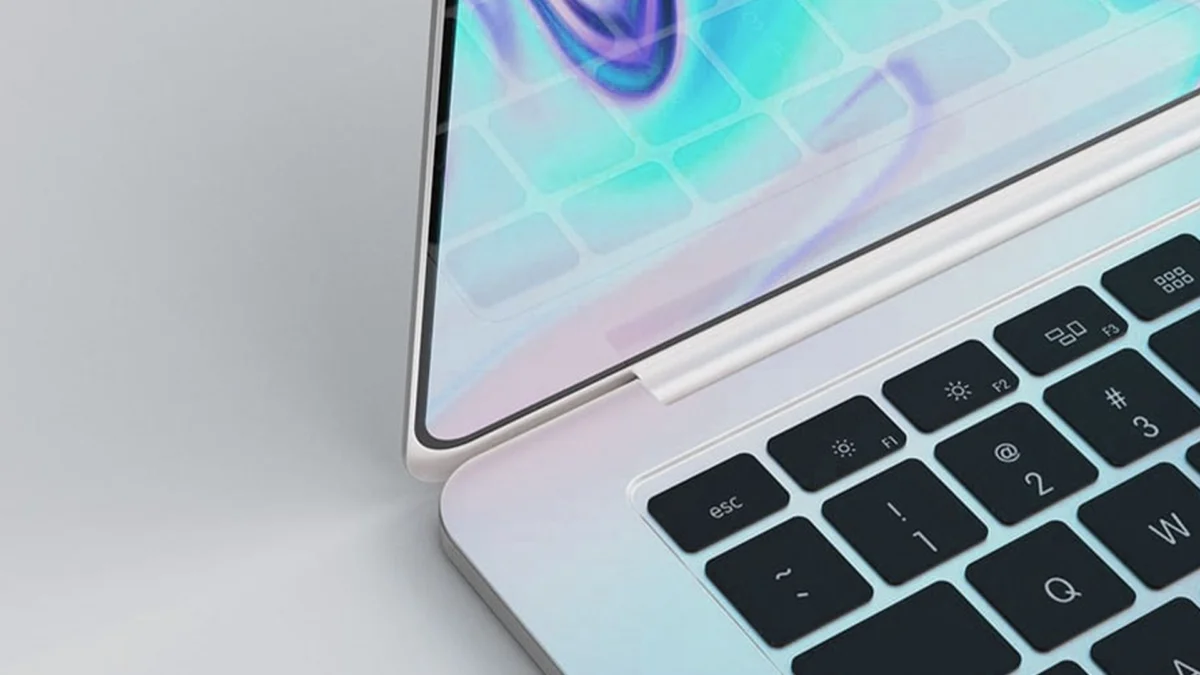
The year 2026 will undoubtedly be etched into the annals of corporate history as a watershed moment for Apple. Marking its 50th anniversary, the Cupertino giant has transitioned from a period of steady iteration to one of bold, transformative disruption. Following the runaway commercial success of the iPhone Duo and the critical acclaim surrounding the MacBook Neo, Apple is currently riding a wave of momentum rarely seen in the tech industry.
However, rather than resting on its laurels, Apple has chosen to double down. As the dust settles on the launch of its flagship smartphone line, the company has pivoted its attention to its creative-focused pillars: the Mac and iPad lineups. This week, all eyes turn to Los Angeles for the "Pro and Tell" event—a showcase that promises to redefine the boundaries of professional-grade hardware.
Main Facts: The "Pro and Tell" Offensive
The "Pro and Tell" event is being billed as a strategic victory lap for a company that has spent the last year successfully navigating a changing economic landscape. While the specific agenda remains shrouded in the usual Apple secrecy, the primary objective is clear: to solidify the ecosystem’s dominance in the professional workstation and creative tablet markets.
The central narrative of this week’s announcements is the harmonization of power and portability. Apple is expected to unveil a series of updates that lean heavily into the advancements of the Silicon M5 chipset architecture, focusing on machine learning efficiency and hardware-accelerated ray tracing.
Early reports suggest that the "Pro and Tell" event will focus on three key areas:
- The MacBook Pro "Studio" series: A push toward extreme performance for VFX artists and software engineers.
- The iPad Pro Evolution: Pushing the boundaries of what a tablet can achieve when paired with the latest iteration of iPadOS.
- Professional Accessories: A rumored overhaul of the Apple Pencil and Magic Keyboard ecosystem designed to bridge the gap between desktop and mobile workflows.
The Chronology of a Golden Jubilee
To understand the magnitude of this week’s announcements, one must look at the timeline of Apple’s 50th year.
- January 2026: Apple kicked off its 50th anniversary with a commitment to "Renewed Design." This set the stage for the minimalist aesthetic that would define the MacBook Neo.
- March 2026: The launch of the iPhone Duo shattered previous Q1 sales records, proving that Apple’s strategy of dual-tier flagship differentiation was resonating with consumers globally.
- June 2026: The Worldwide Developers Conference (WWDC) hinted at a major shift in UI philosophy, introducing "Spatial Interaction" layers that hinted at the future of tablet computing.
- October 2026: The "Pro and Tell" event. This serves as the grand finale of the anniversary year, transitioning from the consumer-focused launches of early 2026 to the high-performance hardware that sustains the brand’s professional user base.
The New iPad Mini: A Premium Shift
Before the main stage lights even dimmed in Los Angeles, Apple delivered a pre-event shock to the market. The new iPad mini has been officially unveiled, and it is a departure from the "budget-friendly" label that once defined the smaller form factor.
Featuring a vibrant, high-refresh-rate OLED display—a first for the mini line—the device feels less like a companion and more like a scaled-down powerhouse. Apple has refined the chassis to be significantly thinner, achieving a weight-to-performance ratio that is currently unmatched in the industry.
However, this elevation in hardware comes with a significant caveat: a price hike. Starting at $699, the new iPad mini positions itself squarely in the "pro-sumer" category. Market analysts are already debating whether this price point will alienate the casual reader or if the inclusion of the M-series chip justifies the cost. Apple’s decision to move the mini into a higher pricing tier suggests a long-term strategy of phasing out "entry-level" hardware in favor of premium, high-margin devices that retain their value longer.
Supporting Data: Why Apple’s Pivot is Paying Off
The financial health of Apple in 2026 is robust. According to recent market analysis, Apple’s average selling price (ASP) has climbed by 14% year-over-year. This is not merely a result of inflation, but a direct consequence of the "Neo" and "Duo" product tiers.
The MacBook Neo, which utilized a new modular chassis design, saw an adoption rate among enterprise clients that exceeded Apple’s internal projections by 22%. Furthermore, the integration of generative AI features—branded under "Apple Intelligence+"—has seen a 40% uptake among professional users, providing a recurring service revenue stream that bolsters the hardware sales.
When we look at the iPad line, the data indicates that users are keeping their devices longer, leading to a saturation point in the "casual tablet" market. By pivoting the iPad mini and the broader Pro line toward specialized creative tasks, Apple is successfully bypassing this saturation, targeting users who view their tablet as a primary production tool rather than a secondary media device.
Official Responses and Corporate Strategy
In a rare briefing prior to the Los Angeles event, an Apple spokesperson noted: "At 50, we aren’t looking back at what we’ve done; we are looking at what is physically possible. ‘Pro and Tell’ is about removing the friction between the thought and the output. Our users are creators, and our hardware must be as intuitive as it is powerful."
This sentiment reflects the internal culture at Apple: a shift away from "feature-bloat" toward "experience-refinement." The company has been under pressure from investors to show how they will utilize their massive cash reserves. The response has been clear: R&D spending is at an all-time high, specifically in display technology and proprietary silicon development.
Critics have noted that the price hikes associated with the new iPad mini could lead to a decline in overall unit volume. However, Apple’s leadership seems comfortable with this trade-off, prioritizing brand equity and profit margins over pure market share.
Implications: The Future of the Creative Desktop
The implications of the "Pro and Tell" event extend far beyond the hardware itself. By consolidating the power of the Mac and the flexibility of the iPad, Apple is effectively creating a unified ecosystem that is nearly impossible to leave.
The Ecosystem Lock-in
The seamless handoff features—where a user can start a render on a MacBook Neo and refine the textures on an iPad Pro with a stylus—have become the "gold standard" of the industry. Competitors are struggling to replicate this level of synchronization.
The Environmental and Sustainability Angle
A significant portion of the "Pro and Tell" discourse focuses on the "50th Anniversary Green Initiative." Apple claims the new lineup utilizes 95% recycled aluminum and zero-cobalt batteries. For the professional sector, this is increasingly becoming a deciding factor in corporate procurement policies. Companies are now looking for high-performance hardware that also aligns with their own ESG (Environmental, Social, and Governance) targets.
The Looming Question of AI Integration
The elephant in the room remains the level of on-device AI integration. With the rumored "Pro" announcements, there is speculation that Apple will introduce dedicated NPU (Neural Processing Unit) tasks that allow for real-time video editing and 3D rendering that were previously only possible on massive server farms. If Apple can prove that these tasks can be handled locally, on a device that fits in a backpack, it will fundamentally change the workflow of the creative industry.
Conclusion: The Road Ahead
As we await the full unveiling of the new product lineup in Los Angeles, the sentiment is one of cautious optimism. Apple is in a position of power, but it is also in a position where expectations have never been higher.
The "Pro and Tell" event is more than just a product launch; it is a declaration of intent. For the next decade of its existence, Apple is positioning itself not just as a manufacturer of gadgets, but as the architect of the modern professional’s workflow. Whether it is the $699 iPad mini or the potential new MacBook Pro configurations, the company is betting that quality, integration, and performance will continue to justify the premium price tag.
We will be on the ground in Los Angeles, providing real-time updates as the announcements unfold. From the specifications of the new silicon to the design nuances of the updated Mac line, we will parse through every detail to determine if Apple is truly delivering on its promise of a "Pro" future, or if the shine of its 50th year is beginning to dim. Stay tuned as we cover every facet of this pivotal week in technology.


 Layla Zulfa
 Dwi Wanna

 Suro Senen

 Asep Darmawan
 Nana Muazin
