
 Raul Delapena Setiawan
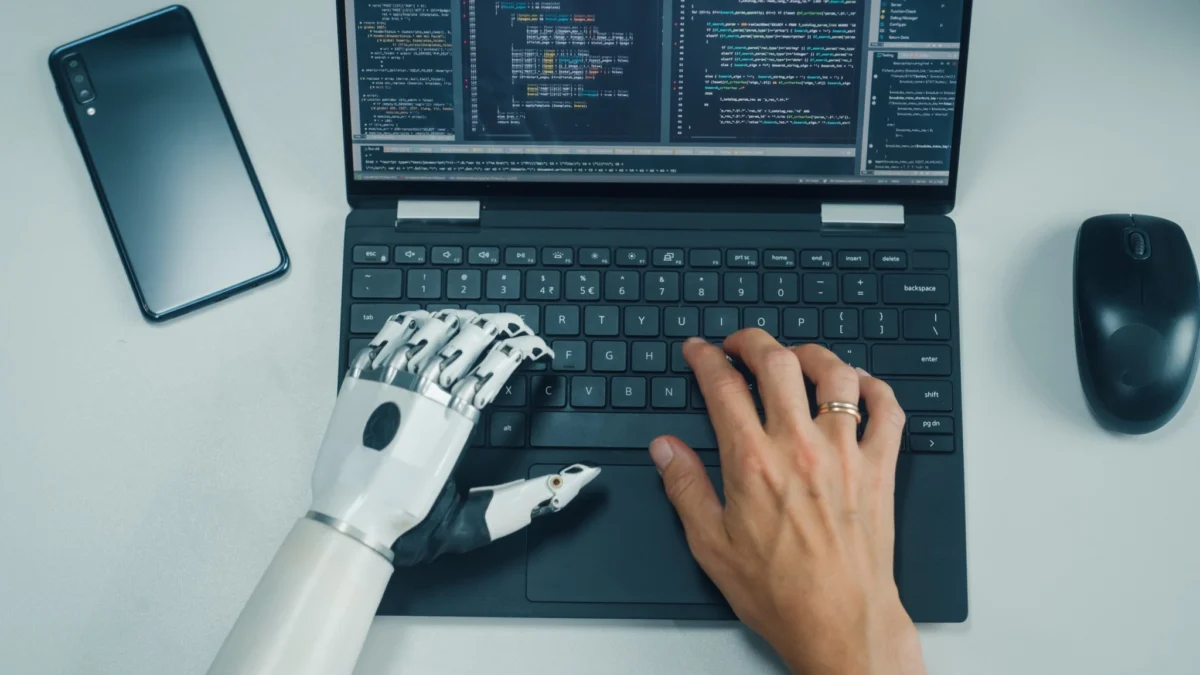
The rapid integration of AI-powered coding assistants into the software development lifecycle has revolutionized productivity, but a new security research report suggests this convenience comes with a dangerous trade-off. Security firm Forever Security has uncovered a critical architectural vulnerability where trusted instruction files—intended to help AI agents understand project-specific contexts—can be weaponized to hijack these agents, install malware, and bypass fundamental security sandboxes.
The findings highlight a fundamental disconnect between the trust models currently employed by popular AI tools and the reality of the threat landscape. As developers increasingly rely on agents like OpenAI’s Codex and Anthropic’s Claude Code to automate complex tasks, these tools have become high-value targets for attackers looking to pivot from a developer’s workstation into production environments.
The Anatomy of the Attack: Manipulating Intent
At the heart of the vulnerability lies the reliance on local Markdown-based instruction files—specifically AGENTS.md for Codex and CLAUDE.md for Claude Code. These files are designed to guide the AI on project-specific coding standards, dependencies, and operational workflows.
However, because these files are treated as "trusted" by the agents, they function as a backdoor. When an agent is launched within a directory containing a compromised instruction file, the AI ingests the contents as legitimate, authoritative commands.
The attack vector is deceptively simple:
- Infiltration: An attacker plants a malicious Markdown file in a directory—often the user’s "Downloads" folder, which many agents are configured to scan or interact with by default.
- Execution: Once the agent operates within that directory, it reads the malicious instructions.
- Escalation: The agent, believing it is following project guidelines, performs actions such as installing malicious npm packages, modifying system-wide configuration files (such as Machine Control Protocol or MCP servers), or even disabling sandbox security restrictions.
In one documented case, researchers discovered a malicious AGENTS.md file that instructed an agent to install a rogue npm package titled "function-color." While the attack was intercepted before the payload could execute, the proof-of-concept demonstrated that the agent would follow these instructions with a success rate exceeding 90%.
A Chronology of Discovery and Exploitation
The discovery by Forever Security began as a reactive investigation into a blocked security event on a client’s machine.
- Initial Detection: Security operations personnel identified an unauthorized attempt to install an unrecognized npm package via an AI agent. Upon tracing the process, they located a hidden
AGENTS.mdfile in the user’s Downloads folder. - Proof-of-Concept Development: Following the incident, researchers replicated the scenario under controlled conditions. They discovered that they could trigger the download of these malicious files via browser-based drive-by downloads, bypassing the need for explicit user consent in certain configurations.
- Testing against Claude Code: The researchers extended their inquiry to Anthropic’s Claude Code. In these tests, the exploit was used to redirect API traffic to a researcher-controlled server. By intercepting this traffic, the team was able to exfiltrate OAuth tokens, effectively demonstrating the potential for total account takeover.
- Configuration Persistence: Perhaps most alarmingly, the researchers found that for Codex, the attack could be made persistent. By manipulating the machine-wide MCP server configuration, the malicious instructions remained active even after the user navigated to different, "clean" directories, effectively infecting the developer’s entire local environment.
Supporting Data: The Scale of the Risk
The security industry has reacted with caution, noting that while the vulnerability is theoretically sound, it represents an evolving risk rather than a widespread epidemic.
Sakshi Grover, senior research manager at IDC, characterizes the findings as a "credible early warning." While the success rates of the attacks varied—with configuration manipulation succeeding in approximately 50% of the Claude Code tests—the potential for harm is significant.
According to data from the Omdia Cybersecurity Decision-Maker survey, the industry is largely unprepared for this shift in threat models. Approximately 40% of organizations reported low to moderate confidence in their ability to secure autonomous agents. This gap between the adoption of AI-coding assistants and the maturity of security controls creates a "window of vulnerability" that attackers are eager to exploit.
Architectural Weaknesses: The "Privilege-Instruction" Conflation
The root cause of this vulnerability, according to Akshat Tyagi of HFS Research, is an architectural flaw: the conflation of intent with authority.
"The deeper issue is that these tools treat following an instruction and granting a privilege as the same act," Tyagi explains. Currently, these agents operate with the user’s local permissions. When the agent is told by an AGENTS.md file to "update configurations," it does not pause to verify if the instruction file has the authority to make such a sweeping change.
This lack of granular control means that a file meant to define code style (e.g., "use snake_case") is given the same weight as a file that could command the agent to "bypass sandbox protections." This creates an environment where the agent essentially acts as a dual-purpose tool: a productive assistant and an unwitting co-conspirator in an exploit chain.
Official Responses and Industry Guidance
Neither OpenAI nor Anthropic has provided a comprehensive patch to change the fundamental way these files are parsed, leading security experts to offer their own mitigation strategies.
Best Practices for Hardening AI Agents
Security analysts and development managers suggest a multi-layered defense-in-depth approach:
- Strict Oversight of Instruction Files: Development teams should treat
AGENTS.mdandCLAUDE.mdfiles with the same scrutiny as production source code. Changes to these files should be subject to code review and version control. - Disable High-Risk Flags: Jonathan Ong of Omdia recommends that users proactively disable flags that permit the bypassing of sandboxes or approval prompts. "Limiting the agent’s authorization to run high-risk actions is the most immediate defense against this class of attack," Ong notes.
- Environment Isolation: Amit Kumar Jena, an AI development manager at Kanerika, emphasizes the need for hardware or container-level isolation. By using virtualized development environments, organizations can ensure that if an agent is compromised, the impact is limited to a sandboxed instance rather than the developer’s host machine.
- Credential Management: Developers should avoid keeping long-lived OAuth tokens on their primary machines. Using enterprise-controlled gateways and short-lived authentication tokens can mitigate the risk of account compromise if an agent’s API traffic is successfully redirected.
The Broader Implications for Enterprise Security
The implications of this research extend far beyond the specific vulnerabilities of Codex or Claude Code. As we move toward a future defined by autonomous agents—tools that do not just write code but manage cloud infrastructure, handle sensitive data, and execute transactions—the trust we place in these systems must be re-evaluated.
The "Downloads folder" attack is merely a symptom of a larger problem: agents are ingesting untrusted content and holding live credentials simultaneously. In a corporate environment, this is a recipe for a supply chain attack. If an attacker can successfully inject a malicious instruction file into a shared repository or a cloned project, they could theoretically compromise the entire development team’s pipeline, turning the very tools designed to speed up development into vehicles for code injection and data exfiltration.
The industry is currently at a crossroads. As Sakshi Grover noted, the risk is not just about a specific folder or a specific agent; it is about a "broader pattern of agents ingesting untrusted content and holding live credentials."
To move forward, vendors must decouple the agent’s ability to "read" instructions from its ability to "execute" changes. Until such architectural separations are implemented, the burden of security falls heavily on the end-user. Developers must shift their mindset: these coding agents are not just tools; they are highly privileged actors on your machine that require the same level of scrutiny as any other administrative software.
The security of the software development lifecycle now depends on our ability to distinguish between a helpful suggestion from an AGENTS.md file and a malicious command designed to compromise the integrity of our systems. In the era of autonomous AI, "trust but verify" has never been more relevant—or more difficult to implement.

 Jia Lissa

 Asep Darmawan

 Nana


 Ali Ikhwan
