
 Neng Nana
I. Main Facts: The $50 Million Catalyst for Borderless Growth
In an era where geographic boundaries are increasingly becoming secondary to talent acquisition, the Singapore-headquartered HR and payroll giant, BIPO, has announced a strategic pivot toward heavy investment in Artificial Intelligence (AI) and product research and development. This move is underpinned by a recent US$50 million investment from Apis Partners, a private equity asset manager. The capital infusion marks a significant milestone for the company as it seeks to address the escalating complexities faced by multinational corporations (MNCs) and high-growth startups expanding across the Asia-Pacific region and beyond.
The core of BIPO’s strategy lies in the "connected infrastructure" model—a synthesis of local regulatory expertise, cloud-based HR technology, and advanced automation. As businesses scale, the traditional "fragmented" approach to HR—where different vendors manage payroll in different countries—is becoming a liability. BIPO’s mission is to unify these disparate threads into a single, cohesive platform that provides C-suite executives with a "single source of truth" regarding their global human capital.
This announcement comes at a time when Southeast Asia is witnessing a surge in foreign direct investment (FDI) and a localized "tech boom," necessitating a more sophisticated approach to workforce management. The focus on AI is not merely a buzzword in this context; it is a functional necessity designed to handle the data-heavy, error-prone tasks of cross-border payroll, allowing HR professionals to transition from administrative roles to strategic business partners.
II. Chronology: From Regional Specialist to Global Contender
The evolution of BIPO reflects the broader trajectory of the Asian economy over the last decade. Founded with the vision of simplifying HR processes, the company has methodically built a footprint that now spans over 150 global markets.
The Foundation of Proprietary Technology:
Unlike many HR service providers that white-label third-party software, BIPO spent years developing its own intellectual property. This began with the creation of proprietary payroll engines tailored to the specific statutory requirements of key Asian markets, including Singapore, Hong Kong, and Mainland China.
The Expansion Phase (2018–2023):
Between 2018 and 2023, BIPO aggressively expanded its presence across Southeast Asia, establishing deep roots in Malaysia, Indonesia, the Philippines, Thailand, and Vietnam. During this period, the company was consistently recognized for its innovation, winning numerous accolades at the HR Vendors of the Year awards across multiple jurisdictions.
The 2024 Pivot and Apis Partners Investment:
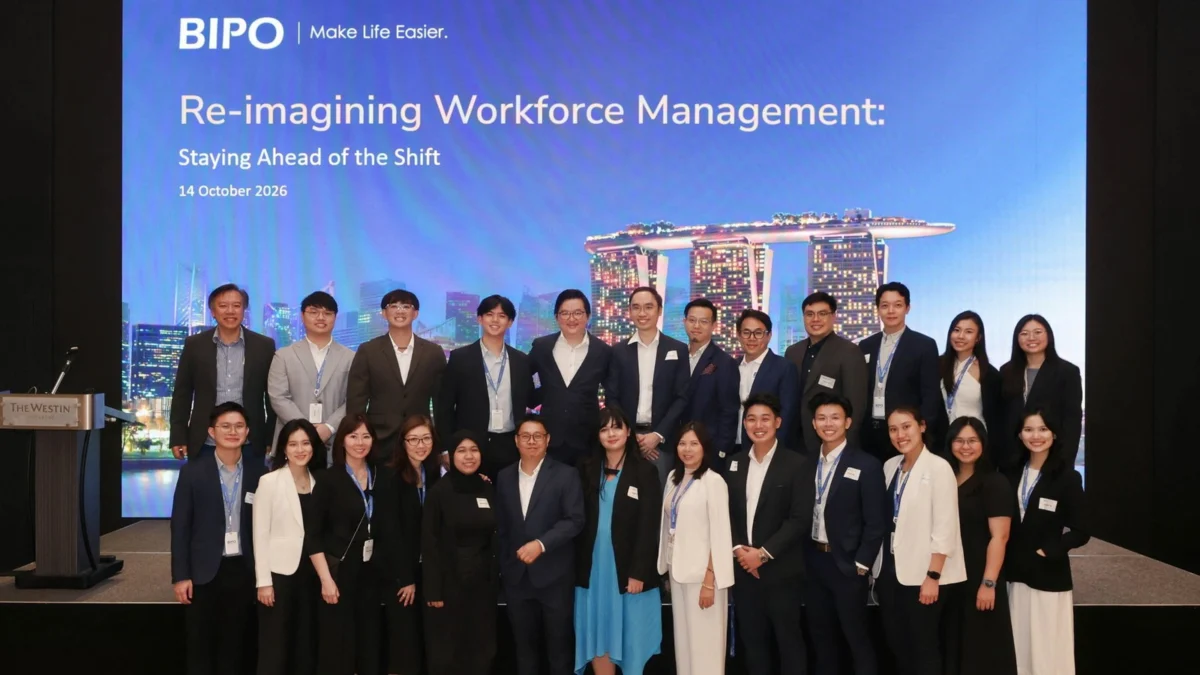
The current year marks a definitive shift toward the "AI-first" era. On October 14, 2024, BIPO hosted an exclusive leadership exchange at The Westin Singapore, bringing together over 100 C-suite executives. This event served as the public unveiling of their future roadmap, emphasizing that the US$50 million from Apis Partners would be the engine for their next phase of growth.
Recognition and Future Outlook:
As of late 2024, BIPO has been named a "Major Contender" in the Everest Group’s Multi-Country Payroll Solutions (MCPS) PEAK Matrix® Assessment for the fourth consecutive year. Furthermore, the company swept the Gold awards at the HR Vendors of the Year Singapore 2026 (announced in advance of the fiscal cycle), securing top honors for Best HR Automation Solution and Best HRMS for both Enterprises and SMBs.
III. Supporting Data: Navigating the "Complexity Tax" of Global Payroll
To understand the necessity of BIPO’s investment, one must look at the data surrounding regional compliance. Managing a workforce in Southeast Asia involves navigating a "complexity tax"—the hidden costs of managing diverse regulatory environments.
The Multi-Market Regulatory Matrix
BIPO currently operates 26 proprietary payroll engines. These are not merely calculators; they are sophisticated compliance databases that manage:
- Singapore: CPF (Central Provident Fund) contributions and specific tax filing requirements (IR8A).
- Malaysia: EPF (Employees Provident Fund), SOCSO, and PCB (Monthly Tax Deduction).
- Indonesia: BPJS (Social Security) and complex PPh 21 income tax structures.
- Vietnam and Thailand: Rapidly evolving labor laws and social insurance updates.
When a government changes a statutory rate, BIPO’s engines are updated in real-time. This automation reduces the margin for human error, which, according to industry benchmarks, can cost companies up to 1-3% of their total payroll budget in penalties and corrections.
The AI Advantage in Numbers
BIPO’s investment in AI targets three specific metrics:

- Onboarding Speed: By using AI-driven document verification and automated workflows, the time taken to onboard an international employee can be reduced by up to 60%.
- Processing Accuracy: Machine learning algorithms identify anomalies in payroll data (e.g., unusual overtime spikes or inconsistent tax deductions) before the final "run" is executed.
- Data Accessibility: Through the "Athena BI" (Business Intelligence) tool, managers can transform raw payroll data into visual heatmaps of labor costs, enabling better budgetary forecasting.
IV. Official Responses: Leadership Insights on Scaling with Confidence
At the heart of BIPO’s expansion is a philosophy that technology should empower, not replace, the human element of HR. During the leadership exchange in Singapore, Albert Liew, Managing Director, Southeast Asia at BIPO, provided a clear articulation of the challenges facing modern enterprises.
"Southeast Asia brings mature economies and high-growth markets within reach of businesses operating across the region," Liew stated. He emphasized that the primary bottleneck for growth is often not capital or product-market fit, but the ability to operationalize a workforce. "The organisations that succeed are the ones that can scale their workforce as quickly as they scale the business."
Liew’s perspective highlights a critical shift in the HR narrative. Historically, HR was seen as a "back-office" function. However, in the context of global expansion, HR becomes the "front line" of risk management. Liew noted that every new market entry introduces a fresh set of employment regulations and statutory obligations. Without a unified platform, HR teams find themselves "drowning in spreadsheets" rather than focusing on talent development and culture.
The sentiment from the C-suite attendees at the Westin Singapore event echoed this. The recurring theme was the need for "visibility." For a regional CFO or HR Director, having a single dashboard that shows the total cost of employment in Jakarta, Manila, and Sydney—all updated with the latest exchange rates and tax laws—is the "holy grail" of global operations.
V. Implications: The Future of HR Technology and the Borderless Economy
The strategic moves by BIPO have several long-term implications for the HR industry and the broader business landscape.
1. The Consolidation of HR Tech and Fintech
BIPO’s evolution suggests that the line between HR software and financial services is blurring. Payroll is essentially a financial transaction that requires deep regulatory compliance. By integrating Employer of Record (EOR) services with their own payroll engines, BIPO is effectively acting as a bridge between the world of human capital and the world of global finance. This "FinTech-enabled HR" model is likely to become the standard for international business.
2. AI as a Compliance Safeguard
As AI matures, its role in HR will move beyond chatbots. The BIPO model suggests a future where AI acts as a "compliance sentinel." In a region like Southeast Asia, where regulations can change with little notice, an AI that can scan government gazettes and automatically suggest updates to payroll configurations will be an invaluable asset for avoiding legal friction.
3. Democratization of Global Expansion
Previously, only the largest MNCs had the resources to manage payroll and HR across ten different countries. With platforms like BIPO, Small and Medium Businesses (SMBs) can now access the same level of infrastructure. This levels the playing field, allowing a 50-person startup in Singapore to hire talent in Vietnam or Australia with the same ease as a Fortune 500 company.
4. The Shift to "Human-Centric" HR
By automating the "routine and the rigorous"—the payroll cycles, the tax filings, and the data entry—AI frees up HR professionals to focus on the "human" aspect of their titles. This includes employee well-being, leadership coaching, and organizational design. The BIPO investment in AI is, paradoxically, an investment in making HR more human.
Conclusion
The US$50 million investment in BIPO is more than just a corporate expansion; it is a signal of the changing requirements of the global economy. As businesses continue to look beyond their home borders for growth, the demand for connected, AI-driven, and locally-compliant HR infrastructure will only intensify. Companies that leverage these tools will be able to navigate the complexities of the global workforce with a level of confidence that was previously impossible, turning the challenge of cross-border growth into a competitive advantage.
For senior HR leaders, the message is clear: the future of work is not just remote or hybrid—it is borderless, and the infrastructure to support that world is being built today.

 Reynand Wu
 Rifan Muazin

 Iffa Jayyana

 Suro Senen

 Pevita Pearce
 Basiran

 Azzam Bilal Chamdy

 Nila Kartika Wati
