
 Asro
In a strategic push to solidify its dominance in the creator economy, Meta has unveiled two major updates to its dedicated video editing platform, "Edits." By expanding the application’s functionality to the cutting-edge hardware of the iPhone Duo and offering a tangible look at its long-awaited desktop interface, Meta is signaling a clear intent: to provide a professional-grade, multi-platform ecosystem that keeps content creators within its walled garden rather than migrating to third-party software like Adobe Premiere or DaVinci Resolve.
The Core Developments: Hardware Optimization and Desktop Integration
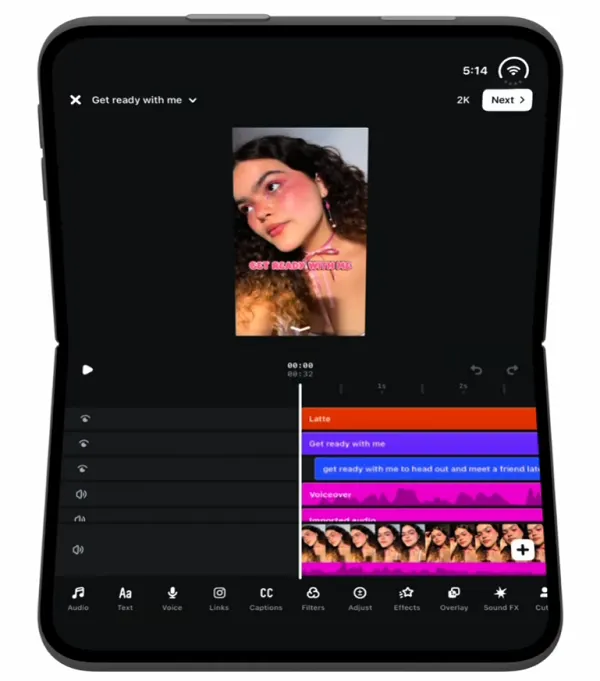
Meta’s latest updates serve as a bridge between mobile agility and professional production depth. The company has officially launched a version of Edits specifically engineered for the iPhone Duo, Apple’s flagship folding-screen device. This release is not merely a port; it is a fundamental UI reimagining that leverages the device’s unique form factor.
Simultaneously, Meta has moved closer to a wider rollout of the Edits desktop application. First teased in June, the desktop iteration is currently undergoing closed beta testing with a select group of creators. This development represents a critical pivot for Meta, as it moves from being a mobile-first social media giant to a provider of robust, high-performance creative tools.
Chronology: From Mobile Curiosity to Professional Suite
To understand the gravity of these updates, one must look at the trajectory of Meta’s creative tools.
- June 2024: Meta first announced the development of a dedicated desktop version of Edits, accompanied by plans to integrate an AI-powered production assistant. This signaled to the market that Meta was serious about moving beyond simple "filter-and-post" editing.
- Late 2024: The development cycle accelerated as Meta began refining its AI models, aimed at automating tedious tasks like color correction, audio leveling, and clip sequencing.
- Early 2025: Select creators were granted access to the early-build desktop version, marking the transition from internal testing to external user feedback.
- Current Date: The official launch of the iPhone Duo version of Edits, coupled with the first public glimpses of the desktop UI provided by creator Taylor Golub, confirms that Meta is executing a aggressive multi-platform roadmap.
Hardware Synergy: The iPhone Duo Implementation
The integration of Edits into the iPhone Duo is a masterclass in adaptive design. Unlike standard smartphones, the Duo’s foldable screen presents unique challenges—most notably the "crease" and the variable aspect ratios.
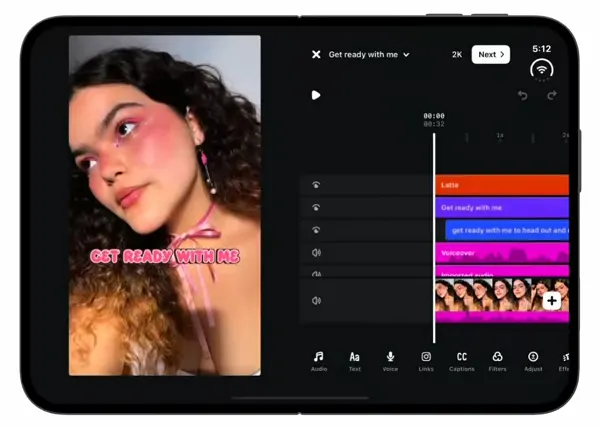
Meta’s developers have addressed these through a dynamic UI that adjusts based on the device’s orientation. When the device is fully unfolded, the app maximizes the larger surface area to allow for a split-screen workflow. This allows users to view their timeline on one side of the crease while monitoring the high-definition preview on the other.
"With a larger, adaptive screen, you can edit and preview your timeline side by side for more flexibility in how you create," Meta noted in a recent update on Threads. "Edits adapts to the screen and crease, so you can keep creating in the position that feels right."
This level of optimization is crucial. For mobile creators, the primary friction point has always been the limitation of a single, small screen. By providing a "workspace" feel on a mobile device, Meta is successfully narrowing the gap between "content creation" and "video production."
The Desktop Shift: Power for Professional Workflows
The screenshot shared by creator Taylor Golub regarding the desktop app reveals a significantly more sophisticated interface than its mobile predecessor. The desktop version appears to utilize a traditional non-linear editing (NLE) layout, providing:
- Expanded Timeline Management: Users can now view multiple audio and video tracks simultaneously, which is essential for complex edits involving layers, overlays, and sound design.
- Asset Management: The desktop UI features a dedicated panel for media organization, allowing creators to manage large libraries of footage more efficiently.
- Advanced Toolsets: By utilizing the power of a desktop processor, the app can handle higher bitrates and more intensive rendering processes, which are often throttled on mobile devices.
This shift suggests that Meta is not just targeting casual TikTok or Reels creators, but is actively courting professional editors who require a workstation-class experience.
Official Responses: The Vision of Adam Mosseri
The significance of these updates has not gone unnoticed by leadership. Instagram Chief Adam Mosseri provided a rare glimpse into the long-term vision for the platform in a comment on Golub’s post.
Mosseri emphasized that the desktop version is not just a secondary feature, but a strategic cornerstone. He remarked that he expects the desktop iteration of Edits to become "a foundation for a lot of interesting features to come." This statement suggests that Meta is preparing to roll out enterprise-grade features—potentially including cloud-based collaboration tools, real-time multi-user editing, and advanced AI-generative video capabilities—all centralized within the Edits platform.
Implications for the Creator Economy
The implications of Meta’s dual-pronged strategy are profound for both the industry and the end-user.
1. Retention through Workflow Integration
By keeping creators within the Meta ecosystem from the point of capture to the point of publication, Meta minimizes the risk of users exporting content to third-party apps, where they might be tempted to repurpose that content for competing platforms like TikTok or YouTube Shorts. The convenience of an integrated "Edit-to-Publish" workflow is a powerful moat.
2. The Standardization of "Pro-sumer" Editing
Meta is effectively democratizing high-end editing techniques. By embedding AI-production assistants and professional-grade UI layouts into a free or low-cost app, Meta is raising the floor for what constitutes "standard" content quality. This creates a competitive environment where creators who do not utilize these tools may find themselves falling behind in terms of visual polish and engagement metrics.
3. Hardware-Software Co-dependency
The collaboration with Apple’s hardware ecosystem—specifically the iPhone Duo—highlights a growing trend of software developers tailoring their experiences to specific, high-end hardware. As smartphones continue to evolve, the software that best exploits the physical capabilities of those devices will dictate the market leaders. Meta is clearly betting that the "foldable" trend is not a gimmick, but the future of mobile productivity.
4. Competitive Pressure on Adobe and DaVinci
While Meta is not yet a direct competitor to high-end cinematic software, the company is successfully capturing the "middle market." Many creators currently pay monthly subscriptions for Adobe Creative Cloud or spend significant time learning professional NLE software. If Meta can provide 80% of the functionality of these tools within an app that is already optimized for social distribution, they could cause a massive migration of users away from traditional software suites.
Conclusion: A New Era for Meta Content
Meta’s latest updates to the Edits app are a testament to the company’s pivot toward becoming an indispensable infrastructure provider for the creator economy. By refining the mobile experience for the iPhone Duo and providing a robust, workstation-grade desktop platform, Meta is successfully positioning itself at the center of the creative process.
As these tools continue to mature—particularly with the promised integration of AI-driven production features—the barrier to entry for professional-quality content will continue to collapse. Whether this leads to a new golden age of user-generated content or simply adds to the digital noise remains to be seen. However, one thing is certain: for the millions of creators who rely on Meta’s platforms for their livelihood, the landscape of production has just become significantly more capable.
As we look toward the wider release of the desktop version, the industry will be watching closely to see if Meta can deliver on the promise of a truly "foundational" creative tool, or if the weight of its own ambition will complicate the simplicity that initially made its social apps successful. For now, the integration of hardware optimization and professional software design looks like a winning strategy for the social media giant.


 Raul Delapena Setiawan

 Basiran

 Iffa Jayyana

 Suro Senen

 Pevita Pearce

 Azzam Bilal Chamdy

 Nila Kartika Wati
