
 Jia Lissa
In late August 2026, Microsoft co-founder Bill Gates published a landmark essay that sent ripples through the global executive community. Addressing the unbridled march of artificial intelligence, Gates did not mince words: humanity is standing on the precipice of one of the most turbulent transitions in its history. While he acknowledged the immense potential of the technology to catalyze innovation, his primary focus remained on the existential risks—ranging from mass labor displacement and the degradation of developmental milestones in children to the democratization of harmful capabilities.
For Chief Procurement Officers (CPOs) and other senior enterprise leaders, this is no longer a theoretical debate for the distant future. It is a present-day operational reality. As the procurement function finds itself at the intersection of technological adoption and human capital management, the pressure to balance efficiency with ethical responsibility has never been greater.
The Chronology of an Existential Pivot
The conversation regarding AI’s impact on the workforce has evolved rapidly over the past two years. Initially viewed as a tool for minor process optimization, AI has transitioned into a fundamental rearchitecting of enterprise operations.
- Mid-2024: AI integration moved from pilot programs to core procurement strategies. Early adopters focused on automated spend analysis and contract lifecycle management.
- Early 2026: The focus shifted toward generative AI, which began handling strategic tasks such as supplier negotiation, risk assessment, and complex category management.
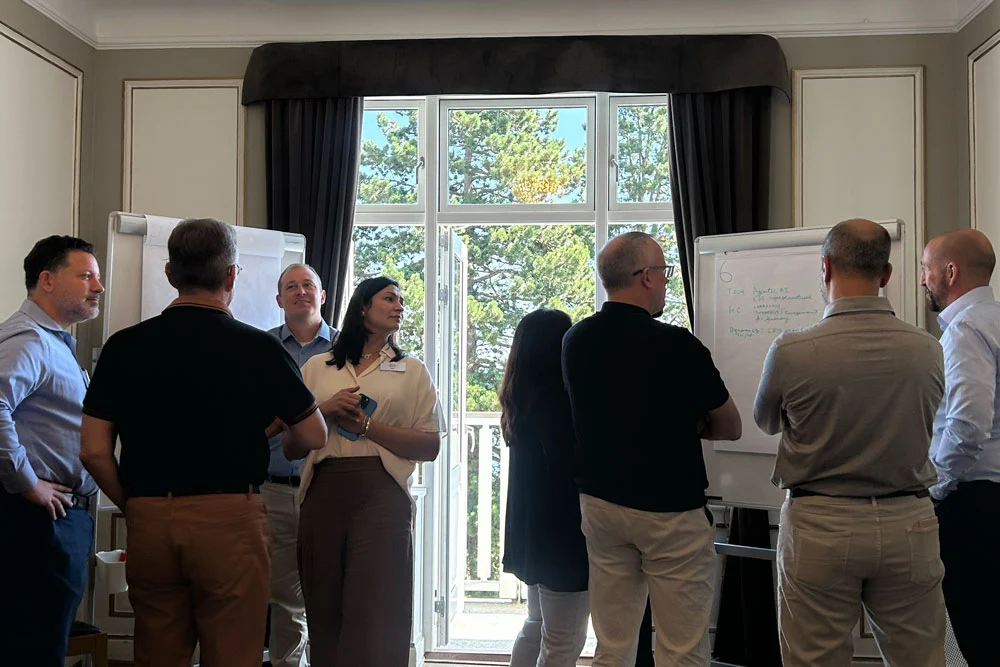
- July 2026: During the Ovation CPO retreat, senior procurement leaders gathered to address the "elephant in the room": the radical restructuring of team sizes. The consensus shifted from "AI as an assistant" to "AI as a replacement."
- August 2026: Bill Gates’ essay crystallized these industry fears, framing the procurement leader’s dilemma within a broader, global socio-economic context.
The Great Disconnect: Efficiency vs. Displacement
During the Ovation retreat, a deliberate, provocative challenge was issued to the attending CPOs: "Break your current operating models." Leaders were asked to be brutally honest about how AI adoption would impact their team structures.
The resulting data was staggering. Estimates for headcount reduction within procurement functions ranged from 30% to 80%. This revelation highlights a growing cognitive dissonance within corporate leadership. On one side of the boardroom table, CPOs frequently claim that automation will "free up" staff to focus on higher-value, strategic work. On the other side, the same leaders—or their CFOs and CEOs—are mandating aggressive headcount reductions, citing the very automation they claim is meant to "empower" the workforce.
Both narratives cannot be true. If automation is meant to augment human capability, why is the primary metric of success increasingly tied to the removal of the human element? This contradiction is precisely what Bill Gates warned against. By prioritizing immediate cost-efficiency, organizations risk fulfilling the most pessimistic predictions regarding labor displacement.
Rethinking the Worker: The Kramer Thesis
The moral dimension of this transition was further illuminated by Larry Kramer, President and Vice Dean of the London School of Economics, who spoke at the Ovation retreat. Kramer challenged the long-held corporate assumption that individuals should primarily be viewed as "consumers."
For decades, the global economy has been fueled by the pursuit of efficiency, cost reduction, and hyper-competition. The procurement function has been the tip of the spear in this effort, driving value through lean operations. However, Kramer argued that if we continue to view people solely as consumers—focusing only on lower prices and faster delivery—we risk hollowing out the very society that sustains the market.
Kramer’s proposition is a radical shift: to navigate the AI era successfully, leaders must start viewing people as workers rather than just consumers. Protecting human dignity and equality in an automated future will require:
- A Shift in KPIs: Moving away from short-term headcount reduction as the primary measure of procurement success.
- Increased Government Intervention: Acknowledging that the private sector cannot solve systemic displacement alone.
- International Multilateralism: Collaborating across borders to establish standards for AI deployment that prioritize labor stability.
Implications for the Modern CPO
As enterprise officers, CPOs are no longer just managers of supply chains; they are architects of the future workplace. The implications of this shifting landscape are threefold.
1. The Strategy of "Human-in-the-Loop"
The goal for the next decade should not be the total replacement of the procurement team, but rather the development of a "human-in-the-loop" architecture. By retaining human oversight, companies can leverage the speed of AI while maintaining the nuance, ethical judgment, and relationship-building skills that remain uniquely human.
2. Preparing for the "Turbulent Era"
Bill Gates noted that the transition will be turbulent. CPOs must prepare for this volatility by fostering organizational resilience. This means investing in the reskilling of employees, shifting the focus from transactional procurement to strategic, long-term supplier relationships that AI cannot easily replicate.
3. The Moral Imperative of Leadership
The most successful CPOs of the future will be those who can defend their team structures to the Board. When a CEO demands a 50% cut in headcount via AI, the CPO must be prepared to articulate the value of the human workforce in terms of risk mitigation, innovation, and long-term stability—factors that an algorithm cannot manage in isolation.
Conclusion: A Call to Action
The concerns raised by Bill Gates are not mere warnings; they are a call for proactive leadership. The Procurement function is currently at a crossroads. One path leads to a ruthless pursuit of efficiency that may solve the immediate budget crisis but ignores the long-term societal fallout. The other path—the more difficult path—involves a conscious, values-driven integration of AI that preserves the dignity of the worker and contributes to a sustainable, equitable future.
As we move forward, these debates will move from the conference floor to the daily agenda of every CPO. It is time to treat the human impact of automation with the same rigor and strategic foresight that we apply to our most complex supply chain challenges.
To receive weekly insights from the Procurement Leaders community, sign up to the CPO Crunch newsletter.

 Evan Lee Salim
 Neng Nana
 Sagoh

 Rifan Muazin

 Ali Ikhwan
