
 Siti Muinah
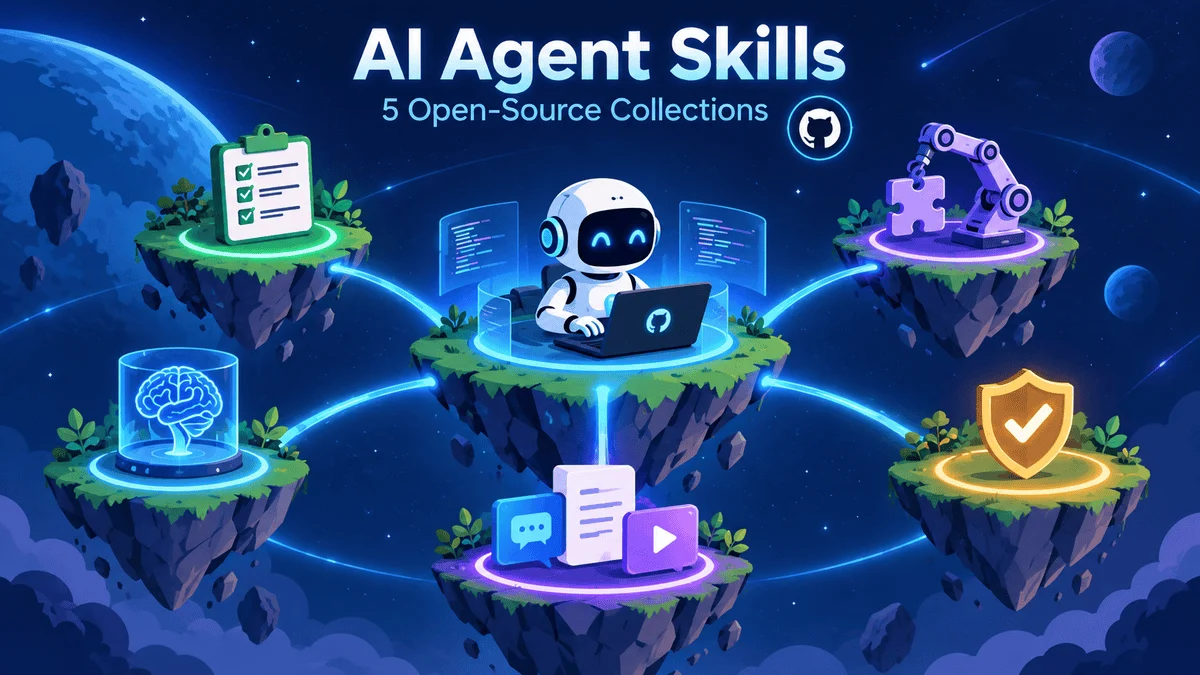
Modern AI coding agents—such as Claude Code, Cursor, and GitHub Copilot—have reached a tipping point. They can generate boilerplate code, debug syntax errors, and write unit tests with remarkable speed. However, for veteran software engineers, a lingering question remains: Is writing code the same as building software?
The answer is a resounding "no." Software engineering is an intricate discipline involving requirement gathering, architectural planning, rigorous testing, security audits, code reviews, and deployment management. While agents are excellent at the "writing" phase, they often struggle with the "engineering" phase. This gap is currently being bridged by a new paradigm in the developer ecosystem: AI Agent Skills.
These reusable instructions and structured workflows provide agents with the "how-to" knowledge required to handle complex tasks, moving them from simple autocomplete engines to autonomous, process-aware engineering partners.
1. The Core Philosophy: Why Skills Matter
At its simplest, an AI agent skill is a structured prompt or a set of instructions—often contained in SKILL.md files—that forces an agent to follow a specific methodology. Rather than allowing an LLM to "hallucinate" its way through a codebase, these skills impose guardrails.
When you ask an agent to "build a feature," a standard agent might jump straight into writing code. A skilled agent, however, will first execute a "brainstorming" step, verify requirements, draft a technical design, and only then proceed to implementation. By formalizing these workflows, developers are essentially offloading their own internal engineering processes to the agent, ensuring consistency across every commit.
2. Top Five Repositories Shaping the Future
The developer community has rapidly coalesced around several key repositories that define the current state of AI-assisted engineering. Below is a comprehensive look at the five most influential collections.
I. Superpowers by Jesse Vincent: A Methodological Approach
Created by Jesse Vincent and the team at Prime Radiant, Superpowers stands out as a full-stack engineering methodology rather than a mere set of utilities.
- The Methodology: Superpowers dictates the entire lifecycle of a ticket. It enforces brainstorming sessions, architectural planning, and TDD (Test-Driven Development) cycles.
- Systematic Debugging: Instead of the common "trial-and-error" approach where agents guess at fixes, Superpowers forces the agent to perform a root-cause analysis before touching a single line of code.
- Compatibility: It is designed for modularity, supporting environments like Claude Code, Codex, Cursor, and the GitHub Copilot CLI. By installing it, you aren’t just adding a tool; you are upgrading the agent’s "operating system" for software development.
II. Skills for Real Engineers by Matt Pocock: Composability First
Matt Pocock, a prominent voice in the TypeScript and engineering community, argues against what he calls "vibe coding"—the tendency to let AI write code without sufficient verification. His repository, Skills for Real Engineers, is built for modularity.
- The Workflow: Pocock emphasizes small, composable skills. A standout feature is
grill-with-docs, which forces the agent to interview the developer about the task at hand. It then updatesCONTEXT.mdand ADRs (Architecture Decision Records) to ensure the documentation stays in sync with the implementation. - The Chain: Users can string these skills together:
grill-with-docs→to-spec→to-tickets→implement→code-review. This creates a repeatable pipeline that mimics the workflow of a senior developer.
III. ECC by Affaan: The Comprehensive Engineering Platform
For teams looking for an all-encompassing solution, ECC by Affaan Mustafa is the most ambitious project on this list. It is less of a collection and more of a "development environment."
- Continuous Learning: ECC differentiates itself by preserving context across sessions. It learns from past errors and turns recurring patterns into permanent, reusable skills.
- AgentShield: Security is often the Achilles’ heel of AI agents. ECC includes
AgentShield, a specialized tool that scans agent configurations for risky permissions, hardcoded secrets, and suspicious hooks, providing a layer of safety that most agents lack by default. - Orchestration: With support for research, ML-specific tasks, and DevOps operations, ECC transforms the agent from a helper into a team member capable of managing the entire development lifecycle.
IV. Awesome LLM Apps by Shubham Saboo: The Laboratory
Awesome LLM Apps serves as a vital repository for developers who want to understand the "how" behind AI-driven applications. With over 100 open-source agents and skills, it acts as a R&D laboratory.
- Cross-Model Versatility: This repository showcases how to combine different models (GPT-4, Claude, Gemini, DeepSeek) with specific agent skills.
- Project Graveyard: A unique highlight of this collection is the
project-graveyardskill. It analyzes abandoned local Git repositories, evaluates the history of why they were archived, and provides insights on whether they are worth reviving, demonstrating how agents can act as historical consultants for a developer’s portfolio.
V. Agent Skills by Addy Osmani: Production-Grade Engineering
Addy Osmani’s Agent Skills is arguably the most focused on the final phase of the software lifecycle: Shipping.
- Quality Gates: The collection is built around six distinct stages: DEFINE, PLAN, BUILD, VERIFY, REVIEW, and SHIP.
- Performance Engineering: A major strength of this collection is its focus on constraint-driven development. It allows developers to define performance, linting, and security thresholds that must be met before an agent can mark a task as "complete."
- Scale: With support for over 70 different coding agents and environments, it is the most accessible repository for developers who want to standardize their workflow without locking themselves into a single IDE or agent tool.
3. Chronology of Adoption: From Autocomplete to Agentic
The evolution of these tools follows a clear trajectory:
- 2022–2023 (The Autocomplete Era): Developers relied on Copilot and Tabnine for line-level code suggestions. These tools were reactive.
- Early 2024 (The Agentic Era): Tools like Cursor and Claude Code introduced multi-file awareness. Developers began to use these to handle entire functions or small features.
- Late 2024–Present (The Skill-Based Era): We have entered the era of process-driven AI. By installing specific skill repositories, developers are no longer asking agents to "write code"; they are assigning them roles, setting constraints, and defining workflows.
4. Supporting Data: Why "Process" Beats "Prompting"
In a recent study of developer productivity, teams that implemented structured workflows (using methodologies like those found in the Superpowers or Addy Osmani repositories) reported a 40% reduction in "re-work" cycles.
The primary reason for this efficiency gain is the reduction of context drift. Without structured skills, agents often lose sight of the project’s architectural goals after 10–15 turns of conversation. By using SKILL.md files, the agent is periodically "reminded" of the project’s constraints (e.g., "Always run tests before finishing," "Ensure all changes are reflected in the ADR"). This enforcement of process creates a predictable output that mimics the quality of a seasoned human engineer.
5. Official Perspectives and Implications
Industry leaders are increasingly vocal about the shift toward agentic workflows. As companies like Anthropic and OpenAI push for more autonomous agents, the responsibility shifts from "writing better prompts" to "designing better systems."
The Implications for Software Engineering:
- The Shift to Architectural Oversight: As agents handle the heavy lifting of TDD and documentation, the role of the software engineer will shift toward "System Architecture" and "Review Oversight." You will spend less time typing and more time auditing the agent’s plan.
- Standardization: These repositories are helping to standardize what "good" code looks like across disparate teams. When an entire organization uses the same
SKILL.mdfiles, every developer—human or AI—is held to the same standard. - Security: The inclusion of tools like
AgentShieldsuggests a future where agents are not just productivity tools, but security-hardened members of the dev team that actively prevent vulnerabilities from entering the codebase.
6. Final Thoughts: How to Choose
The temptation is to install everything. However, the most successful engineers are those who treat these repositories as a toolbox.
If you are a solo developer looking to build robust, high-quality production software, start with Addy Osmani’s collection. If you are an engineering team needing to enforce rigorous methodology and root-cause analysis, Superpowers is the gold standard. For those building complex, multi-agent systems, ECC provides the necessary infrastructure.
The ultimate goal of these agent skills is not to replace the engineer, but to codify the engineer’s best habits. As we move forward, the most successful developers will be those who master the art of teaching their agents how they want to work, ensuring that the software of tomorrow is not just generated quickly, but built correctly.
About the Author:
Abid Ali Awan is a certified data scientist and technical writer specializing in machine learning and the future of AI development. Holding a Master’s in Technology Management and a background in telecommunications, he is dedicated to documenting the transition of AI from a novelty to a fundamental engineering utility.


 Pevita Pearce

 Sagoh

 Muslim

 Evan Lee Salim

 Basiran

 Reynand Wu

 Layla Zulfa

 Nana
