
 Ali Ikhwan
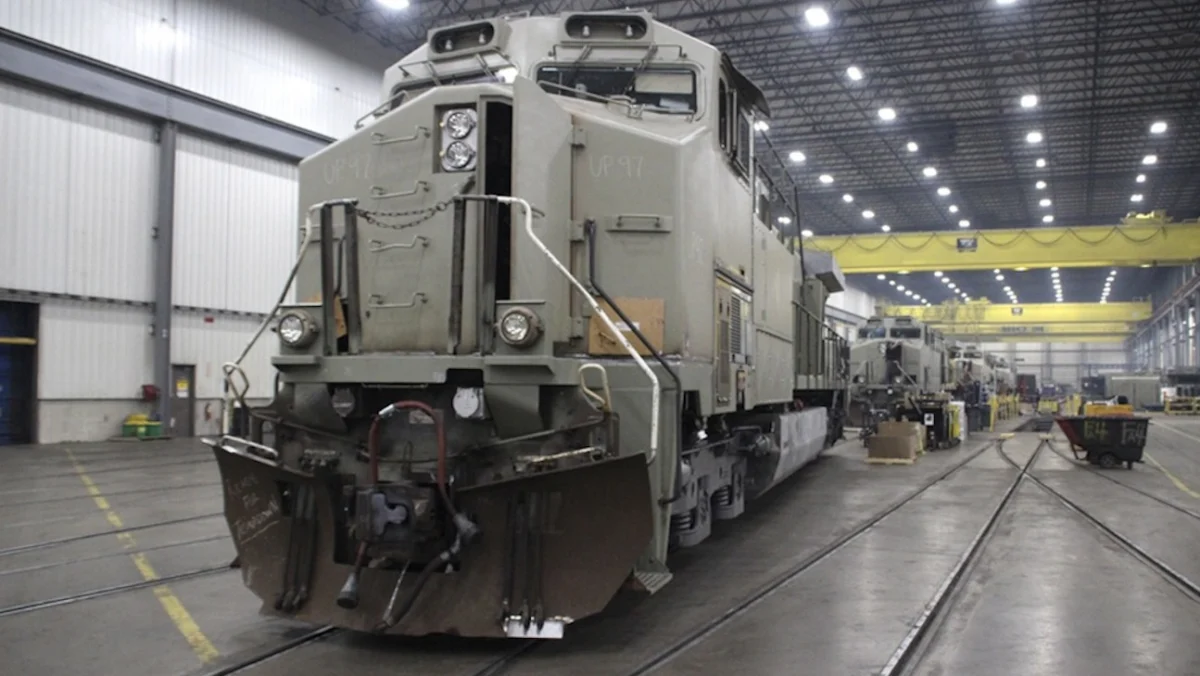
Wabtec Corporation (NYSE: WAB), a global leader in equipment, systems, and digital solutions for the freight and transit rail industries, has announced impressive third-quarter financial results. The company outperformed market expectations, reporting significant gains in both revenue and earnings. This performance, bolstered by a growing backlog of orders and strategic acquisitions, has prompted leadership to raise its full-year earnings guidance, signaling a positive trajectory for the rail infrastructure sector.
Main Facts: A Quarter of Broad-Based Growth
For the third quarter, Wabtec reported a 27% increase in operating income, which reached $625 million. Revenue for the period grew by 8% to $3.12 billion, while earnings per share (EPS) surged by 34% to $2.42.
The company’s decision to elevate its full-year adjusted EPS guidance to a range of $10.85 to $11.05 reflects a 21% to 23.2% increase over previous projections. This is a notable upward revision from the prior forecast of 18.2% to 21.5%, highlighting management’s confidence in the firm’s operational momentum as it heads into the final quarter of the year.
The growth was not limited to one segment; both the Freight and Transit divisions contributed to the positive results. The Freight segment saw a revenue increase of 6.9%, heavily supported by a 24.2% jump in digital intelligence revenue, driven by the successful integration of Frauscher Sensor Technologies. Meanwhile, the Transit segment performed even more robustly, with revenue climbing 11.3% to $883 million, fueled by the acquisition of Sweden’s Dellner Couplers and strong demand for both original equipment and aftermarket services.
Chronology: The Path to Q3 Success
The third quarter of this year represents a critical juncture for Wabtec, following a period of industrial recalibration.
- Early 2024: Wabtec initiated several strategic realignments, focusing on "digital intelligence" to streamline rail operations. The acquisition of Frauscher Sensor Technologies served as a cornerstone for this digital transformation.
- Mid-2024: As North American freight traffic began to show signs of recovery, Class I railroads—facing capacity constraints—moved to reactivate long-stored locomotives. This created an immediate, though specific, demand for parts and modernization services rather than brand-new locomotive builds.
- Q3 2024 Performance: The company successfully closed $633 million in new locomotive and modernization orders from two major Class I railroads. These orders underscored the shift in railroad spending priorities toward efficiency and life-cycle extension.
- The Earnings Call: During the post-earnings investor briefing, leadership articulated the current state of the market: while volume growth is evident, it has yet to trigger a full-scale replacement cycle for new locomotives, suggesting a cautious but optimistic outlook for the coming fiscal year.
Supporting Data: By the Numbers
To understand the scale of Wabtec’s current market position, one must look at the backlog data, which serves as a leading indicator for future performance.
Segment Performance
- Freight Segment: The 12-month backlog for the Freight division rose by 7.5% year-over-year, reaching $6.54 billion. This indicates that while new locomotive orders may be slower to materialize, the demand for upgrades and digital solutions is locked in for the foreseeable future.
- Transit Segment: The Transit segment’s 12-month backlog grew by 12.2% to $2.45 billion. This surge is directly attributable to the integration of Dellner Couplers and increased investment from public transit authorities in North America and Europe.
Financial Ratios and Projections
The 34% increase in EPS is a standout figure that reflects not only revenue growth but also improved margin discipline. By focusing on high-margin digital and aftermarket products, Wabtec has demonstrated an ability to improve profitability even in a market that has yet to see a massive capital expenditure surge from the "big iron" locomotive replacement cycle.
Official Responses: Leadership Perspective
Chairman and Chief Executive Officer Rafael Santana provided a comprehensive overview of the company’s strategic stance during the earnings call.
"The strength of our performance reflects our momentum across the portfolio, disciplined execution by our teams, and the continued success of our strategic actions," Santana stated. He emphasized that the company’s recent investments in technology—specifically those aimed at autonomous and digitally-assisted rail operations—are yielding tangible results.
"These actions enhance our growth profile, expand margins, and increase the earnings power of the company," Santana added. "Our teams continue to translate healthy customer demand into profitable growth while investing in technologies that will advance the future of transportation. These investments are strengthening our competitive position and reinforcing Wabtec as a leading industrial technology company."
Santana’s comments also provided clarity on the "locomotive paradox." While railroads are moving more goods, they are choosing to modernize existing fleets rather than commit to massive multi-year orders for new units. Wabtec’s strategy, according to Santana, is to position itself as the primary partner for both: providing the parts to keep older trains running efficiently and the digital intelligence to optimize the modern, connected fleet.
Implications: A New Era for Rail Infrastructure
The implications of Wabtec’s Q3 report extend far beyond its own stock price. The results provide a granular look at the health of the broader North American rail industry.
1. The Recovery of Rail Usage
The increase in parts orders is a reliable proxy for the return of rail traffic. When railroads reactivate stored assets, they require immediate support. Wabtec’s growth in the Freight segment confirms that the "rebound" in rail freight is real, even if it is currently manifested as "maintenance-led" growth rather than "expansion-led" growth.
2. The Shift Toward "Digital Intelligence"
Perhaps the most significant takeaway is the 24.2% growth in digital intelligence revenue. This suggests that the rail industry is finally undergoing the digital transformation that has already revolutionized trucking and air freight. By integrating sensor technology (Frauscher) and advanced analytics, Wabtec is becoming an indispensable software provider, not just a hardware manufacturer.
3. Cautious Capital Expenditure (CapEx)
The fact that Wabtec has yet to see a broad rebound in new locomotive orders is a warning sign to market observers that Class I railroads remain disciplined and conservative with their capital budgets. Shareholders should not expect a "boom" cycle of new locomotive sales until interest rates stabilize and volume growth becomes significantly more consistent across all commodity sectors.
4. Strategic M&A as a Growth Engine
The successful integration of Dellner Couplers and Frauscher Sensor Technologies demonstrates that Wabtec’s M&A strategy is not just about expanding the top line—it is about vertical integration. By owning the components (couplers) and the sensors, Wabtec captures a larger share of the total cost of ownership for its clients, insulating the company from the cyclical volatility of the rail sector.
Conclusion
Wabtec’s third-quarter report is a testament to the company’s evolution from a traditional heavy-equipment manufacturer into a technology-driven industrial powerhouse. By balancing the slow-but-steady demand for locomotive modernization with a high-growth digital intelligence portfolio, the company has managed to satisfy investors during a period of market uncertainty.
As the rail industry moves toward a more sustainable and technologically advanced future, Wabtec appears well-positioned to capitalize on these shifts. While the wait for a new, massive wave of locomotive replacement continues, the company’s ability to grow its backlog and expand its margins suggests that it has built a resilient business model capable of weathering the cyclical nature of the global freight economy. For stakeholders, the primary narrative remains clear: Wabtec is not just moving trains—it is moving the rail industry toward a smarter, more efficient, and ultimately more profitable future.


 Pevita Pearce
 Sagoh

 Azzam Bilal Chamdy
 Raul Delapena Setiawan

 Nana Muazin
