
 Asep Darmawan
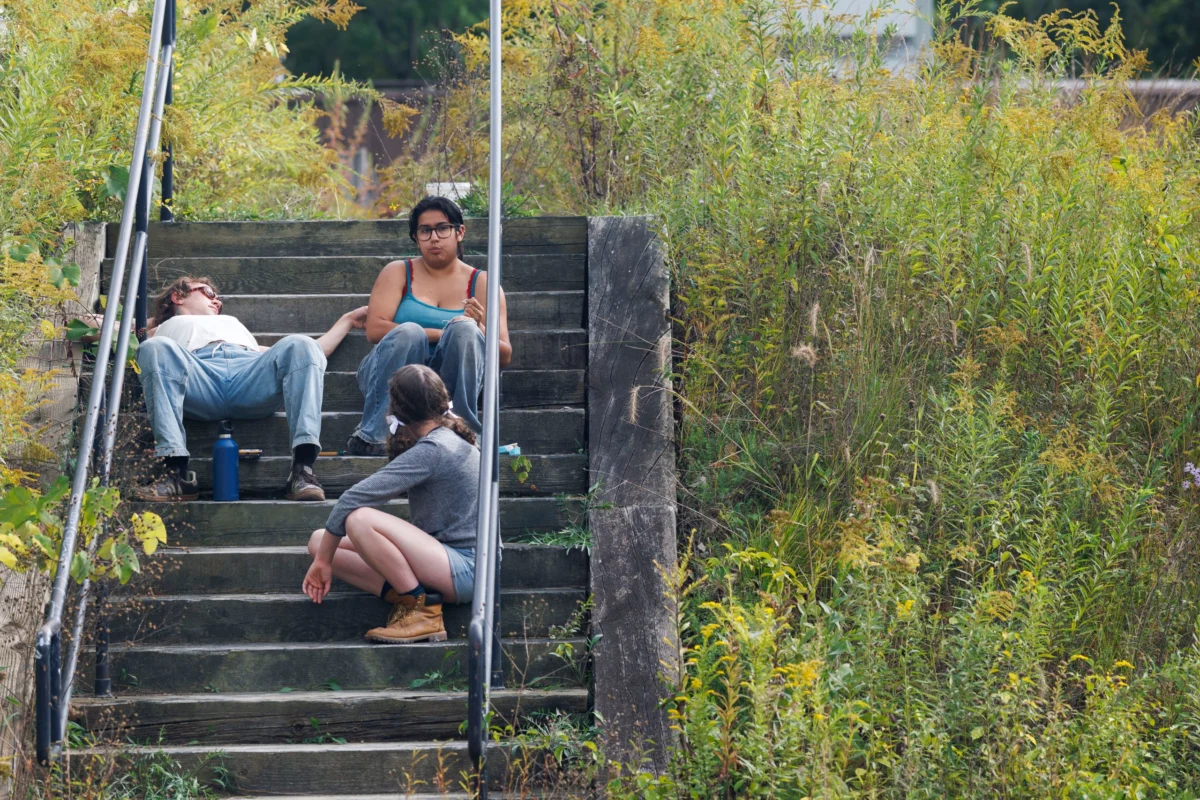
The parking lots at Hampshire College in Amherst, Massachusetts, are hauntingly vacant. Inside, the silence of the buildings is broken only by the rhythmic hum of a lone maintenance worker on a riding mower, dutifully grooming a lawn that few remain to enjoy. Dusty pots hold dying plants, and the once-vibrant pulse of academic inquiry has been replaced by the stillness of an institution preparing for its final act: a permanent closure this December.
Hampshire College is not an outlier; it is a symptom. Its demise is part of a steady, accelerating stream of college closures and mergers that have swept across the United States. Last year alone, the rate of institutional disappearance hit a staggering frequency—the equivalent of one college shuttering every three weeks. As experts sound the alarm, it has become clear that higher education is no longer merely facing a "rough patch"; it is in the throes of an industry-wide crisis that mirrors the deindustrialization of the American heartland.

The Anatomy of an Institutional Crisis
The current landscape of higher education is marked by abandoned classrooms and hollowed-out endowments, evocative of the shuttered steel mills and idling auto plants that devastated communities in the late 20th century. However, the stakes in this crisis are arguably higher, carrying long-term "collateral damage" for the nation’s social mobility and workforce readiness.
Peter Stokes, a managing director at Huron Consulting Group, offers a sobering forecast: "Everyone is shocked to hear that more than a quarter of our private colleges could be gone in the next decade." His research suggests that 442 of the nation’s 1,700 remaining private, nonprofit universities are currently at risk of closure or merger. "We are now talking about hundreds of other institutions being in a similar situation," he warns.

This downward trajectory represents a violent correction after 60 years of near-uninterrupted expansion. For decades, the industry operated under the assumption of an inexhaustible supply of students. That era ended abruptly around 2011, ushering in a "30-year period of significant decline" in college-aged demographics that, according to projections, will continue through at least 2041.
A Chronology of Decline
The erosion of the small, private liberal arts college model did not happen overnight, though the velocity of the closures has spiked in recent years.

- 2011: The peak of U.S. college enrollment. Following this year, a demographic "cliff" began to emerge, driven by falling birth rates and a shifting economic landscape.
- 2016: The Bureau of Labor Statistics reported that 70 percent of high school graduates enrolled in college. By 2024, that figure had plummeted to 63 percent, signaling a fundamental shift in how young Americans view the value proposition of a degree.
- 2022–2024: A period of unprecedented volatility. Nearly 150 private, nonprofit institutions closed their doors over the last decade. Notable casualties include institutions like Wells College in New York, a 156-year-old bastion of liberal arts that permanently shuttered in 2024.
- 2026 (Current): The crisis enters a new phase of urgency. Major campuses, including those in Wisconsin and Pennsylvania, have faced mass closures or forced consolidation. Meanwhile, Hampshire College, once a celebrated hub of experimental education, prepares to host its final cohort of students.
The Data: Why Schools Are Failing
The mathematics of the current crisis are relentless. Enrollment in U.S. colleges has declined by 2 million students since the 2011 high. This drop is compounded by three distinct factors:
- The Demographic Cliff: There are simply fewer 18-year-olds in the U.S. population.
- The Value Gap: As tuition costs have soared, public trust in higher education has evaporated. Gallup polling shows that the percentage of adults with "a great deal" or "quite a lot" of confidence in higher education has cratered from 57 percent in 2015 to just 38 percent today.
- International Volatility: The influx of international students, once a financial lifeline for many mid-tier colleges, has stalled due to visa delays, geopolitical tensions, and restrictive immigration policies.
Kevin McElrath, director of the College Crisis Initiative at Davidson College, notes that the problem is most acute in the Northeast and Midwest. "Historically, every group founding a town—before they had clean water, before they had public schools—they would seem to build a college," says John Thelin, an emeritus professor at the University of Kentucky. "It gave a legitimacy, a stature, a sense of purpose." Now, those same regions are left with a surplus of campuses and a shortage of students, creating "ghost towns" of brick and mortar.

Official Responses and the "Sink-or-Swim" Reality
The response from the higher education sector has been a mix of desperate pivots and quiet survivalism. Behind the scenes, administrators are engaged in a frantic search for merger partners. Brian Weinblatt, founder of HCS Strategy, reports that he is constantly approached by distressed institutions seeking to be acquired by more stable, better-endowed universities.
"The more troubled institutions are going to the relatively stable institutions saying, ‘Would you consider taking us in?’" Weinblatt explains. For many, the answer is no—or simply, "It’s too late."

Large public flagship universities are generally weathering the storm, bolstered by their prestige and vast resources. But for the small, private, and little-known colleges, it is a "sink-or-swim" environment. These schools, often already burdened by debt incurred from over-expansion during the boom years, are resorting to unsustainable tuition discounting to keep enrollment numbers afloat. When that strategy fails, the end comes quickly.
The Human and Economic Cost
The implications of this industry collapse extend far beyond the balance sheets of failing schools.

Local Economic Devastation
Colleges serve as the lifeblood of rural economies. They are often the largest employers in their respective towns. When a college closes, the secondary impact is profound: local businesses lose their customer base, and the steady stream of young, educated labor that once sustained the town’s growth disappears.
The Student Toll
For students caught in the closure, the path forward is rarely smooth. Data from the State Higher Education Executive Officers Association suggests that fewer than half of students at closed colleges successfully transition to another institution. Of those who do, less than half go on to earn a degree. The disruption—both financial and emotional—often leads to many students simply abandoning their pursuit of higher education entirely.

Chloe De Lisle, one of the fewer than 170 remaining students at Hampshire College, captures the pervasive sense of loss. "It feels like we’re still waiting for the student body to arrive," she says, surveying a campus that once hosted over 1,500 students. For De Lisle and her peers, the closure isn’t just about credits or degrees; it’s about the loss of a community that provided an alternative to the "huge sea of people" in large, bureaucratic universities.
The Loss of Institutional Diversity
Hampshire College was founded in the 1960s as a "hippie paradise," rejecting traditional majors in favor of self-directed study and narrative evaluations. It produced a legendary roster of alumni, from filmmaker Ken Burns to Academy Award-winner Lupita Nyong’o. As these specialized, experimental, or mission-driven schools vanish, the diversity of the American higher education ecosystem shrinks. We are left with an environment where only the most prestigious or the most "efficient" institutions survive, potentially narrowing the types of learning environments available to future generations.

Conclusion: A Future in Flux
As the maintenance crews at Hampshire College begin the process of shutting down buildings, they pass by graffiti left by students: "Goodbye, Hamp," and "Hampshire will live forever." These slogans are poignant reminders of the disconnect between institutional legacy and modern economic reality.
"What is happening here at Hampshire is something I think other institutions are likely to be facing," says Jen Chrisler, the college’s final president. "And that’s going to be bad for us as a country."

The crisis in higher education is not merely a business failure; it is a profound societal shift. If the nation cannot find a way to maintain access to a diverse array of educational institutions, the long-term impact on the workforce and the intellectual health of the country will be felt for generations. The "ghost campuses" appearing across the landscape are not just empty buildings—they are the physical remnants of a promise that the American higher education system is no longer able to keep.

 Azzam Bilal Chamdy
 Nana Muazin

 Rifan Muazin

 Nana


 Asro

 Nila Kartika Wati
 Muslim
