
 Siti Muinah
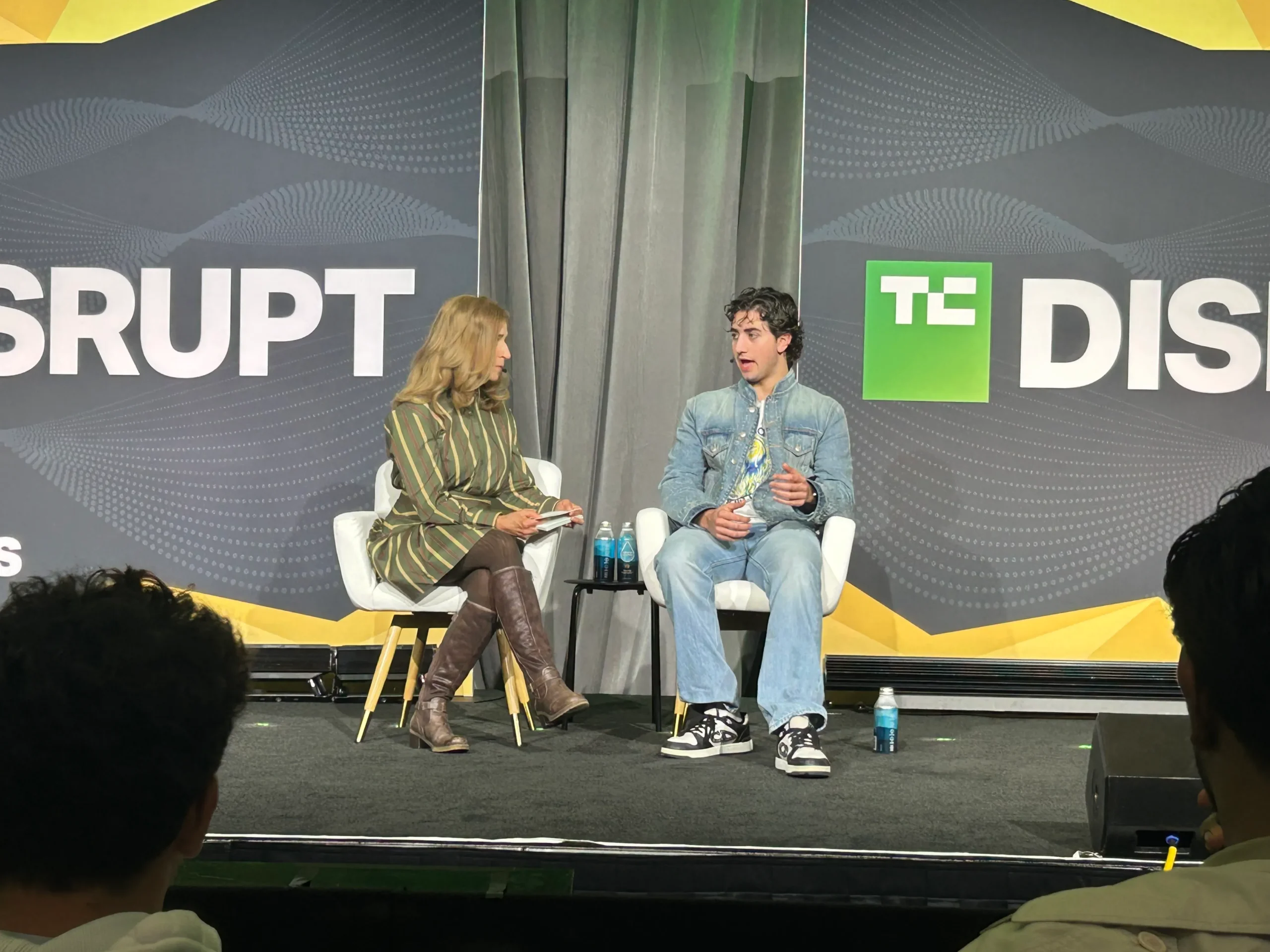
In the rapidly evolving landscape of artificial intelligence, few stories capture the imagination quite like that of Zach Yadegari. At just 19 years old, Yadegari has achieved a level of professional success that many veteran entrepreneurs spend decades pursuing. As the founder of Cal AI, an AI-powered calorie tracking application, he navigated the treacherous waters of the creator economy to secure a multi-million dollar acquisition by industry giant MyFitnessPal in March 2026.
Speaking at the prestigious TechCrunch Disrupt stage, Yadegari offered a candid look behind the curtain of his company’s viral ascent. His journey from a recent high school graduate to a Forbes 30 Under 30 alumnus serves as a masterclass in aggressive digital marketing, influencer arbitrage, and the sheer audacity required to disrupt established markets.
The Genesis of Cal AI: A Strategic Blueprint
Founded in 2024, Cal AI was built on a simple premise: simplifying the tedious process of manual calorie logging through the power of generative AI. While the technology was innovative, Yadegari’s true genius lay in his go-to-market strategy. Instead of relying on traditional venture capital-backed customer acquisition channels—which are often prohibitively expensive—Yadegari looked toward the burgeoning world of social media influencers.
The Influencer Arbitrage Model
Yadegari’s strategy was rooted in "quantifiable reach." He treated social media influencers not as brand ambassadors, but as performance-based marketing assets. By identifying creators with highly engaged, "tight" communities, he was able to convert social media views into tangible app downloads with startling efficiency.
"It was a clear formula," Yadegari explained during his Disrupt session. "Every post they did would get a certain number of viewers that would convert. It was linear, but it was extremely fast."
His method of negotiation was equally pragmatic. He targeted "broke college kids" with significant followings, offering them performance-based payouts. He did not pay for vanity metrics; he paid for results. The contracts were structured to ensure that influencers were incentivized to continue promoting the app until a specific conversion threshold was met. This "pay-for-performance" model effectively outsourced his sales force to a decentralized army of content creators.
Chronology of a Viral Sensation
The timeline of Cal AI’s growth is characterized by rapid iteration and hyper-growth.
- Early 2024: Cal AI is founded. The core AI model is developed to solve the friction associated with nutritional tracking.
- Mid-2024: The "Influencer Pivot." After a single influencer post generated over 1,000 users in 48 hours, Yadegari shifts the company’s entire focus toward aggressive creator recruitment.
- Late 2024 – 2025: Scaling the machine. The company achieves massive viral fame, optimizing its conversion funnels and expanding its reach across TikTok and Instagram.
- March 2026: Acquisition. MyFitnessPal, a dominant force in the health and fitness app space, acquires Cal AI for an undisclosed amount, cementing a two-year run that saw the startup generate over $30 million in revenue.
- October 2026: Post-acquisition expansion. Yadegari launches his new venture, Persona, securing $10 million in initial funding to build the next generation of AI agents.
The Data Behind the Success
The numbers surrounding Cal AI are staggering for a company founded by a teenager. In the span of just 24 months, the company generated north of $30 million in revenue. This figure is particularly impressive when considering the lean operational structure Yadegari maintained. By leveraging social proof and influencer trust, Cal AI bypassed the need for expensive programmatic advertising campaigns that typically drain the budgets of early-stage startups.
The success of this model proved that, in the age of AI, the barrier to entry for building a consumer app is lower than ever, but the barrier to distribution is higher. Yadegari’s ability to solve the distribution problem via influencer networks is what ultimately made his company an attractive acquisition target for MyFitnessPal.
The "College Question" and Modern Ambition
One of the most provocative aspects of Yadegari’s public persona is his stance on higher education. When asked about the role of a traditional university degree in his success, he was dismissive, suggesting that the primary value of college is social rather than academic.
"I think the only real reason to go to college is if you want to have a fun social time as a kid and be with other people," he stated, drawing laughter from the TechCrunch audience.
This perspective reflects a growing sentiment among the "Gen Z" founder demographic: the belief that the speed of the digital economy renders traditional academic timelines obsolete. Yadegari credits his family, specifically his father who was in attendance, for providing the foundational support and freedom to pursue his entrepreneurial ambitions rather than following a conventional career path.
Implications: Building the Future with Persona
Having successfully exited his first major venture, Yadegari is wasting no time. His new startup, Persona, represents a pivot from specific utility—calorie tracking—to broad-based intelligence.
The Vision for Persona
Persona is designed to be an AI agent that "lives" wherever the user lives digitally. Whether it is email, phone calls, or messaging platforms like iMessage, Persona aims to integrate AI into the fabric of daily human interaction.
"The overarching mission is to make computing seamless with human life," Yadegari noted.
The implications for this technology are profound. By moving beyond a standalone "app" and embedding the AI into the communication channels people already use, Yadegari is attempting to solve the problem of fragmented digital experiences. Furthermore, he hinted at the development of a "hardware ecosystem" to support the software, suggesting that Persona may not be confined to screens for long.
With $10 million in fresh capital, the industry is watching closely to see if Yadegari can replicate the viral success of Cal AI on a much larger, more integrated scale.
Industry Analysis: What Comes Next?
The story of Zach Yadegari is not merely a tale of teenage success; it is a preview of how the next generation of software companies will be built. Several key takeaways emerge from his trajectory:
- Influencer-Led Growth: The traditional "top-down" marketing model is being replaced by decentralized creator networks. Startups that master the art of incentivizing influencers will continue to outperform those relying on legacy ad platforms.
- The "Agentic" Shift: The transition from Cal AI (a tool) to Persona (an agent) mirrors the broader industry shift toward autonomous AI. The value is no longer in helping users perform tasks, but in performing the tasks for them.
- Capital Efficiency: By focusing on revenue-generating viral loops early on, Yadegari avoided the pitfalls of excessive dilution. His ability to bootstrap growth through influencer sales funnels provides a blueprint for capital-efficient scaling.
As the AI industry matures, the spotlight will continue to shine on founders who can bridge the gap between complex machine learning models and intuitive, high-velocity consumer adoption. Zach Yadegari has demonstrated that he possesses the rare combination of technical intuition and marketing prowess required to survive in this new era. Whether Persona will redefine the way we interact with our devices remains to be seen, but if his track record is any indication, the tech world would be wise to pay attention to his next move.
In a world where software is eating the world, Yadegari is proving that if you know how to feed the right content to the right people, you can build a massive empire before you are even old enough to rent a car. His trajectory is a testament to the fact that, in the digital age, age is rarely a barrier to entry—only a detail in the biography of a founder who refused to wait for the world to catch up.


 Jia Lissa

 Raul Delapena Setiawan

 Basiran

 Nana Wu

 Nana


 Ammar Sabilarrohman

 Reynand Wu
