
 Siti Muinah
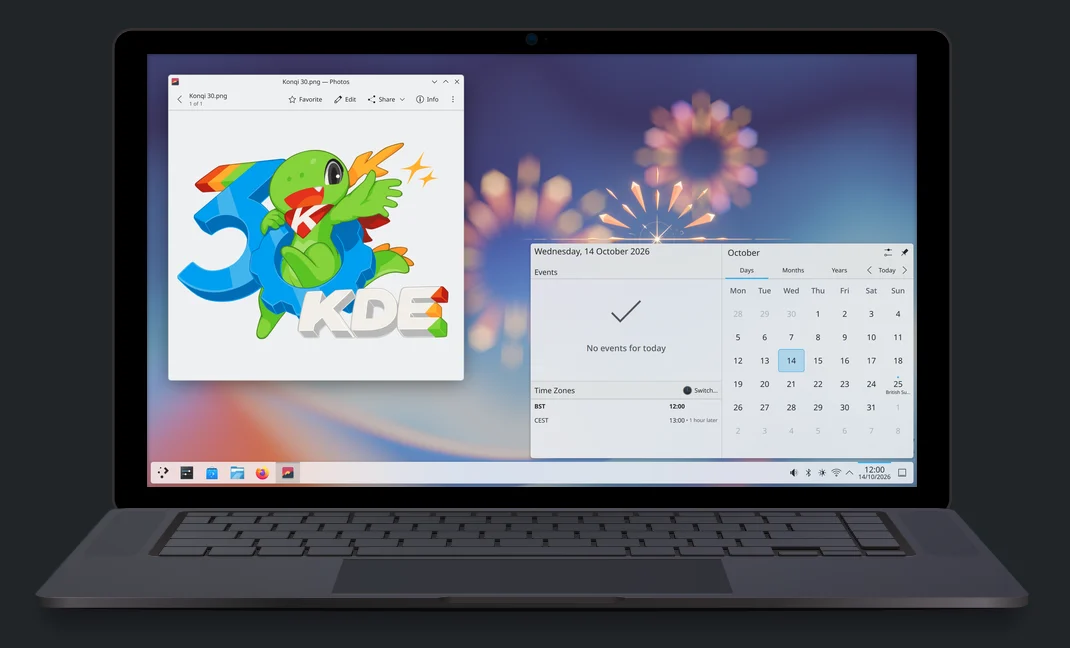
On October 14, the open-source community reached a monumental milestone as KDE, the venerable software powerhouse, celebrated its 30th anniversary. To mark three decades of desktop computing excellence, the project unveiled "Plasma 6.8," an update officially dubbed the "30th Anniversary Edition." This release is not merely a collection of bug fixes or aesthetic tweaks; it represents a fundamental architectural pivot for the Linux desktop, signaling the permanent retirement of native X11 session support in favor of the modern Wayland protocol.
Coupled with a celebratory commemorative film, the release of Plasma 6.8 serves as both a retrospective on the project’s storied history and a bold, decisive step toward the future of graphical user interfaces on Unix-like operating systems.
The Main Facts: What Plasma 6.8 Changes
Plasma 6.8 arrives with a suite of features designed to modernize the user experience while ensuring long-term maintainability. The most significant technical shift is the sunsetting of native X11 sessions. While users have long anticipated this transition, its implementation in the 30th Anniversary Edition marks the official end of an era.
Key Technical Enhancements
Beyond the transition to Wayland, Plasma 6.8 introduces several quality-of-life improvements:
- Enhanced Window Decorations: The desktop environment now offers expanded support for third-party applications to implement custom shadows, rounded corners, and blur effects, bridging the gap between native KDE apps and external software.
- Union Theming System: A more streamlined approach to theming, the new Union system simplifies the application of global styles, making it easier for users to customize their environment without the friction often associated with legacy configuration files.
- Nvidia Triple Buffering: For users with Nvidia hardware, the enablement of triple buffering by default addresses long-standing complaints regarding stuttering and frame latency, resulting in a significantly smoother visual experience.
- Kup Integration: KDE’s powerful backup utility, Kup, is now deeply integrated into the Plasma system, providing users with a robust, accessible interface for data protection.
- kscreenctl: This new command-line utility provides power users and system administrators with granular control over display configurations, allowing for complex multi-monitor setups to be managed via scripts or terminal commands.
Chronology: Thirty Years of KDE
The history of KDE is a testament to the persistence of the open-source model. Founded by Matthias Ettrich in 1996, the "Kool Desktop Environment" was born out of a desire to create a unified, user-friendly desktop experience for Linux.
- 1996: Matthias Ettrich posts a call to action on Usenet, proposing the creation of a consistent desktop environment.
- 1998: KDE 1.0 is released, setting the stage for a modular desktop that would challenge proprietary offerings.
- 2000s: KDE grows through the KOffice suite and the transition to the Qt framework, establishing itself as a powerhouse of productivity.
- 2014: The launch of Plasma 5 signals a shift toward a more modern, hardware-accelerated desktop.
- 2024: Plasma 6 is introduced, focusing on Wayland as the default display protocol.
- 2026 (October 14): Plasma 6.8 is released, marking 30 years and the final sunset of native X11 sessions.
Supporting Data: The Decline of X11
The X Window System (X11) has been the backbone of Linux graphics for 42 years. Its retirement is not a sudden whim but a slow, calculated move by the entire Linux ecosystem. X11 was designed in an era when modern display requirements—such as high-DPI scaling, variable refresh rates, and advanced security sandboxing—were nonexistent.
Why the Shift?
The transition to Wayland is driven by three primary factors:
- Security: X11’s architecture allows any application to "see" the input of any other application (a keylogger’s dream). Wayland isolates client windows, preventing one app from snooping on another.
- Performance: X11 relies on a "middleman" approach that introduces latency. Wayland streamlines the communication between the compositor and the application, reducing "screen tearing" and improving responsiveness.
- Code Maintenance: The X11 codebase is massive, aging, and difficult to secure. As maintainers move on, the community has determined that the cost of securing X11 far outweighs the benefits of keeping it alive.
The Compatibility Layer
It is crucial to note that "retiring native X11 sessions" does not mean your favorite legacy apps will stop working. Plasma 6.8 relies on XWayland, a compatibility layer that acts as an X server for legacy applications, allowing them to run seamlessly within a Wayland session. While native X11 support is removed, the ecosystem remains backwards compatible.
Official Responses and Industry Context
The KDE development team has framed this move as a "necessary evolution." In their official announcement, the lead maintainers noted:
"For thirty years, we have built the future on the foundation of the past. Today, we choose to look solely at the horizon. By sunsetting X11, we are freeing our developers to focus on the next generation of desktop features that were previously impossible under the constraints of the 1980s-era X protocol."
The move follows a broader industry trend. GNOME, the primary competitor to KDE in the Linux space, officially announced the removal of X11 sessions by default in 2025. With both major desktop environments now aligned on a Wayland-first strategy, the Linux desktop is arguably more unified than at any point in its history.
Industry analysts have praised the decision, noting that while there will be a brief "adjustment period" for enterprise users who rely on niche legacy tools, the long-term stability of the Linux desktop depends on this technical consolidation.
Implications: What This Means for Users and Developers
The release of Plasma 6.8 and the final deprecation of X11 have profound implications for different segments of the computing population.
For the Casual User
Most users will notice little to no difference, other than a smoother, more responsive desktop. The inclusion of Kup backup integration and the streamlined theming system makes the desktop more "ready to use" out of the box. The transition to Wayland will likely result in fewer graphical glitches, particularly for those using modern hardware, including high-refresh-rate gaming monitors.
For Power Users and Sysadmins
The introduction of kscreenctl is a significant upgrade. Historically, managing display configurations via CLI on Linux was inconsistent. By standardizing this tool, KDE is making it easier for system administrators to deploy standardized desktop configurations across entire organizations, a move that could help Linux expand further into corporate environments.
For Developers
The removal of X11 support reduces the "surface area" of the codebase that developers need to maintain. Instead of debugging issues that exist only in the X11 backend, the KDE team can now direct all their efforts toward improving the compositor (KWin) and the Wayland protocols. This will likely lead to a faster pace of innovation in the coming years, specifically regarding multi-monitor handling and advanced graphical effects.
Looking Toward the Future
As KDE enters its fourth decade, the project finds itself in a unique position. It has successfully navigated the transition from a niche project for hobbyists to a robust, enterprise-ready desktop environment.
The "30th Anniversary Edition" is a statement of intent. By letting go of the X11 protocol—a technology that predates the modern web—KDE is signaling that it is not a project content to rest on its laurels. Instead, it is actively preparing for the next 30 years of computing, where security, performance, and user-centric design will be more critical than ever.
For the end user, Plasma 6.8 is the most stable and feature-rich version of the desktop to date. For the Linux community, it represents a moment of closure—an acknowledgment that while we honor the foundations laid in 1996, we must continuously iterate to keep the open-source promise of a free, modern, and powerful computing platform alive.
As we look back at the journey from the early days of KDE 1.0 to the polished, high-performance experience of Plasma 6.8, one thing is clear: the project’s capacity for reinvention remains its greatest asset. The sunsetting of X11 is not an end, but rather a clearing of the stage for the next act in the history of Linux.


 Reynand Wu

 Sagoh

 Raul Delapena Setiawan


 Azzam Bilal Chamdy

 Ali Ikhwan
