
 Sagoh
Sagoh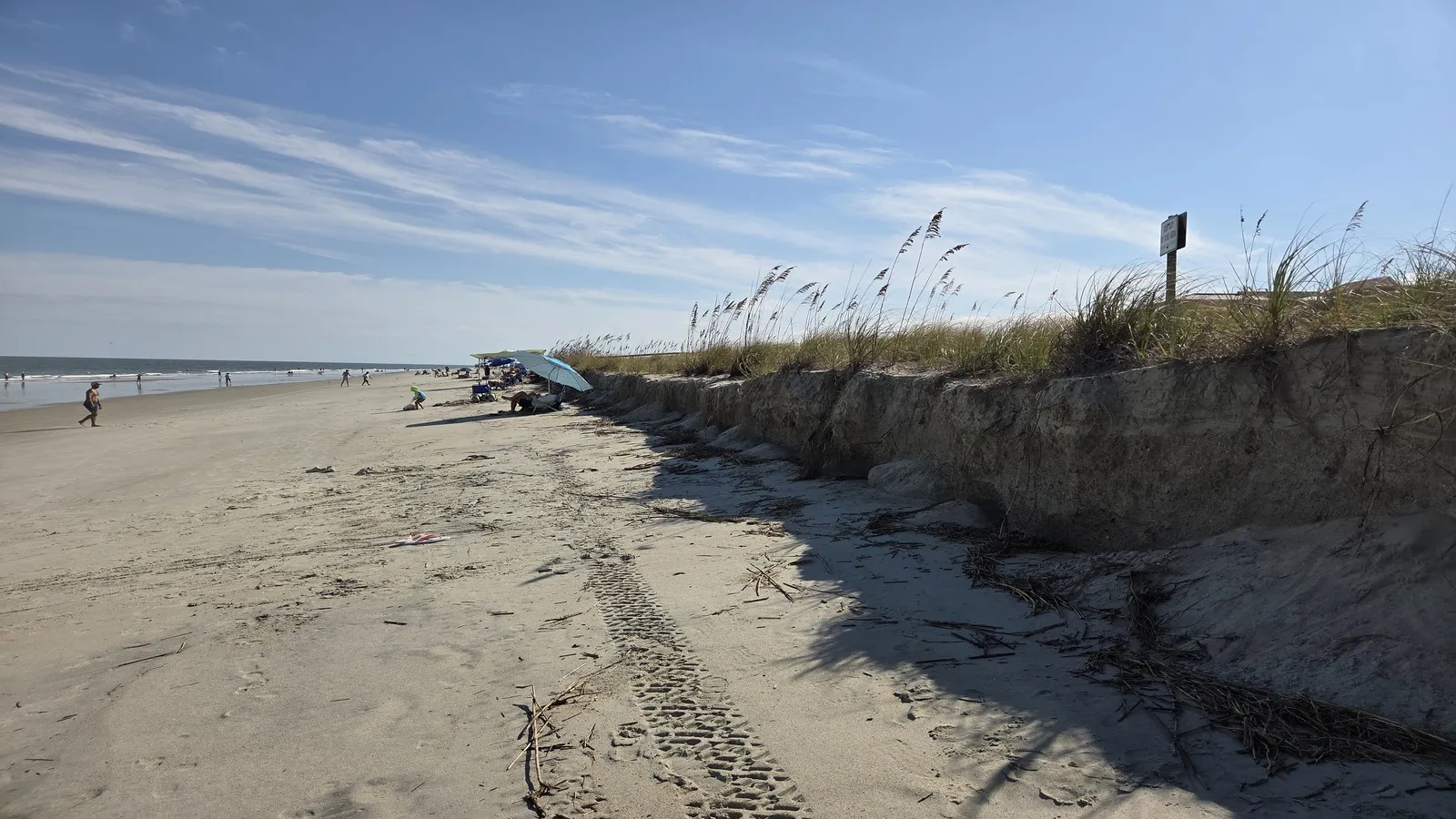
This coverage is made possible through a partnership between Grist and WABE, Atlanta’s NPR station.
The coast of Georgia is defined by its barrier islands—ribbons of sand that stand as the first line of defense between the vast, surging Atlantic and the mainland. Among these, Tybee Island, a historic vacation destination just east of Savannah, serves as a poignant case study of the precarious relationship between human infrastructure and the natural world.
For millennia, these islands have existed in a state of dynamic equilibrium, fueled by the slow, southward drift of sediment from northern shores. Today, however, that cycle has been fractured. A combination of climate change, rising sea levels, and centuries of aggressive human intervention—including the construction of jetties, sea walls, and the dredging of massive shipping channels—has transformed these natural bulwarks into fragile, eroding relics. As Tybee Island faces an existential crisis, it highlights a growing national dilemma: how do we save our beaches when the very systems meant to sustain them are failing?
The Mechanics of Disruption: Why Tybee is Disappearing
To understand why Tybee Island is losing its battle with the ocean, one must look at the Savannah River. The river acts as a geological highway for sand, but it has been heavily engineered to accommodate the massive container ships that drive Georgia’s economy. The shipping channel that cuts between Tybee and its northern neighbors acts as a physical barrier to the natural "sand-sharing" process.
Because this channel traps or diverts the sediment that should naturally replenish the island’s shores, Tybee is perpetually starved of its primary defense mechanism. To compensate, the U.S. Army Corps of Engineers has engaged in a costly, decades-long cycle of "beach renourishment." Since the 1970s, the Corps has periodically dredged sand from the ocean floor or riverbeds and pumped it onto the beach, effectively putting the island on life support.
However, the efficacy of these interventions is waning. In the winter of 2019 and 2020, a major project deposited 1.3 million cubic yards of sand onto Tybee’s coast. Today, more than half of that investment has been reclaimed by the sea. In areas near the DeSoto Beach Hotel, the landscape is harrowing: dunes that should offer a gentle, protective slope have been sliced away, leaving behind five-foot vertical cliffs. The exposed, skeletal remains of dune grass roots dangle in the air, a stark visual indicator of the island’s rapid land loss.
A Chronology of the Crisis
The erosion currently facing Tybee is not a sudden disaster but a steady, accelerating decline.
- The 1970s–Present: The Army Corps of Engineers establishes the standard cycle of seven-year beach renourishment intervals to combat the lack of natural sediment flow caused by the Savannah River shipping channel.
- Winter 2019–2020: The Corps conducts a major renourishment project, placing 1.3 million cubic yards of sand. Despite this massive infusion, extreme weather and consistent tide action begin to dismantle the new dunes within months.
- 2023: City officials, alarmed by the dramatic loss of sand, begin lobbying federal authorities for the next cycle of funding. They successfully secure commitments for 40 percent of the $20 million project costs from local and state sources.
- Early 2024: Congress underfunds the federal beach renourishment program, leaving Tybee Island off the project list. The island’s future is suddenly cast into uncertainty.
- September 2024: Following a concerted letter-writing campaign by residents and visits from Georgia’s congressional delegation, the Corps identifies a "miracle" funding source: redirected funds from other stalled projects. A new, innovative renourishment plan is greenlit for the coming winter.
Supporting Data: The Cost of Climate Inaction
The physical erosion of the beach is accompanied by a sobering metric: sea levels are rising by approximately half an inch per year. While this might seem marginal, the cumulative effect is devastating.
For a low-lying island like Tybee, the beach is not merely a tourist amenity; it is critical infrastructure. The dune system serves as a natural breakwater, dissipating the kinetic energy of storm surges. Without these dunes, the mainland behind the island becomes significantly more vulnerable to flooding, property damage, and saltwater intrusion.
The economic fallout is already being felt. The beach’s degradation has led to a ripple effect for local commerce. Chair and umbrella rental operations, which rely on wide, stable stretches of sand, have been forced to relocate or cease operations in certain zones. Hotels, such as the DeSoto, have reported a decline in bookings, as tourists—the lifeblood of the island’s economy—are deterred by the sight of disappearing shorelines and eroded, uninviting terrain. Furthermore, the ecological impact is profound: the erosion has cut into protected sea turtle nesting grounds, threatening the biodiversity that makes the Georgia coast unique.
Official Responses and the "Miracle" of Federal Funding
The fight to secure the $20 million required for the upcoming renourishment was, by all accounts, a grueling political battle. Bret Bell, the city manager of Tybee Island, has been the public face of this struggle. He describes the initial rejection by the federal government as a moment of profound frustration.
"All of a sudden, all of these beach communities started really competing for the limited amount of funding that there was," Bell noted. The scramble for federal dollars created a zero-sum game, pitting coastal towns against one another in a race to prove whose survival was most critical.
The breakthrough in September, which saw the Corps redirect leftover project funds to Tybee, was met with relief, but also tempered by a realization of the system’s fragility. The "miracle" funding ensures the project proceeds, but it does not solve the long-term structural issue of reliance on federal budget cycles for coastal survival.
The Path Forward: Innovation in Renourishment
Perhaps the most significant aspect of the upcoming project is a departure from traditional methods. Rather than simply pumping sand onto the beach—a "quick fix" that the tides frequently undo—the Corps is adopting a more nuanced strategy.
As part of the upcoming maintenance dredging of the Savannah River shipping channel, the Corps plans to deposit dredged sand into the shallows off Tybee’s beach. By placing the sand in the nearshore environment rather than dumping it further offshore or piling it exclusively on the dry beach, engineers hope to utilize natural wave energy to distribute the sand more effectively.
"That really is expected to extend the life of our nourishment," Bell explained. "So instead of the next nourishment happening in seven years, it might be 10 years."
Implications for a Changing Coastline
Tybee Island’s plight is a microcosm of the challenges facing thousands of miles of American coastline. As climate change accelerates, the "renourishment" model is increasingly being viewed as a stopgap measure rather than a long-term solution.
The situation forces a difficult conversation: Can we continue to engineer our way out of these problems, or is the ocean inevitably reclaiming the land we’ve built upon? For now, the people of Tybee Island are betting on the former. They are buying time—time to adapt, time to lobby, and time to witness if these new, smarter engineering methods can finally match the relentless, rising power of the Atlantic.
For now, the dunes of Tybee remain a battleground—a place where the resilience of a small community meets the unforgiving reality of a changing planet. The upcoming winter project will be a test case for coastal engineering, and the stakes could not be higher. As the vegetation clings to the dunes and the sea continues its slow, steady encroachment, the eyes of those living on the front lines of the climate crisis are firmly fixed on the horizon, waiting to see if the next wave of sand will be enough to hold back the tide.

 Asep Darmawan
 Nila Kartika Wati

 Layla Zulfa
 Rifan Muazin