
 Layla Zulfa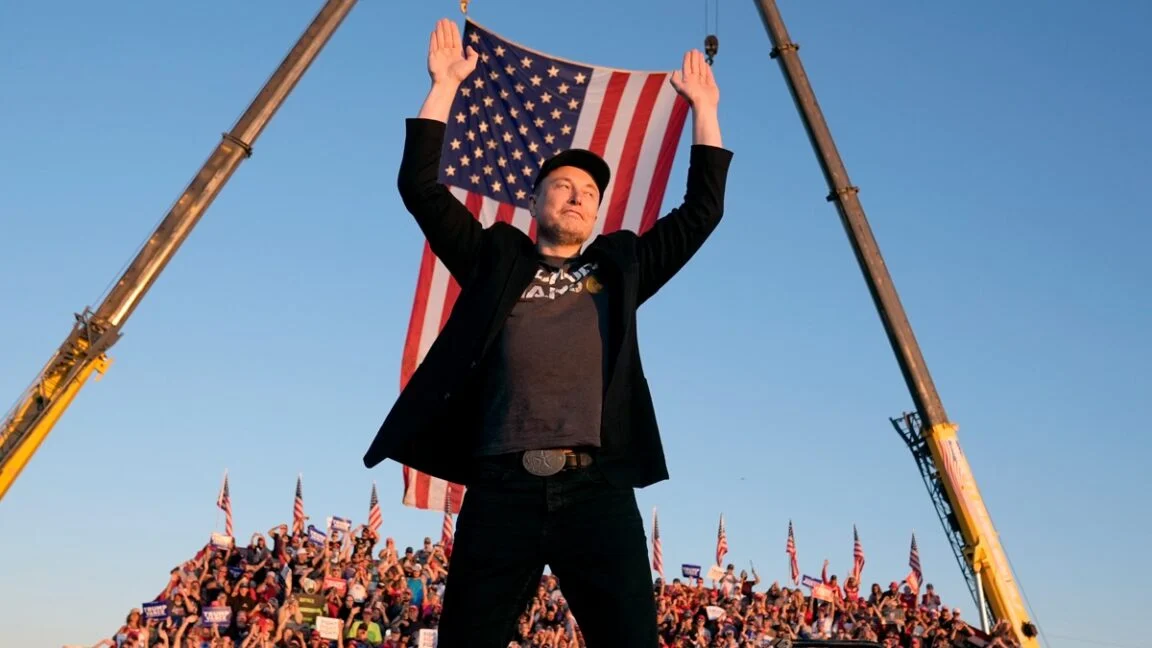
Elon Musk is perhaps the most polarizing figure in the modern technological landscape. Over the past two decades, his influence has spanned the automotive industry, aerospace exploration, satellite telecommunications, and the volatile town square of global social media. To his acolytes, he is the indispensable visionary—a real-life Tony Stark accelerating humanity’s transition to a multi-planetary species. To his critics, he is a reckless oligarch whose unchecked ego and erratic decision-making pose a systemic threat to democratic norms and public safety.
Into this fractured discourse steps Academy Award-winning documentarian Alex Gibney with his latest feature, simply titled Musk. The film is not merely a biography; it is a clinical dissection of a curated public image, peeling back the layers of marketing genius and hype to reveal what Gibney suggests is a Gilded Age confidence man—an investor playing the role of an inventor, whose primary currency is not engineering, but the masterful manipulation of public perception and stock market sentiment.
The Anatomy of an Icon: Gibney’s Critical Lens
Alex Gibney is no stranger to the anatomy of power and corruption. With a career spanning decades, his portfolio includes definitive examinations of the Enron scandal (The Smartest Guys in the Room), the dark underbelly of the Iraq War (Taxi to the Dark Side), and the systemic rot within organizations like the Church of Scientology and the Lance Armstrong cycling syndicate.
In Musk, Gibney applies this same investigative rigor to the world’s richest man. The documentary argues that Musk’s "genius" is a construct—a high-tech mirage designed to dazzle investors and the public with utopian promises of Mars colonies and neural interfaces, while the underlying reality is often one of volatility, regulatory evasion, and human cost. By positioning Musk as a modern-day P.T. Barnum, Gibney seeks to dismantle the "tech titan" narrative that has allowed Musk to operate with an unusual degree of immunity from traditional corporate and governmental oversight.
A Chronology of Controversy: From PayPal to the Presidency
To understand the subject of Gibney’s film, one must trace the arc of Musk’s career, which the documentary masterfully reconstructs through archival footage and candid interviews.
The Rise of the Visionary
The narrative begins with Musk’s early forays into the tech sector. From the sale of Zip2 to the formation of PayPal, Musk established a pattern: identify a burgeoning industry, insert himself as a central figure, and leverage high-stakes public relations to drive valuation. However, the film pivots sharply when it reaches Tesla and SpaceX. While acknowledging the tangible technological achievements, the documentary highlights the darker chapters: the fatalities associated with Tesla’s Autopilot and Full Self-Driving software, the grueling work environments within his factories, and the constant friction with regulatory bodies like the SEC and NHTSA.
The Twitter Pivot and Political Alignment
The mid-section of the film explores the acquisition of Twitter—now X. This is where the narrative shifts from corporate profile to political thriller. Gibney explores how the platform’s transformation under Musk’s ownership coincided with a radicalization of his public persona. The documentary chronicles his pivot from a purported centrist to an unabashed supporter of Donald Trump, a move that fundamentally altered the political landscape of Silicon Valley.
The AI Paradox and Future Horizons
The documentary also highlights the irony of Musk’s relationship with Artificial Intelligence. Having once been a vocal alarmist regarding the existential risks posed by AI, Musk’s recent pivot to launching "Grok" and his deepening integration into the AI arms race suggests a strategic flexibility—or, as the film suggests, a cynical opportunism—that defines his career.
Supporting Data and Voices: The Witnesses
Gibney’s film is anchored by a diverse array of voices, each providing a piece of the puzzle. The documentary does not rely on a single perspective; instead, it creates a mosaic of testimony:
- The Insiders: Martin Eberhard, co-founder of Tesla, provides technical context regarding the company’s origins, while ex-wife Justine Musk offers a rare, intimate look at the human cost of being within Musk’s orbit.
- The Critics and Analysts: Tech journalist Kara Swisher and author Cory Doctorow dissect the business mechanics of Musk’s empire, highlighting the "pump and dump" nature of his social media influence.
- The Intellectuals: Sam Harris and AI pioneer Geoffrey Hinton weigh in on the risks of Musk’s unchecked ambition, particularly in the realm of synthetic intelligence.
- The Personal: The inclusion of Ashley St. Clair, a former MAGA influencer who shares a child with Musk, adds a layer of complexity to the documentary’s exploration of Musk’s personal life and his growing influence in conservative political circles.
The soundtrack, featuring an original song by David Byrne titled "Let Me Sell You a Dream," serves as a thematic bookend, perfectly encapsulating the documentary’s thesis: that Musk is, at his core, a salesman of the highest order.
The Reaction: Defamation and Defiance
Perhaps the most compelling aspect of Musk is the reaction it provoked before it even reached the screen. Musk, a man who famously claims to be a "free speech absolutist," has reportedly responded to the film with characteristic hostility. Legal threats regarding defamation have circulated, and rumors regarding potential pressure on distributors—specifically Universal Pictures—to limit the film’s theatrical release in international markets have added a layer of meta-narrative to the documentary’s release.
These reactions provide a real-time validation of Gibney’s central premise: that the Musk brand is guarded with a ferocity that suggests a fragile foundation. By attempting to chill the production and distribution of the film, Musk inadvertently draws more attention to the very critiques he seeks to suppress.
Implications for the Tech Age
The release of Musk comes at a pivotal moment in our social media-driven era. We live in a time where the lines between political power, corporate influence, and celebrity culture have been entirely erased. Elon Musk is the apex predator of this new ecosystem.
The Cult of Personality
The documentary forces the viewer to confront the "Great Man" theory of history that so many in the tech sector subscribe to. By challenging the necessity of Musk’s individual "genius," Gibney asks whether our reliance on these singular figures is a feature or a bug of modern capitalism. If we strip away the stock pumping and the media spectacle, what is actually left?
Regulatory Oversight and Accountability
The film also serves as a clarion call for increased oversight. When an individual has the power to influence global elections, determine the functionality of critical infrastructure like Starlink, and shape the development of artificial intelligence, the standard rules of corporate governance seem woefully inadequate. Gibney’s film argues that the "Musk phenomenon" is not an isolated incident but a symptom of a systemic failure to regulate the ultra-wealthy and the industries they dominate.
A Cultural Reckoning
Finally, Musk serves as a mirror to our own culture. We are the audience that fueled the rise of the Musk brand. We are the ones who clicked, followed, and invested. The documentary suggests that our desire for a savior—a visionary who can solve climate change, conquer space, and revolutionize transit—has made us susceptible to the very "confidence game" Gibney describes.
Conclusion: The Myth and the Man
Alex Gibney’s Musk is a masterclass in investigative filmmaking. It does not attempt to be a neutral, dispassionate biography; rather, it takes a clear, evidence-based stance that Musk’s public image is a carefully manufactured product. While his supporters will undoubtedly view the film as a "hit piece," those who engage with the provided documentation and testimony will find a complex, often disturbing, portrait of a man who has successfully leveraged the tools of the 21st century to redefine the boundaries of power.
As the film makes its way into the public discourse, it serves as a necessary intervention. In an era of rampant misinformation and hero worship, Gibney reminds us of the value of professional skepticism. Whether one views Elon Musk as a visionary or a charlatan, Musk demands that we look past the hype, examine the receipts, and ask ourselves: at what point does the dream-selling become a public danger?


 Dwi Wanna
 Lina Hope
 Pevita Pearce

 Asep Darmawan
 Azzam Bilal Chamdy