
 Asro
Asro
For nearly two decades, the B2B marketing manual has been anchored to a single, golden objective: dominate the search engine results page (SERP). Marketers spent millions of dollars on keyword research, backlink building, and technical SEO, all to secure the top spot on Google. However, the rise of generative AI and Large Language Model (LLM)-driven search tools has rendered this traditional playbook not just outdated, but fundamentally incompatible with the modern buyer’s journey.
A seismic shift is underway. According to the new report from 10Fold, titled "The Visibility Reset: How AI Search Is Changing B2B Content Strategy," over 52% of B2B tech marketing leaders have identified AI-generated search as their primary channel for reaching prospective buyers. The era of the "ten blue links" is rapidly giving way to the era of the "definitive answer."
The End of the Click-Through Era
The fundamental mechanics of information discovery are changing. Today’s B2B buyers—often tasked with complex, high-stakes purchasing decisions—are bypassing traditional websites in favor of AI-powered interfaces like ChatGPT, Perplexity, Gemini, and Google’s AI Overviews. Instead of scanning pages of search results to find a vendor’s blog post, they are inputting sophisticated queries directly into AI agents, expecting synthesized, accurate, and actionable summaries.
This transition marks a departure from a traffic-centric model to a credibility-centric one. In the traditional SEO world, success was measured by clicks, sessions, and bounce rates. In the new AI-augmented landscape, visibility is no longer a matter of ranking; it is a matter of citation. If an AI system does not recognize your brand as a credible, authoritative source, you are effectively invisible to the modern buyer.

Chronology of the Shift: From SEO to AIO
To understand the current "Visibility Reset," we must look at how we arrived here:
- 2005–2015: The Golden Age of SEO: B2B marketing was defined by "content marketing" at scale. The goal was to produce as much high-quality content as possible to capture search intent. SEO was a mechanical process of matching keywords to user queries.
- 2016–2022: The Era of Semantic Search: Google shifted its algorithms to prioritize user intent over keyword density. The focus turned toward E-E-A-T (Experience, Expertise, Authoritativeness, and Trustworthiness). While this raised the bar for content, the underlying model remained the same: send traffic to the website.
- 2023–2024: The Generative AI Explosion: The launch of ChatGPT and subsequent LLM-based search integrations introduced a "zero-click" reality. AI began summarizing the web’s content, reducing the need for users to leave the search environment.
- 2025–Present: The Visibility Reset: We have entered a phase where marketers realize that volume no longer correlates with visibility. The focus is now on being "AI-ready"—ensuring content is structured, cited, and validated by the models that power modern discovery.
Supporting Data: The Disconnect Between Traffic and Leads
One of the most counterintuitive findings in the 10Fold report is the divergence between website traffic and lead quality. Many marketing leaders report that while their traditional organic traffic has plateaued or declined, the quality of their inbound leads has improved.

This suggests that the "window shoppers"—those who click on generic "what is" articles—are being filtered out by AI search, which answers those basic questions directly. The buyers who do arrive at a vendor’s website are often further along in their research, better informed, and possess higher intent.
According to the data:

- 42% of respondents reported that they have successfully managed to increase both visibility and traffic by aligning their content strategy with AI discovery patterns.
- A majority of firms are now de-prioritizing "blog volume" in favor of "authority building."
- High-authority signals—such as analyst coverage, peer-review mentions (e.g., G2, Gartner), and expert bylines—are now rated as the most critical factors for appearing in AI responses.
Credibility Over Volume: The New Content Currency
As generative AI floods the internet with mass-produced, mediocre explainers, the value of generic content has plummeted toward zero. Differentiation has become significantly harder. Marketers are finding that the "more is better" strategy—once the bedrock of content SEO—is now a liability.
AI systems are trained to favor content that provides unique perspectives, proprietary research, and primary data. If your content is merely a regurgitation of what already exists on the web, an LLM will likely summarize your competitor’s content instead, or synthesize a generic response that lacks your brand’s specific value proposition.

The Pillars of AI Credibility
To remain visible in an AI-driven environment, brands must focus on the following "signals of trust":
- Proprietary Research: Original data that cannot be found elsewhere is the most "cited" content in LLM responses.
- Expert Validation: Byline articles in reputable industry publications serve as high-authority backlinks that AI models use to verify expertise.
- Analyst Mentions: Inclusion in industry reports (e.g., Forrester, IDC) acts as a trust signal that boosts a brand’s authority score within the model’s training data.
- Concise, Structural Clarity: Content should be written in a way that is easily parsed by AI. This includes clear headings, data tables, and direct answers to specific, high-intent industry questions.
Official Perspectives: Navigating the Disruption
Industry leaders acknowledge that the transition is painful. Many CMOs are struggling to explain to stakeholders why "website traffic" is no longer the definitive metric of marketing success.

"The challenge is not producing more content faster," the report notes. "The challenge is creating content that answers buyer questions better than competing sources."
This requires a fundamental rethink of the marketing budget. If the goal is to be the "source of truth" that AI systems reference, resources should be diverted from low-level content production (SEO filler) toward high-level brand building, public relations, and original research. The goal is to build a "brand halo" that follows the buyer across every touchpoint, whether they are on your website or interacting with a chatbot.

Strategic Implications: How to Adapt
For B2B organizations looking to survive the visibility reset, the path forward involves three distinct phases:
1. Optimize for the "Answer," Not the "Link"
Stop designing content to encourage clicks. Start designing content to be the definitive answer. This means writing in a way that is "quote-ready"—creating summaries, bulleted takeaways, and clear definitions that an AI model can seamlessly integrate into a response.
2. Double Down on Brand Influence
If traffic is becoming harder to track, brand influence becomes the most reliable indicator of market presence. Marketing teams must prioritize "share of voice" and "brand preference." If a buyer learns about your solution from an AI, they will eventually search for your brand name directly. That direct traffic—often called "dark social" or "branded search"—is the new gold standard.
3. Build a "Trust Architecture"
AI models are programmed to minimize hallucinations by cross-referencing information. If your brand is mentioned across a diverse, reputable network of industry sites, analyst firms, and social platforms, you are effectively "training" the AI to associate your company with the specific problems you solve. This requires a tighter integration between PR, content, and demand generation teams.

Conclusion: The Human Element in an AI-Search World
The 10Fold report makes one thing abundantly clear: we are not witnessing the death of B2B content, but rather its evolution. The "Visibility Reset" is a move away from gaming algorithms and toward providing genuine, verifiable value.
While the tools of discovery have changed, the fundamental need for trust remains. AI search engines are, in essence, machines built to predict what a human expert would say. By focusing on deep expertise, proprietary insights, and consistent brand authority, B2B marketers can ensure that when a buyer asks a question, the AI’s answer is their brand.

The future of visibility belongs to those who stop chasing the algorithm and start becoming the most credible answer in the room. As the industry moves forward, those who successfully navigate this reset will find themselves not just visible, but essential to the B2B buying process.


 Ammar Sabilarrohman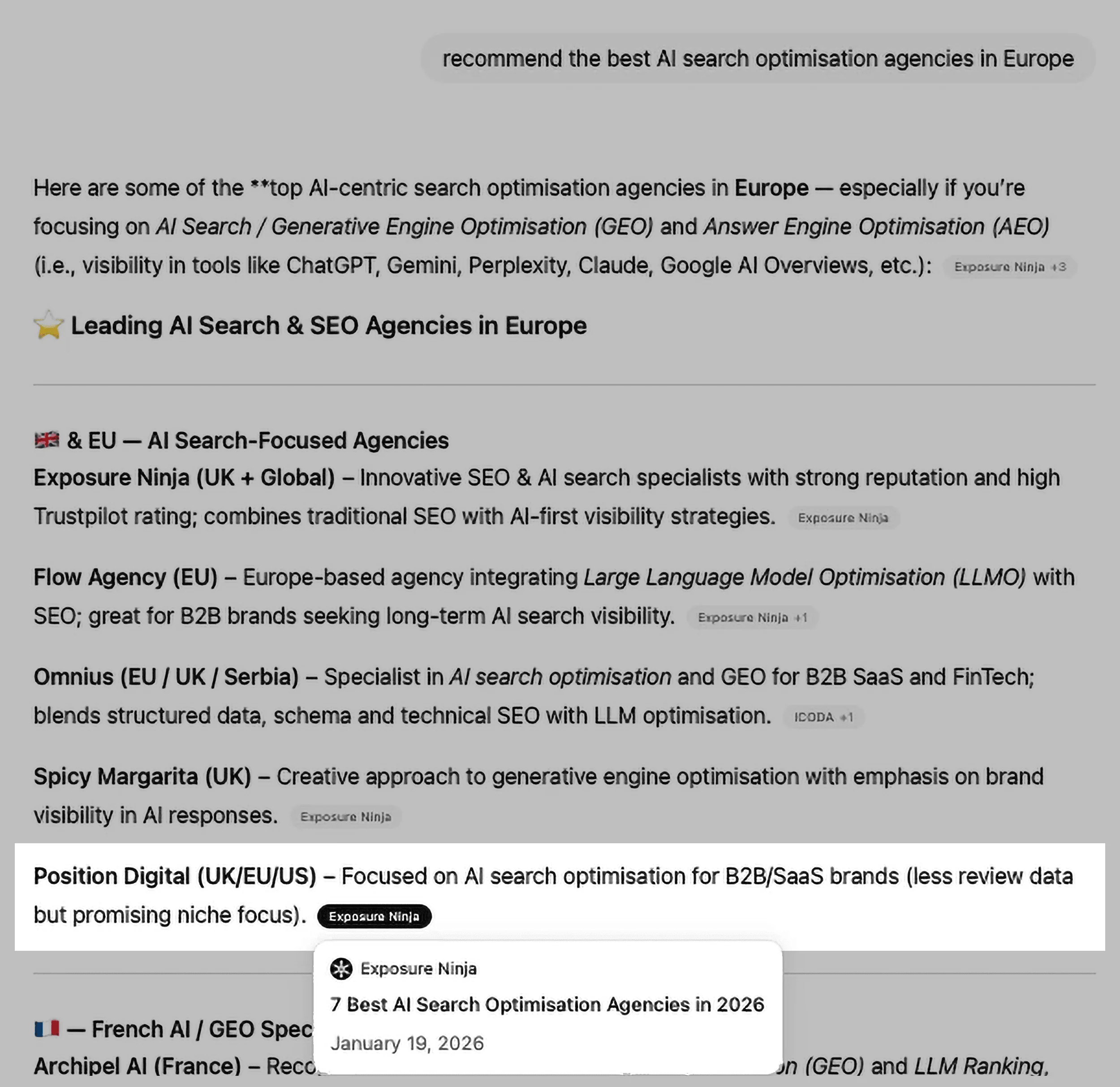
 Sagoh
Sagoh
 Raul Delapena Setiawan
 Reynand Wu


 Azzam Bilal Chamdy
 Ali Ikhwan