
 Ammar Sabilarrohman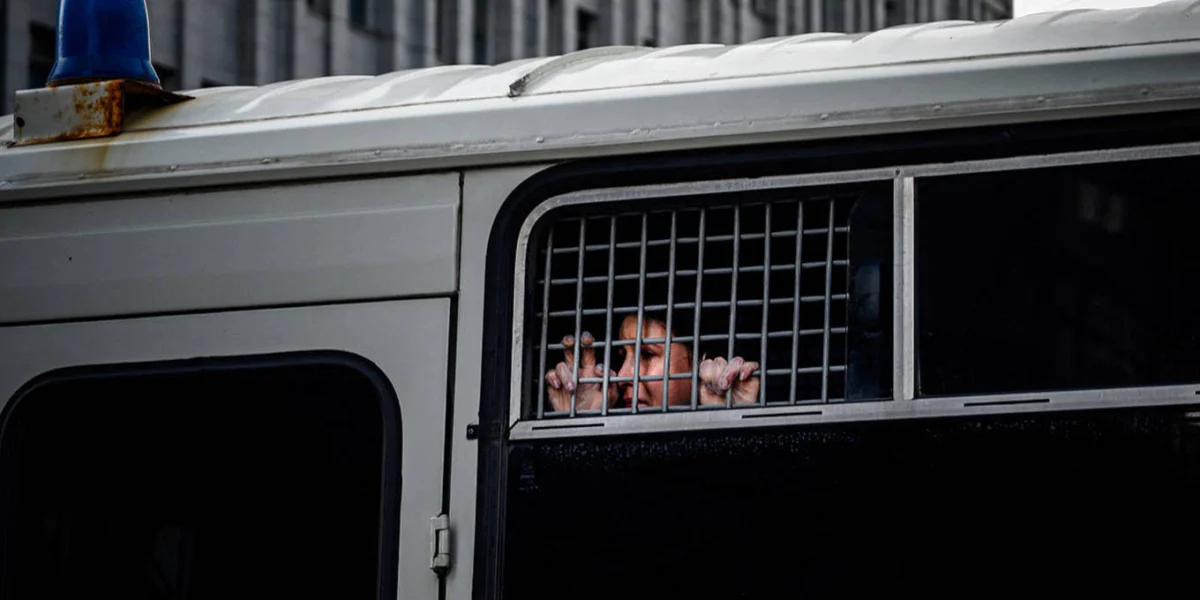
By Nina L. Khrushcheva
October 13, 2026
In the dark annals of Russian history, state-sponsored brutality has rarely been quiet. From the Tsarist era to the seismic shifts of the Soviet Union, violence was almost always packaged within a grand, teleological narrative. Whether under the banner of revolutionary fervor, the consolidation of a socialist utopia, or the desperate industrialization projects of the mid-20th century, the Russian state justified its cruelties through the promise of a destination. During the horrors of Stalin’s Great Terror, there was, however perverse, a sense that the country was hurtling toward an objective—that the immense suffering endured by its citizenry served an end, however unjustifiable the means.
Today, however, the architecture of Russian repression has undergone a fundamental transformation. The state no longer seeks to mold the "New Soviet Man" or steer the country toward a historical destiny. Instead, the repression currently being meted out against Russia’s remaining intelligentsia, independent thinkers, and political analysts has shed its ideological pretense. It possesses only one aim: the preservation of the state apparatus itself, and the absolute perpetuation of the power structure executing it.
The Case of Alexander Kynev: A New Kind of Persecution
On September 25, 2026, the hollowness of this modern authoritarianism was laid bare in a Moscow courtroom. Alexander Kynev, a distinguished political analyst known for his nuanced, data-driven examinations of Russia’s electoral processes and regional political dynamics, was remanded to pretrial detention.
The charges leveled against him are as jarring as they are predictably mendacious: "large-scale illegal drug production, sale, and trafficking." Under current Russian law, these charges carry a potential sentence of 10 to 20 years in a penal colony. Yet, as has become the hallmark of the Kremlin’s campaign against dissent, no credible evidence linking Kynev to the illicit drug trade has been presented to the public, nor has any been suggested by independent observers.
Kynev’s detention is not merely an isolated legal proceeding; it is a signal. By opting for a criminal charge as mundane and stigmatizing as drug trafficking rather than the more politically "fashionable" charges of treason or "foreign agency," the state is signaling a shift in tactics. It is no longer interested in debating the merits of an analyst’s work; it is interested in destroying the person’s reputation and removing them from the public square through the most efficient, dehumanizing mechanism available.
Chronology of a Systematic Silencing
To understand the trajectory that led to the incarceration of Alexander Kynev, one must look at the systematic dismantling of civil society in Russia since the full-scale invasion of Ukraine in 2022.
- February 2022: The immediate post-invasion environment triggers a massive wave of emigration and the forced closure of the final vestiges of independent media, such as Echo of Moscow and Novaya Gazeta.
- Late 2022 – 2023: The state expands the definition of "foreign agent" and "undesirable organization," effectively turning academic inquiry and political commentary into high-risk activities.
- 2024: A pivot toward "moral and existential" charges. The state begins to utilize criminal law—drugs, economic crimes, and "discrediting the armed forces"—to imprison voices that were previously considered too prominent to touch.
- September 2026: The arrest of Alexander Kynev. His detention marks a threshold where even those who maintained a degree of professional detachment from active opposition politics are no longer safe.
Kynev’s career had been characterized by a refusal to abandon his post. Even as the academic environment grew increasingly suffocating, he continued to provide insights into the mechanics of regional elections and the shifting loyalties within the Russian bureaucracy. His arrest signifies the total exhaustion of the Kremlin’s tolerance for objective analysis.
Supporting Data: The Erosion of Academic Freedom
The detention of Kynev follows a grim trend observed by human rights monitors. According to data provided by organizations tracking political prisoners, such as Memorial, the number of individuals imprisoned on "fabricated criminal charges" has tripled since 2022.
The data reveals a deliberate pattern:
- Weaponized Judiciary: In the current Russian legal system, the acquittal rate remains below 0.5%. Once a case reaches the investigative committee, the likelihood of a guilty verdict is virtually absolute.
- Strategic Isolation: By charging analysts like Kynev with non-political crimes, the state creates a "social firewall." The average citizen, fed a steady diet of state propaganda, is less likely to empathize with a "drug dealer" than with a "political dissident."
- The Brain Drain Factor: Independent research institutions have been decimated. Since 2022, it is estimated that over 1,500 academics and researchers have fled Russia. The arrest of those who remained serves as a final warning to the domestic intelligentsia.
Official Responses and the Echo Chamber
The official response from the Russian judiciary and state-aligned media has been one of cold silence, punctuated by occasional, vague assertions regarding the "rule of law." When asked about the lack of public evidence, spokespersons for the Investigative Committee have repeatedly cited "the secrecy of the investigation," a standard deflection used to shield procedural abuses from scrutiny.
In the state-controlled media, the arrest was mentioned briefly, framing Kynev as a "marginal figure" caught in a standard criminal investigation. This tactic serves to decouple the man from his body of work. By stripping him of his professional identity—denying that his arrest has anything to do with his political commentary—the state attempts to render his expertise irrelevant.
Implications: The Death of Political Inquiry
The implications of this shift are profound and unsettling. When the state stops using political justifications for political repression, it is essentially declaring that politics—as an intellectual and analytical endeavor—no longer exists.
The End of Objective Reality
When a scholar is imprisoned on falsified drug charges, the message to the remaining public is clear: truth is not a defense. The objective reality of an individual’s life, their research, or their contributions to public discourse is secondary to the state’s need for control.
The Institutionalization of Fear
The use of "low-level" criminal charges creates a pervasive atmosphere of paranoia. In an environment where anyone can be accused of anything—from tax evasion to drug possession—the rational response is total withdrawal. This silence is the state’s true objective. It does not need to convert the populace to its worldview; it only needs to ensure that no one dares to offer an alternative one.
The Longevity of the State
As noted at the outset, the brutality of the past had a "destination." The current repression has no destination; it is a self-sustaining cycle. By eliminating the middle class of intellectuals and analysts, the regime ensures that there is no one left to diagnose the structural rot within the state. This creates a feedback loop: the state suppresses information, leading to bad decision-making, which leads to further crises, which necessitates even more repression.
Conclusion: A Future Without a Narrative
The arrest of Alexander Kynev is a tragedy, but it is also a symptom of a broader, deeper malady. Russia is currently governed by a system that has become untethered from the necessity of public justification. In the past, the state at least felt the need to convince its citizens that their sacrifices were part of a grander mission. Today, the mission is simply the state itself.
As we look toward the future of the Russian state, we are witnessing the solidification of a "vacuum society." It is a country where the institutions of intellectual life have been hollowed out, replaced by a judiciary that acts as a blunt instrument of control. Kynev’s plight serves as a harrowing reminder that when a government no longer seeks to lead a nation toward a future, it inevitably turns on those who remind it that the present is unsustainable. The tragedy is not just that Alexander Kynev may lose years of his life to a prison cell; it is that the society that put him there has lost the ability to imagine a path forward that does not require the destruction of its own brightest minds.

 Nila Kartika Wati
 Ali Ikhwan
 Nana Wu
 Asro
Asro
 Jia Lissa
 Neng Nana
 Dwi Wanna
 Siti Muinah