
 Nila Kartika Wati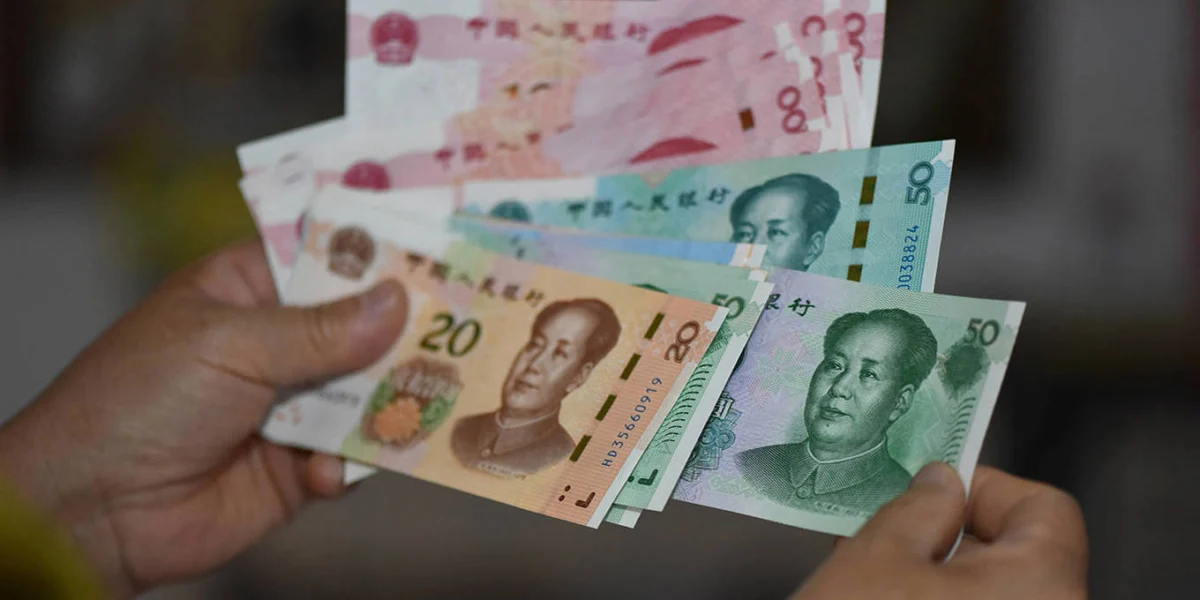
By Kai Guo | October 13, 2026
The global economic order is once again fixated on the renminbi (RMB). As China’s merchandise trade surplus hit a staggering $1.2 trillion in 2025, the narrative among Western financial analysts and policymakers has crystallized into a familiar refrain: the Chinese currency is artificially suppressed, serving as a blunt instrument to subsidize exports at the expense of global competitors. From Washington to Brussels, the consensus is that a sharp appreciation of the renminbi is the necessary corrective to restore equilibrium to the world economy.
However, this diagnosis mistakes a symptom for the disease. The weakness of the renminbi is not merely a product of central bank manipulation; it is a profound reflection of China’s internal economic malaise—specifically, chronically weak domestic demand. To force a currency revaluation without first addressing the structural deficiencies within the Chinese economy would be a counterproductive exercise, likely exacerbating global volatility rather than resolving it.
Main Facts: The Anatomy of a Trade Superpower
The primary driver of the current international friction is the sheer scale of China’s trade surplus. In 2025, China’s export machine reached an unprecedented level of dominance, fueled by a manufacturing sector that has successfully moved up the value chain into high-tech sectors, including electric vehicles (EVs), renewable energy infrastructure, and advanced robotics.
The "undervaluation" argument rests on a simple premise: China’s manufacturing costs are kept artificially low by a currency that does not reflect the country’s massive trade inflows. Economists frequently point to purchasing power parity (PPP) models, which suggest that the RMB is undervalued by as much as 30%. If the currency were allowed to float freely and rise, the logic goes, Chinese exports would become more expensive globally, imports into China would become cheaper, and the trade gap would narrow.
Yet, this perspective ignores the domestic reality. China’s internal economy is currently characterized by a "liquidity trap" of sorts, where low consumer confidence and a persistent property market downturn have stifled spending. When domestic demand is anemic, manufacturers are forced to turn outward, dumping excess capacity onto global markets at competitive prices. The currency is weak precisely because the internal economic engine is stalling.
Chronology: A Decade of Rising Tensions
The trajectory of the renminbi debate has shifted significantly over the past decade, moving from a concern over "currency manipulation" to a broader anxiety about industrial hegemony.
- 2015-2016: The People’s Bank of China (PBOC) initiated a surprise devaluation of the yuan in August 2015, sparking global market jitters and accusations that China was attempting to export its slowdown.
- 2019-2021: The US-China trade war saw the renminbi fluctuate as the primary shock absorber for tariffs. Washington formally labeled China a "currency manipulator" in 2019, a designation later dropped as trade negotiations progressed.
- 2023: As the post-pandemic recovery faltered, China faced a "triple threat": a property sector collapse, high youth unemployment, and deflationary pressures. The RMB began a steady depreciation trend against the US dollar.
- 2025: The trade surplus reached an all-time high of $1.2 trillion. The disparity between China’s domestic economic weakness and its export performance became a flashpoint at the G20 and IMF meetings.
- 2026 (Present): International pressure for a "Revaluation Accord" similar to the 1985 Plaza Accord has reached a fever pitch, with various central banks calling for structural adjustments in Beijing.
Supporting Data: Dissecting the Surplus
The data paints a complex picture. While the $1.2 trillion surplus is indeed historic, it is not merely a product of currency policy. It is the result of a deliberate industrial policy that has incentivized the production of capital goods while leaving the household sector with a disproportionately small share of GDP.
The Household Consumption Gap
In most developed economies, household consumption accounts for 60-70% of GDP. In China, that figure has languished below 40%. This is the root cause of the trade surplus. When Chinese households do not consume the goods they produce, those goods must be exported. A stronger currency would theoretically make it easier for Chinese citizens to buy imports, but without structural reforms—such as a robust social safety net and pension reform—households are likely to continue their high-savings behavior, keeping domestic demand suppressed regardless of the exchange rate.
Productivity vs. Price
While critics focus on price, the real competitive edge of Chinese industry is productivity. Massive investments in automation and supply chain integration have made Chinese goods superior in value-for-money. Even with a stronger currency, these underlying productivity advantages would continue to displace Western competitors, suggesting that currency policy is a secondary issue compared to the technological gap.
Official Responses and Strategic Ambiguity
Beijing’s response to the calls for appreciation has been one of strategic ambiguity. The People’s Bank of China maintains that it is committed to a "managed float" and that the exchange rate is determined by market forces.
"The renminbi reflects the fundamentals of the Chinese economy," a spokesperson for the PBOC noted in a recent briefing. "If we were to force a rapid appreciation, it would jeopardize our delicate economic transition and threaten the stability of the global supply chain."
The official stance is that China is focusing on "high-quality development," moving away from low-end export manufacturing. However, domestic observers note that the state is still pouring credit into the manufacturing sector, further cementing the current export-led model. There is a palpable fear in Beijing that if the RMB strengthens too quickly, it could trigger capital flight and bankrupt the already fragile corporate sector, which is heavily indebted in foreign currencies.
Implications: The Dangers of Miscalculation
The push for a stronger renminbi is not without significant risks. If the international community succeeds in pressuring China into a sharp currency revaluation, the unintended consequences could be severe.
1. The Risk of "Japanification"
If the RMB appreciates significantly while China is in a deflationary cycle, it could mirror Japan’s experience after the 1985 Plaza Accord. A rapid currency surge could lead to a catastrophic collapse in export profits, forcing widespread bankruptcies and exacerbating the domestic recession. This would, in turn, reduce China’s demand for global commodities and luxury goods, hurting the very economies that are demanding the change.
2. The Inflationary Shock
For the rest of the world, Chinese exports have acted as a massive deflationary force for decades. A stronger RMB would raise the cost of Chinese goods globally. While this might please domestic manufacturers in the US or EU, it would result in a significant inflationary shock for global consumers, potentially forcing central banks to keep interest rates higher for longer, stifling global growth.
3. Geopolitical Fragmentation
The demand for a stronger RMB is being viewed in Beijing as a containment strategy. If China feels that the international financial system is being used to cripple its industrial base, it is likely to double down on its efforts to build a parallel financial infrastructure, including the internationalization of the CIPS (Cross-Border Interbank Payment System) and a move away from dollar-denominated trade.
Conclusion: A New Framework for Rebalancing
The obsession with the renminbi’s exchange rate is a distraction from the necessary, difficult work of global rebalancing. If the goal is to reduce global imbalances, the focus must shift from currency manipulation to structural reform.
For China, this means shifting the engine of growth from investment-led exports to consumption-led domestic services. This requires significant policy intervention: strengthening the social safety net to encourage spending, liberalizing the household registration system (hukou), and reining in the state-subsidized overcapacity in manufacturing.
For the international community, the focus should not be on demanding an arbitrary currency revaluation that could trigger a global recession. Instead, policymakers should engage with China on a sustainable path toward demand-side stimulus. Addressing the global imbalances will require a "grand bargain"—one where China accepts its role as a consumer in the global economy, and the West accepts the reality that China’s industrial competitiveness is a feature of its economy, not just a bug of its exchange rate.
Until both sides recognize that currency is a reflection of economic health rather than a lever to be pulled in isolation, the global economy will remain caught in a cycle of suspicion and volatility. The renminbi is not the villain of this story; it is simply the mirror reflecting the unresolved contradictions of the globalized age. To fix the reflection, we must first fix the reality behind the glass.

 Ali Ikhwan
 Azzam Bilal Chamdy

 Raul Delapena Setiawan
 Nana
Nana
 Muslim
 Asep Darmawan
 Neng Nana