
 Nana
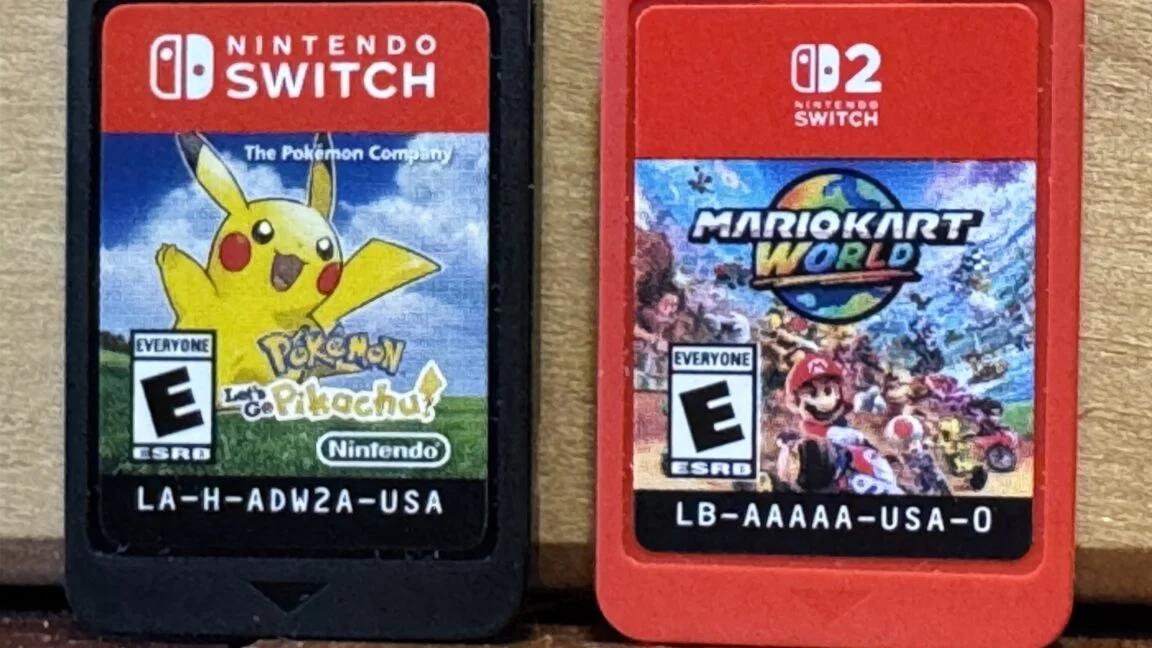
For decades, the plastic game cartridge has been synonymous with the Nintendo brand. From the gray boxes of the NES to the tiny, proprietary chips powering the Switch, physical media has served as a cornerstone of the company’s identity. However, as the gaming industry accelerates toward a cloud-based, digital-first future, Nintendo finds itself at a difficult crossroads: how to maintain a beloved tradition of physical ownership while navigating a supply chain landscape that is becoming increasingly fragile and expensive.
Main Facts: The Strains of a Legacy Format
While competitors like Sony have aggressively transitioned away from physical media, signaling a potential total withdrawal from the disc-based market, Nintendo remains a holdout. Recent statements from the Kyoto-based gaming giant confirm that there are no immediate plans to abandon physical cartridges. However, this commitment comes with significant caveats.
The primary obstacle is the manufacturing of ROM chips. Nintendo relies on specialized suppliers, most notably Rohm and Lapis Semiconductor, to produce the storage media for their games. As the global semiconductor market shifts its focus toward more advanced, high-performance logic chips for AI and high-end computing, the production lines for the specialized ROM chips required for game cartridges are becoming a niche, and therefore more costly, enterprise.
This supply chain squeeze has already begun to manifest in the marketplace. Nintendo has quietly initiated a pricing strategy that sees physical Switch games costing more than their digital counterparts. This "physical premium" is not merely a reflection of retail shelf space; it is a direct result of the rising costs associated with manufacturing and logistics for physical goods in an era where digital distribution offers near-zero marginal cost for the publisher.
Chronology: A Slow Transition to Digital Dominance
The trajectory of this shift can be traced through a series of key developments over the last several years:
- December 2025: The industry witnessed a pivotal moment when Japanese publisher Inin Games publicly expressed hesitation regarding the release of R-Type Dimensions III. The company noted that they would only commit to a full physical cartridge release if Nintendo provided smaller, lower-capacity, and thus cheaper, storage solutions. This highlighted the barrier to entry for third-party publishers facing high production costs.
- March 2026: Nintendo officially adjusted its pricing structure, beginning to charge a premium for physical versions of upcoming Switch 2 titles compared to their digital equivalents. This move confirmed long-standing industry rumors that the cost of physical production was no longer being absorbed by the company, but passed on to the consumer.
- June 2026: New financial data revealed that digital software sales had climbed to 61.5 percent of Nintendo’s total business for the second calendar quarter. This represented a steady, year-over-year increase, confirming that the consumer base is moving toward digital convenience even as the company maintains its physical production lines.
- July 2026: In a clarifying statement to the press, Nintendo reiterated its dedication to physical media, effectively distancing itself from the "all-digital" strategies being explored by Sony and other industry peers.
Supporting Data: The Shrinking Physical Footprint
To understand the challenge, one must look at the data provided by market analysts like Gibson. The 61.5 percent digital share is not merely a statistic; it is a trend line. If this adoption rate continues to climb, the necessity for massive physical manufacturing runs will naturally diminish.
The reliance on ROM-based cartridges has historically been a point of pride for Nintendo, offering faster load times and better durability than optical discs. Yet, the cost of manufacturing these cartridges—specifically for larger, high-fidelity games—is significantly higher than that of a standard Blu-ray disc or a digital server download.
Furthermore, the "Inin Games" example from late 2025 provides a cautionary tale for the industry. When a publisher of that size must rely on Nintendo creating "smaller, lower-capacity" cartridge sizes just to make a physical release economically viable, it signals that the margins on physical media are razor-thin. If the cost of the raw materials from suppliers like Lapis Semiconductor continues to rise due to scarcity or lack of manufacturing scale, the physical market may eventually become a luxury segment, reserved only for "Collector’s Editions" or premium, high-priced physical releases.
Official Responses and Corporate Strategy
Nintendo’s stance remains one of "balanced support." While the company acknowledges the rising costs, they have been careful not to alienate their core demographic—players who value physical ownership, the ability to trade games, and the nostalgic appeal of a shelf full of cartridges.
In official communications, Nintendo executives have emphasized that physical media provides a unique "tangible" value that digital cannot replicate. They recognize that many consumers still prefer to purchase physical copies for gifts, resale value, and the simple satisfaction of ownership. However, the company is clearly playing a long game. By charging more for physical games, they are effectively "market-testing" the elasticity of demand for these products. If sales remain stable despite the price hikes, they will continue the practice. If sales plummet, it may force a faster pivot toward an all-digital future, despite their public denials.
Furthermore, Nintendo is leveraging its internal supply chain expertise to keep costs as low as possible for as long as possible. By coordinating with their semiconductor partners, they are attempting to insulate the industry from the volatility of the broader tech sector, though this is becoming increasingly difficult as the demand for generic ROM chips for consumer electronics wanes.
Implications: What This Means for the Future of Gaming
The implications of this shift are profound, affecting everything from game preservation to consumer rights.
1. The Death of Affordable Physical Media
The most immediate implication is the end of the "standard price" for physical games. If production costs continue to rise, consumers should expect the price gap between digital and physical to widen. This may lead to a future where "Standard Edition" games are digital-only, and physical copies are classified as "Premium" or "Deluxe" items, carrying a significantly higher price tag.
2. The Preservation Crisis
Digital-only models pose a significant threat to long-term game preservation. When servers are eventually shuttered, digital-only libraries become inaccessible. Physical cartridges, while prone to wear, represent a form of media that can exist independently of an internet connection or a company’s active server support. If Nintendo were to follow Sony into a purely digital world, the ability for future generations to access, play, or archive these titles would rely entirely on Nintendo’s goodwill and infrastructure.
3. Third-Party Publisher Exodus
Smaller developers and publishers often rely on physical releases to gain visibility in a crowded marketplace. If the cost of printing cartridges becomes prohibitive, these smaller studios may be forced to abandon physical releases entirely, leaving the retail space dominated by AAA publishers who can afford the manufacturing premiums. This could lead to a homogenization of retail shelves.
4. The Market Balancing Act
As Gibson noted, there is a potential for a "market equilibrium." As the demand for physical media drops due to the convenience of digital downloads, the manufacturing infrastructure will shrink in tandem. Eventually, the costs may stabilize at a level where physical media becomes a sustainable, if smaller, boutique industry. Nintendo is currently trying to manage this decline, attempting to avoid the "cliff" that would occur if they were to abruptly end physical production.
Conclusion: A Delicate Balancing Act
Nintendo is currently walking a tightrope between the past and the future. By maintaining physical cartridge production, they are honoring their legacy and serving a significant portion of their fanbase that rejects a fully digital-only future. However, the economic reality is inescapable. The semiconductor industry is moving on, production costs are rising, and the consumer base is migrating to digital platforms at an accelerating pace.
For now, Nintendo’s strategy is one of managed decline—slowly raising prices to account for the rising cost of the physical medium while waiting for digital adoption to hit a critical mass that makes the transition inevitable. While the cartridge may not be dead yet, its days as the primary, affordable vehicle for Nintendo’s gaming empire are clearly numbered. For the collector and the traditionalist, the next few years will be a period of adaptation, as the hobby of physical game collecting transforms from a standard consumer practice into an increasingly expensive, specialized pursuit.
The question remains: when the final ROM chip is produced, will Nintendo have successfully guided its audience into a digital-only future, or will they have left a generation of fans behind? Only time, and the continued data of the next few quarters, will tell.

 Ammar Sabilarrohman

 Nana Wu

 Azzam Bilal Chamdy


 Lina Hope

 Asro

 Suro Senen
