
 Muslim
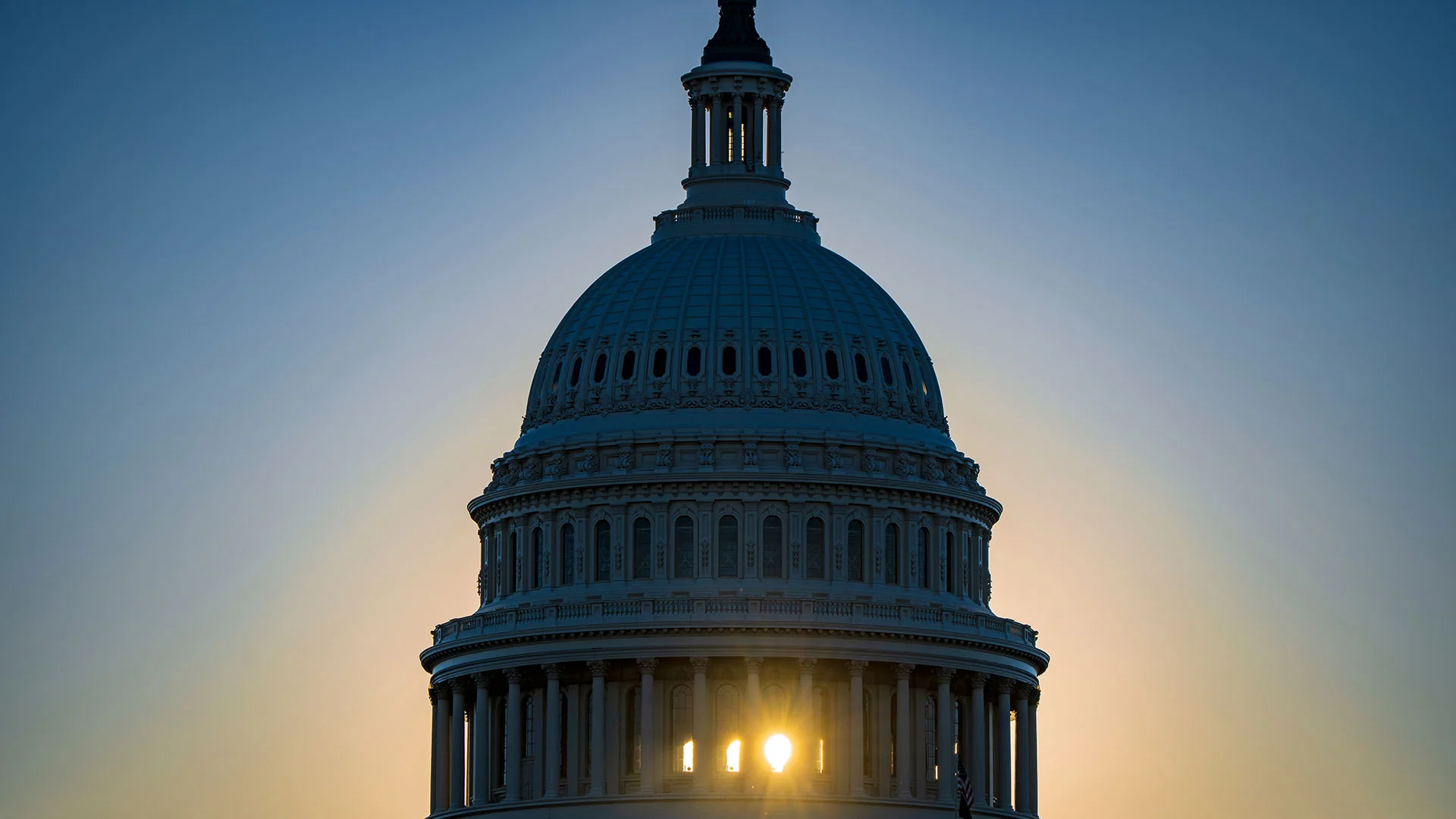
The United States is currently facing a silent, high-tech epidemic. While Americans are being defrauded at an unprecedented rate—losing nearly $18 billion to cyber-scams in the last year alone—a scathing new investigation by the Joint Economic Committee of the U.S. Congress has revealed that the federal government is fundamentally unequipped to handle the crisis.
The report, spearheaded by ranking Democrats Senator Maggie Hassan and Representative Don Beyer, paints a picture of a fragmented, reactive, and often blind federal response. Despite the proliferation of sophisticated, AI-driven criminal compounds operating across borders, the U.S. government lacks a unified strategy, a centralized database for victim recovery, and the legislative teeth to hold the private sector accountable. As criminal syndicates evolve, the American response remains stuck in a bureaucratic loop of "voluntary" cooperation and disconnected agency silos.
The Anatomy of the Crisis: A Chronology of Neglect
The rise of global cyber-scam operations is not a new phenomenon, but its recent maturation into a transnational industry is. Over the past several years, the landscape of fraud has shifted from amateurish phishing emails to highly organized, corporate-style operations.
- 2023–2024 (The Escalation Phase): Investigative reporting by The Associated Press and FRONTLINE began uncovering the existence of massive, industrial-scale "scam compounds." These facilities, often operating out of Southeast Asia and increasingly emerging in hubs like Bangladesh, utilize thousands of trafficked individuals forced to operate AI-powered scripts to defraud Western targets.
- Early 2025 (Regulatory Wake-up Call): As reported losses reached an staggering $2 million per hour, congressional pressure mounted. The Joint Economic Committee launched a yearlong inquiry to determine why, despite high-profile seizures by the FBI, Secret Service, and FTC, the aggregate impact on the average American consumer remains devastating.
- Late 2025 (The Congressional Report): The findings released this week confirm the worst fears of advocates: the U.S. government does not even have a cohesive accounting of seized assets. While different agencies announce "wins," these victories are disparate, often overlapping, and ultimately fail to address the core issue: money recovered is a rounding error compared to the $18 billion stolen.
- Current Outlook: The report arrives as a call to action for the next legislative session, urging for the immediate passage of a unified federal strategy and a centralized reporting portal for victims.
The Data Gap: Why "Success" is a Mirage
One of the most damning revelations of the committee’s report is the lack of transparency regarding asset recovery. Federal agencies often report impressive-sounding figures, but these numbers crumble under scrutiny.
The Fragmented Ledger
- The FBI: Reported returning $336 million to victims in 2025.
- The FTC: Claimed $1.83 billion in recoveries for the 2025 fiscal year, yet officials admitted they could not isolate how much of that total was linked to the specific overseas compounds driving the current surge in cyber-scams.
- The U.S. Secret Service: Reported returning over $770 million in assets, though they acknowledged this figure encompasses a broad spectrum of fraud schemes beyond international cyber-scams.
- The State Department: Provided the most vague assessment, noting that foreign law enforcement agencies supported by the U.S. have seized "in the low hundreds of millions," while simultaneously directing Congress to seek specific tallies from the Departments of Justice and Treasury.
When these figures are combined, they represent a mere fraction of the $18 billion in reported losses. The math is simple, but the reality is bleak: for every dollar stolen by these criminal networks, only a few cents are ever returned to the American taxpayer. Furthermore, this data ignores the "dark figure" of crime—the vast majority of victims who, out of shame or the belief that reporting is futile, never contact law enforcement at all.
Official Responses and the "Tools" Debate
The U.S. government’s stance is a study in contradictions. On one hand, the State Department asserts that it "has the tools it needs to combat the threat internationally." On the other, the committee found that the department has actively cut funding to anti-scam programs in emerging hubs like Bangladesh.
Senator Maggie Hassan emphasized the severity of the threat in a recent statement: "Transnational criminal organizations run massive compounds that exploit U.S. technology, including AI, to carry out scams against Americans with devastating consequences. The scale of this exponentially growing challenge requires Congress, the Administration, and the private sector to all strengthen their efforts."
However, the Department of Justice’s approach has been criticized for placing the burden of prevention on private entities without providing the necessary incentives. Unlike the European Union, the United Kingdom, Australia, and Singapore—which have all implemented frameworks that hold telecommunications, financial, and tech companies liable for failing to implement adequate anti-fraud protections—the United States has remained largely hands-off.
The absence of a "duty of care" for the private sector means that major platforms and financial institutions have little legal impetus to prioritize security over growth. This regulatory vacuum is exactly what criminal syndicates exploit to ensure their scams reach millions of screens every day.
Implications: The Need for Durable Reform
The implications of the current status quo are profound. As the barrier to entry for cyber-scammers continues to drop due to the democratization of Generative AI, the "scam industry" is moving from a nuisance to a national security threat.
1. The Death of Voluntary Cooperation
The report makes it clear that the era of voluntary private-sector cooperation is over. Without mandatory, standardized security protocols for banks, ISPs, and social media platforms, the "game of whack-a-mole" will continue indefinitely.
2. The Victimization Cycle
Kate Griffin, a director at the Aspen Institute’s financial security program, notes that while there have been minor improvements in awareness, the U.S. still lacks "durable, sustainable scam prevention." Griffin points out the uncomfortable truth: "We don’t see that showing up yet in reduced victimization. And that’s what really needs to happen."
3. The Legislative Imperative
Congress is currently debating pending legislation that would establish a unified federal strategy. This includes the creation of a centralized hub where victims can report losses, seek legal guidance, and—most importantly—initiate recovery processes without being bounced between the FBI, the FTC, and the Treasury.
The White House has signaled support for this increased coordination, but the legislative path remains fraught with opposition from industry lobbyists who fear the cost of compliance.
Conclusion: A Call for Accountability
The findings of the Joint Economic Committee serve as a stinging indictment of a system that has allowed a global criminal enterprise to thrive in the shadows of the digital age. By failing to integrate the efforts of law enforcement, failing to demand accountability from the private sector, and failing to provide a clear pathway for victim recovery, the United States has inadvertently provided a safe harbor for the architects of the largest theft of personal wealth in modern history.
As the documentary Scammed—a collaboration between The Associated Press and FRONTLINE—illustrates, the victims of these crimes are not just statistics. They are individuals whose lives are upended, whose savings are obliterated, and whose trust in the digital economy is permanently shattered.
If the United States is to stem the tide, it must move beyond the rhetoric of "fighting the threat" and toward a concrete, enforceable, and transparent policy. The era of the fragmented response must end, or the American public will continue to pay the price—at a rate of $2 million every hour—for the government’s failure to adapt to the new reality of 21st-century crime.


 Nana

 Layla Zulfa
 Ali Ikhwan

 Lina Irawan

 Dwi Wanna

 Asep Darmawan
 Iffa Jayyana
