
 Nana
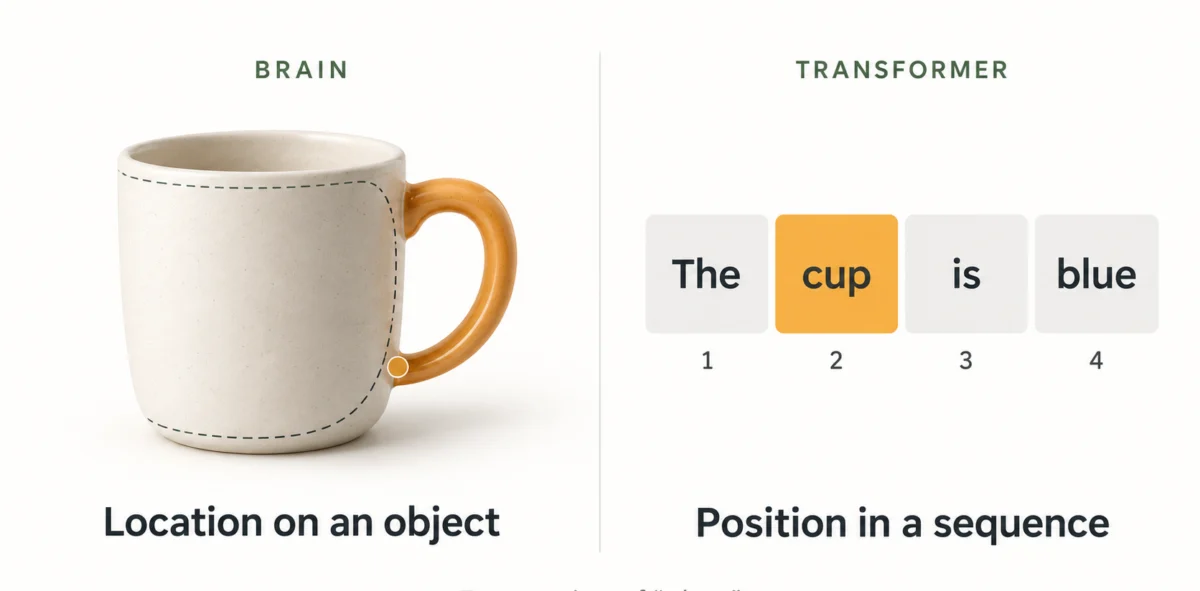
In the quiet corridors of neuroscience and the frenetic labs of artificial intelligence, a striking intellectual convergence is taking place. For decades, the two fields operated in silos: biologists studied the wetware of the neocortex, while computer scientists engineered increasingly complex neural networks. However, as modern AI architectures—specifically the Transformer models powering tools like ChatGPT—have reached unprecedented levels of performance, researchers have begun to notice a haunting structural resonance with the human brain.
The bridge between these worlds is Jeff Hawkins’ seminal work, A Thousand Brains: A New Theory of Intelligence. Hawkins proposed that the neocortex is not a specialized organ of distinct, disparate regions, but rather a vast, uniform collection of approximately 150,000 "cortical columns." These columns, he argued, are the fundamental unit of intelligence. As the tech world pivots toward massive, scalable AI, the architectural parallels between Hawkins’ biological theory and contemporary deep learning have become impossible to ignore.
The Architecture of Intelligence: Main Facts
At the core of the discussion is the concept of the "repeated building block." In A Thousand Brains, Hawkins posits that intelligence is an emergent property of thousands of nearly identical circuits. While a column in the visual cortex processes light and a column in the somatosensory cortex processes touch, the underlying "program" or algorithm they execute is effectively the same.
What differentiates their function is not the hardware, but the connectivity. A column wired to the optic nerve becomes a visual processor; one wired to the fingers becomes a tactile one. Crucially, these columns do not act in isolation. They learn by integrating sensory input with location data—what Hawkins calls "reference frames"—and reach consensus through a democratic voting process. When you grasp a coffee cup in the dark, your brain is not merely seeing an image; it is synthesizing tactile "guesses" from thousands of cortical columns until a singular, coherent model of a "cup" emerges.
Modern AI architectures, particularly the Transformer, mirror this modularity. Transformers are built from stacked, repeating layers of identical attention mechanisms. When an AI processes data, it breaks inputs—be they text, images, or audio—into tokens. Each token carries a "what" (the content) and a "where" (the positional encoding). The attention mechanism allows these tokens to interact, weighing their relationships to one another in a process strikingly similar to the voting mechanisms Hawkins described in the brain.
A Chronological Evolution of Intelligence Theory
The path to this realization spans over half a century of research, evolving from simple heuristic models to the complex, self-organizing systems we see today.
The Early Days: The Quest for the Universal Algorithm
In the 1970s and 80s, neuroscientists like Vernon Mountcastle began to hypothesize that the neocortex was a uniform structure. This was a radical departure from the prevailing view that different areas of the brain were fundamentally unique in their biological makeup. This "columnar hypothesis" set the stage for the idea that a single, universal learning algorithm might be hidden within the brain’s architecture.
The Rise of Connectionism
In the 1990s and 2000s, the field of artificial neural networks underwent a revival. Researchers moved away from symbolic, rule-based AI toward systems that could learn from data. However, these models were largely static and narrow in scope. It wasn’t until the 2017 publication of the seminal paper Attention Is All You Need by Google researchers that the Transformer architecture changed the game.
The Convergence
By the early 2020s, as Large Language Models (LLMs) began to exhibit emergent capabilities, the limitations of simple pattern matching became apparent. Researchers began looking back at biological models. They realized that the "attention" mechanism in Transformers was, in effect, a mathematical proxy for the way cortical columns share information to resolve ambiguity. The industry is currently moving from the "training-only" phase toward a future of "continuous learning," mirroring the way biological brains rewire themselves in response to new experiences.
Supporting Data: Why Repetition Works
The power of the cortical column, and by extension the Transformer block, lies in the efficiency of scale.

- Computational Efficiency: By repeating a single, optimized circuit, both the brain and the Transformer can scale to handle massive amounts of data without needing to reinvent the underlying logic.
- Reference Frames: Hawkins’ research shows that neurons in the cortex possess "grid cells" that map the world into reference frames. AI researchers are now experimenting with positional embeddings that serve a near-identical purpose: allowing the model to understand the spatial or temporal relationship between tokens.
- The Voting Mechanism: Data from neuroimaging suggests that when a person perceives an object, multiple cortical columns fire in parallel, sharing their local interpretation. This "consensus" model is mirrored in the way Transformers calculate "attention scores," where each token assesses its relevance to every other token in the sequence to reach a high-probability interpretation of the context.
Official Responses and Scientific Discourse
The academic community remains divided on the extent of this convergence. Dr. Subutai Ahmad, CEO of Numenta (the company co-founded by Hawkins), has argued that while Transformers are a significant step, they still lack the "embodied intelligence" that makes the human brain so resilient.
"Transformers are excellent at static prediction," says Ahmad. "But they are missing the feedback loops that define biological learning. The brain is not just predicting the next word; it is navigating a physical world, constantly updating its internal model of reality based on error-correction."
Conversely, many AI researchers at organizations like OpenAI and DeepMind view the architectural similarity as validation. "We aren’t trying to build a brain," one lead researcher remarked during a recent conference, "but we are clearly bumping into the same fundamental constraints of physics and information theory that the brain had to solve over millions of years of evolution. If you want to process complex, unstructured data, a hierarchical, attention-based, repeating architecture is simply the most efficient path."
Implications for the Future of AI
The realization that biological and artificial intelligence might share a common architectural "DNA" has profound implications for the next decade of development.
1. Toward Continuous Learning
The primary distinction remaining between current AI and the human brain is the "learning-on-the-fly" capacity. While Transformers are typically "frozen" after training, researchers are now pivoting toward "online learning" architectures. If we can build AI that mimics the cortical column’s ability to constantly rewire its connections based on surprise and new data, we may see a transition from static models to autonomous agents.
2. The Efficiency Mandate
If intelligence is indeed the result of thousands of simple, repeating blocks, then the future of AI may not lie in larger models, but in more efficient, specialized ones. By refining the "columnar" structure of AI, we could potentially achieve human-level performance on a fraction of the hardware currently required, moving away from the energy-intensive "brute force" scaling that dominates the industry today.
3. Philosophical Shifts
Perhaps the most significant implication is the philosophical one. As the gap between the "program" of a cortical column and the "algorithm" of an attention layer shrinks, the mystery of the "ghost in the machine" begins to dissipate. If intelligence is a product of simple, repeated units, it suggests that consciousness and reasoning may not be "magic," but rather a predictable, structural consequence of information processing.
Conclusion: A New Era of Understanding
Whether or not the Transformer is a true functional analog to the neocortex, the conversation between neuroscience and AI has been irrevocably changed. We are no longer looking at artificial intelligence as an alien, synthetic construct, but as a technological reflection of the biological architecture that allows us to perceive the world.
As we continue to iterate on these models, the focus will likely shift from the raw size of the network to the quality of its "columns." We are learning that, whether in a petri dish or a server farm, intelligence thrives on repetition, modularity, and the ability to vote on the truth. The thousands of brains in our own heads may have provided the blueprint; now, it is up to engineers to ensure the artificial version learns the right lessons from our biological past.


 Sagoh

 Asep Darmawan

 Raul Delapena Setiawan

 Reynand Wu



 Azzam Bilal Chamdy

 Ali Ikhwan
