Reynand Wu

In the modern corporate boardroom, there is a ghost haunting the balance sheet. It is the "missed opportunity"—the customer who was never understood, the product that remained unsold, and the price point that never captured the true value of a brand. These figures never appear as line items; they are the invisible deficits of a marketing function that has become increasingly disconnected from core business strategy.
While marketing budgets remain highly visible—and frequently scrutinized—the department’s contribution to tangible business value is often left unproven. Consequently, marketing has become an easy target for the first and most aggressive budget cuts. This is not merely a budgetary issue; it is an existential one. Marketing has lost its seat at the table, often relegated to a tactical role where "Product" is dictated by management, "Price" is set by sales, and "Place" is managed by ecommerce teams. The modern CMO is frequently left with only "Promotion," tasked with generating demand for strategic decisions made in a vacuum.
The Gap: Fast Data vs. Slow Meaning
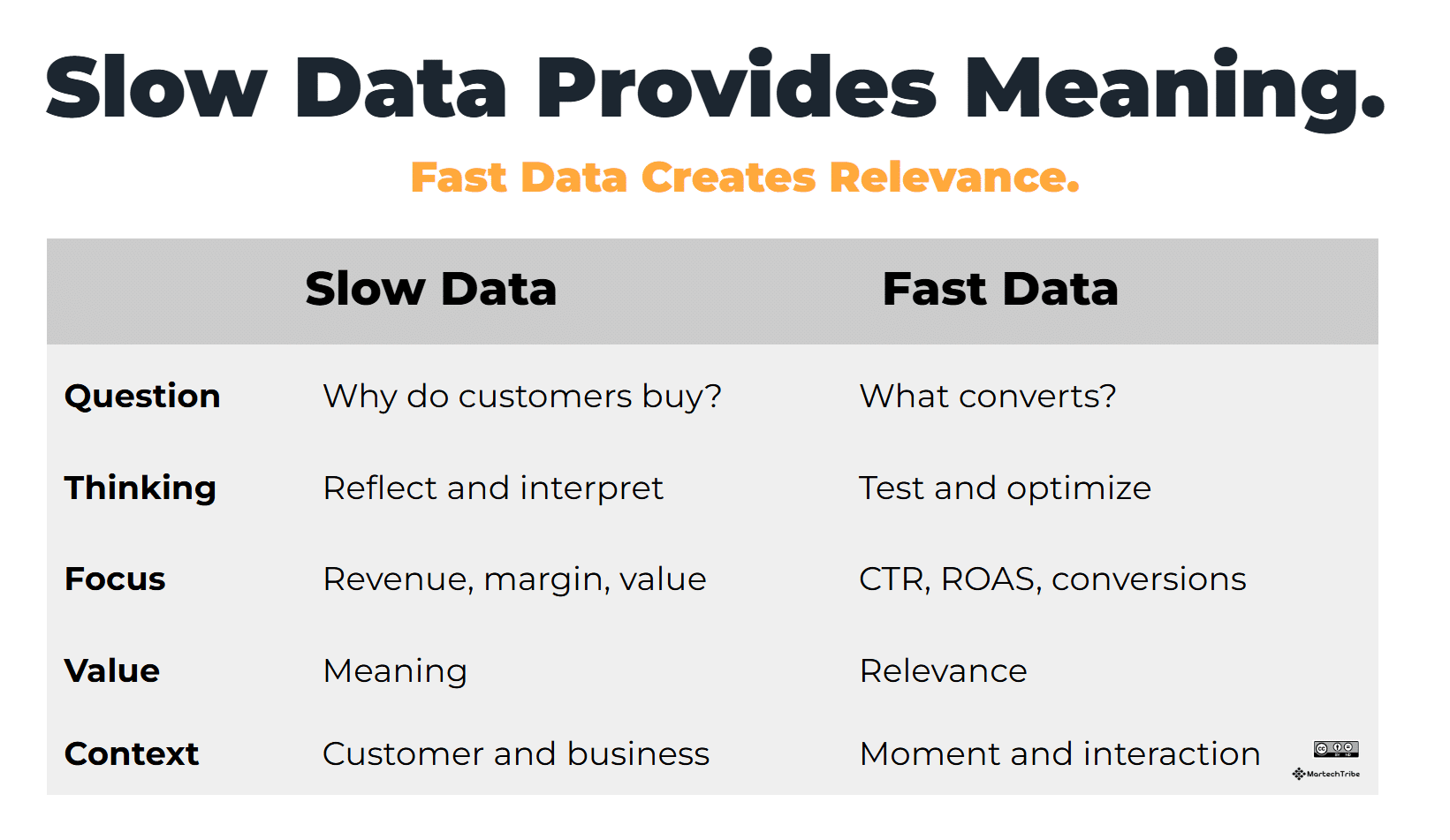
To understand why marketing has drifted from the boardroom, one must look at how we measure success. Borrowing from the framework of Nobel laureate Daniel Kahneman, we can categorize marketing intelligence into two streams: "Fast Data" and "Slow Data."
The Trap of Fast Data
Fast data is the lifeblood of the modern digital dashboard. It answers the immediate, tactical questions: Which ad creative triggered a click? Which button color increased conversions? Which interaction should follow the last? These metrics—reach, traffic, leads, and ROAS (Return on Ad Spend)—are essential for operational efficiency, but they are insufficient for strategic leadership.

The core problem is that fast data lacks inherent meaning. It can show a spike in traffic, but it cannot explain why the customer is buying. It can report a high conversion rate, but it cannot tell you if that customer will ever return or if they cost more to acquire than the profit they provide.
The Necessity of Slow Data
Slow data is the deliberate, reflective analysis of the business. It focuses on the "why" rather than the "what." It reverse-engineers value by asking:
- Which customer segments drive our highest margins?
- What problem does our product solve, and why does the customer value that solution?
- Are we growing revenue through sustainable acquisition or by cannibalizing our own margins through discounts?
Without the context provided by slow data, marketing is essentially telling a story without a plot. You may have the characters (the customers) and the setting (the digital platform), but you have no idea how the narrative ends—or if it ends in profitability.
Chronology of the Disconnect: How Marketing Lost Its Influence
The evolution of the marketing department over the last decade has followed a predictable, yet detrimental, trajectory:

- The Digital Proliferation (2010–2015): The rise of sophisticated MarTech platforms allowed for unprecedented tracking. CMOs became obsessed with "attribution," prioritizing the metrics that were easiest to measure—clicks, views, and likes.
- The Tactical Silo (2015–2020): As tracking became more granular, marketing became more fragmented. Product, Pricing, and Channel management moved into their own distinct P&L silvers. Marketing was effectively "hollowed out" into a lead-generation machine.
- The AI Acceleration (2020–Present): Artificial intelligence has now supercharged the "Fast" side of the equation. AI can optimize ad spend and personalize content at lightning speed, but it lacks the strategic oversight to determine if those campaigns align with long-term profitability.
This chronology reveals a widening chasm. While execution speed has increased exponentially, the strategic mandate of the CMO has narrowed, creating a scenario where marketing is faster at doing things that don’t necessarily move the bottom line.
Supporting Data: The Illusion of ROAS
The table of performance metrics often hides a dangerous reality. Consider the difference between "Reported Marketing Success" and "Actual Business Performance":
| Metric | Marketing Dashboard View | Business Reality View |
|---|---|---|
| ROAS | High attributed revenue | Net profit after returns/discounts |
| Conversions | Transaction volume | Customer Lifetime Value (CLV) |
| Traffic | Reach and Awareness | Qualified leads that convert to sales |
| Acquisition | Cost Per Acquisition (CPA) | Long-term customer profitability |
A campaign may appear successful on a dashboard because it drove a high volume of transactions. However, if those transactions were fueled by deep discounts that eroded margins, or if the customers acquired have no intent to return, the company is effectively paying for its own decline. Marketing, in this context, is merely accelerating the depletion of business value.
Implications: The AI-Driven Future
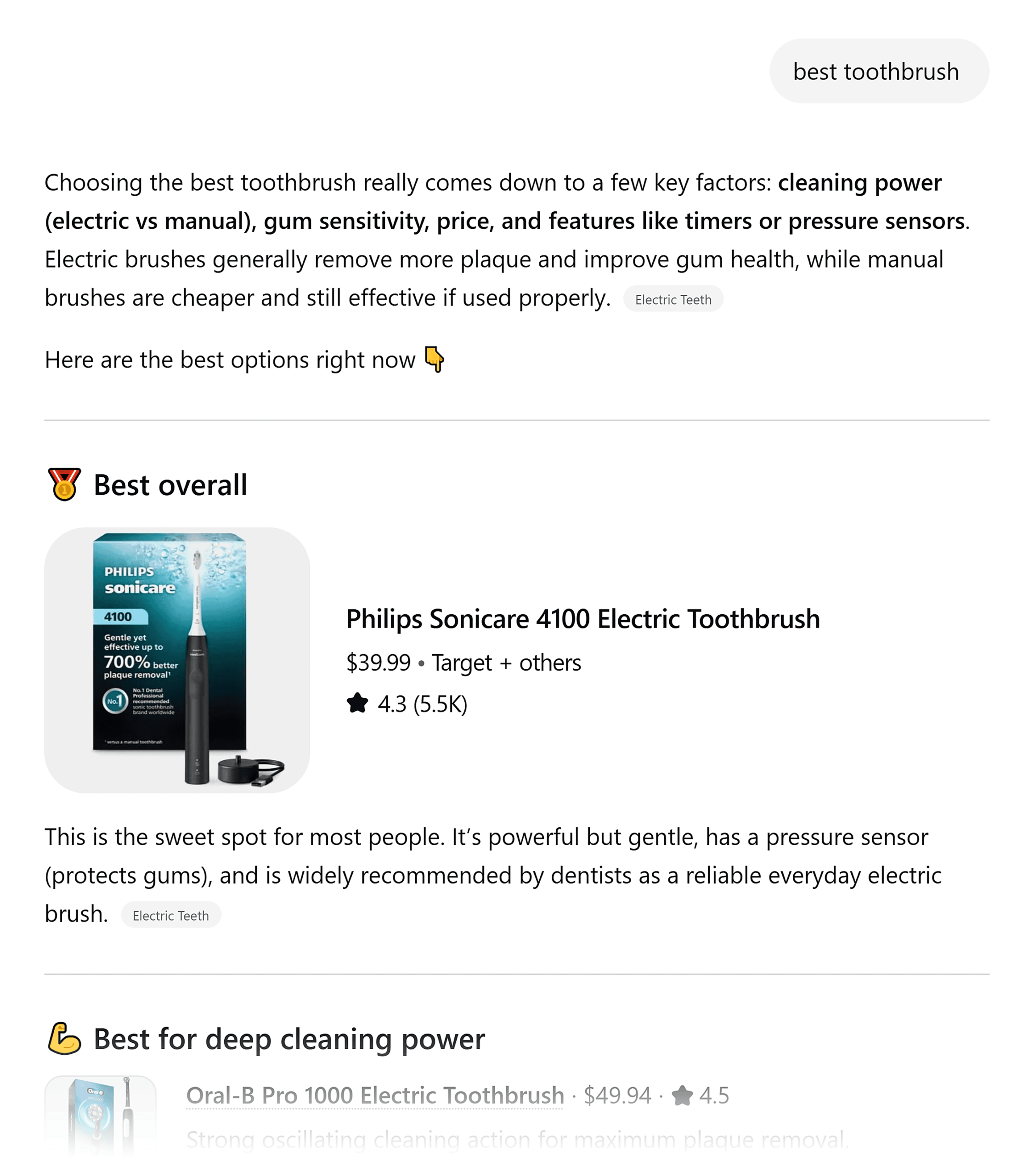
The emergence of AI makes this gap an urgent crisis. Because AI is exceptionally good at optimizing for a singular, narrow goal (like "increase clicks"), it will execute whatever directive it is given with ruthless efficiency.

If the CMO provides a goal of "maximize conversions," the AI will find the cheapest, fastest way to get a conversion, even if that means targeting low-value customers who don’t contribute to margin. If, however, the CMO provides a goal of "increase full-price purchases among our highest-value segment," the AI becomes a powerful tool for value creation.
The Role of the CMO
The CMO’s path to regaining a strategic role in the boardroom lies in "Value Engineering." This is the process of tracing the customer journey from awareness to the bottom-line financial impact.
- Redefining the Brief: Move beyond asking for "clicks." Ask for outcomes that correlate with business health, such as "educate the customer on product value to increase full-price conversion rates."
- Integrating Slow Data: Use reflective analysis to interpret what the fast data is telling you. If customers are waiting for discounts, don’t just "optimize the offer"—analyze whether the product value is being clearly communicated.
- Cross-Functional Alignment: The CMO must reclaim the four Ps (Product, Price, Place, Promotion). By using customer insights to inform pricing and product strategy, marketing moves from a cost center to a profit center.
Official Perspectives: The Boardroom’s Expectation
CEOs and CFOs are not looking for more vanity metrics. When they ask about revenue growth, margin expansion, and profitability, they are not looking for an analysis of reach or engagement. They are looking for a business case.
When marketing answers a question about profit with a slide about "brand awareness," it reinforces the narrative that marketing is a luxury expense rather than a growth engine. The "Slow Data" approach allows the CMO to speak the language of the boardroom. It transforms the conversation from "How much did we spend on ads?" to "How did our investment in understanding the customer drive higher lifetime value and superior margin?"
Conclusion: Reclaiming the Narrative
Marketing is currently at a crossroads. It can continue to hide behind the veil of "fast data" dashboards, providing the appearance of activity while losing influence over the foundational elements of the business. Or, it can embrace the challenge of integrating slow, deliberate thinking into its execution.
AI will make the engines of marketing faster, but it cannot provide the direction. That remains a human responsibility. By connecting customer needs to revenue, margins, and profit, the CMO can prove that a missed opportunity is not just an abstract concept—it is a measurable loss that, once understood, can be converted into the company’s greatest competitive advantage. The future of marketing isn’t just about faster execution; it’s about better, more meaningful, and more profitable decisions.

 Neng Nana


 Sagoh

 Siti Muinah