
 Layla Zulfa
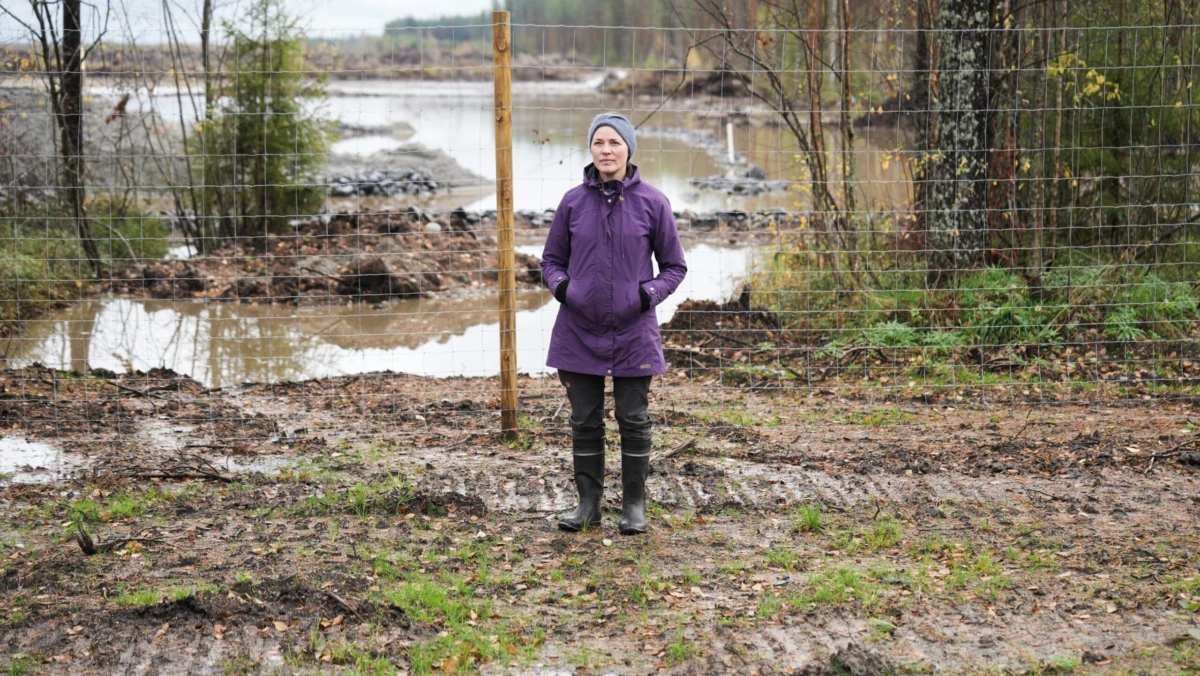
In the quiet, forested landscapes of northern Finland, the rhythm of rural life has been violently interrupted. Behind high, imposing wire fences in the municipality of Muhos, the earth lies exposed—a vast, muddy wound where, until a few months ago, a dense woodland stood. An estimated quarter-million trees once occupied these 815 acres. Today, the landscape is a barren expanse of roots, upturned soil, and stagnant pools of brown runoff, creating a stark visual testament to the accelerating, often bruising, expansion of global AI infrastructure.
This destruction, carried out by Google to pave the way for a massive data center, has ignited a firestorm across Finland. As the tech giant faces legal scrutiny for bypassing environmental impact assessments, the incident has transformed from a local zoning dispute into a national crisis, forcing Finns to confront the true cost of hosting the world’s insatiable appetite for artificial intelligence.
A Chronology of the Clear-Cut
The crisis began with a swift and aggressive mobilization. When Google acquired the land in Muhos and a secondary site in the village of Otanmäki, approximately 62 miles to the southeast, the company proceeded to clear-cut the forest with a speed that shocked local residents and conservationists alike.
- The Acquisition: Google secured the land as part of a broader, $17 billion AI infrastructure investment plan in the Nordic region—the largest of its kind in Finnish history.
- The Felling: Within weeks, an estimated 250,000 trees were removed at the Muhos site, with another 150,000 estimated to have been felled at Otanmäki.
- The Regulatory Failure: It was later revealed that the company had failed to secure the necessary environmental impact assessments required by Finnish law before beginning work.
- The Intervention: On October 6, the Finnish Licensing and Supervision Authority (LVV) issued a directive ordering Google to immediately cease all work at both sites.
- The Aftermath: Following the intervention, reports emerged that sediment-heavy, brown water from the clear-cut sites had begun seeping into local streams, eventually feeding into the Oulujoki River, prompting urgent concerns about ecological contamination.
Supporting Data: The Cost of the "Data Economy"
The scale of the damage goes beyond the mere loss of trees. Conservationists, including Mari Annala of the Finnish Association for Nature Conservation (SLL), point to the long-term biological impact of such rapid, large-scale industrialization of natural land.
Ecological experts note that the removal of topsoil and the destruction of the forest floor have displaced local wildlife, forcing animals—including wolves—to migrate closer to residential areas. The noise pollution from heavy machinery, vibrating through the hard-rock soil of the region, has become a constant nuisance for the residents of Otanmäki, who describe the persistent, percussive sound of construction as a "drum" beneath their feet.
Furthermore, the economic justification for these projects has come under fire. Jussi Kangasharju, head of computer science at the University of Helsinki, argues that the national benefit is minimal. "Really, for Finland, there are no benefits," Kangasharju explains. "They are international companies serving international customers. Very little corporate taxes go to Finland. Data centers ultimately have very little benefit for others except the data center operator."
Official Responses and Corporate Defenses
The tension between government ambition and public outcry is palpable. Prime Minister Petteri Orpo’s administration has consistently championed foreign investment as a "top priority," arguing that the data economy is a critical engine for a nation struggling with an aging population and slow economic growth. However, the revelation of Google’s procedural bypasses has forced the government into a defensive posture. Orpo recently characterized the situation as a "cold shower," signaling a potential cooling in the government’s previously uncritical embrace of tech giants.
Google’s response has been a mix of apologies and defensive legal framing. Antti Järvinen, Google’s Finland country manager, issued an apology for the clearings but maintained that the company acted based on their "best understanding of the legislation at the time."

In a formal statement, a Google spokesperson added: "We have operated in Finland for 15 years and have always worked to meet or exceed zoning, environmental, health, and safety requirements. After receiving the LVV letters on October 6, we stopped preparatory works… and will fully comply with LVV’s requests." The company has proposed a remediation plan, which includes planting trees across 74 acres—a proposal that environmentalists have dismissed as a drop in the bucket compared to the destruction of over 400,000 trees across the two sites.
Implications: A Nation at a Crossroads
The scandal in Muhos and Otanmäki is far from an isolated incident; it is a symptom of a broader, global rush to build AI infrastructure. Finland, with its stable geopolitical environment, cool climate (which reduces energy costs for cooling servers), and abundant land, has become an accidental epicenter of this expansion.
The Regulatory Void
The primary issue identified by critics is the lack of centralized oversight. Currently, much of the decision-making power regarding land use for data centers rests with individual municipalities. These local governments, often desperate for new tax revenue and job creation, are arguably ill-equipped to negotiate with global tech conglomerates that possess significantly more legal and financial resources. There is now a growing movement, supported by over 93,000 petition signatories, calling for a centralized national body to regulate data center projects, ensuring that environmental impact is prioritized over corporate speed.
The Social and Security Dimension
Beyond environmental concerns, there is a mounting sense of unease regarding the social fabric of these rural towns. For residents like Anni Ranta, the arrival of Google is not just an environmental disaster; it is a threat to their way of life. The fear that these high-profile data centers could make their communities targets in a shifting geopolitical landscape—specifically regarding Finland’s long border with Russia—adds a layer of existential anxiety to the local opposition.
Furthermore, the irony of using Finland’s limited renewable energy resources to power international AI projects for non-Finnish customers has sparked a national debate about resource sovereignty. "Young people go to Helsinki, Berlin, and Paris," notes Vesa Hyyryläinen, a local conservationist. "There are so few people left. We feel we are being asked to sacrifice our nature for a future that doesn’t include us."
Conclusion: An Election Year Reckoning
As Finland approaches the April elections, the "Google issue" has solidified into a central campaign theme. Voters are no longer asking only about the number of jobs these data centers might bring; they are asking about the cost of the "digital transformation."
The events in Muhos serve as a warning to other nations currently courting the tech giants of Silicon Valley. When the pursuit of the "data economy" outpaces environmental law and local democratic input, the resulting "silicon scar" is not just on the landscape, but on the public trust. Whether the Finnish government will implement the legislative amendments necessary to rein in these projects remains to be seen. For now, the people of Muhos and Otanmäki are left to watch the mud, listen to the distant hum of machinery, and wonder if their forests were merely the first sacrifice in a global race that cares little for the ground upon which it builds.


 Ammar Sabilarrohman

 Neng Nana

 Asep Darmawan

 Asro


 Nila Kartika Wati

 Muslim
